Great news, relatively speaking, out today that Dan Glickman, head of the MPAA is committed to fair use, interoperability and DRM. From a report on Arstechnica (by way of Public Knowledge):
"Glickman said the movie studios were now fully committed to interoperable DRM, and they recognize that consumers should be able to use legitimate video material on any item in the house, including home networks. In a major shift for the industry, Glickman also announced a plan to let consumers rip DVDs for use on home media servers and iPods."
This is a major step forward, publicly, for the MPAA. While the studios are still committed to digital rights management (DRM), they are at least realizing that consumers want to be able to play movies that they purchase on multiple devices and that current DRM schemes aren't up to snuff. Most people who study DRM think it will never work, but Hollywood is scared to death of piracy, so getting Glickman this far in his thinking should be considered a good first step.
The MPAA is eventually going to have to face the facts that soon consumers will want to mix/mash and sample video as well, and will do it whether or not the MPAA likes it. You should also be able to buy a film and give it to a friend - whether on DVD, tape or new formats. Under current DRM you can't, which studios love because they make more sales. But there's a legal precedent called "right of first sale" which says you are allowed to do this. Currently, DRM stops this, and the MPAA will have to address this or consumers will eventually revolt as well. But, a positive sign.
Thursday, April 26, 2007


Friday, April 20, 2007
First Academy Award Film under Creative Commons

From Interplast - "In 1997, a film crew accompanied an Interplast volunteer surgical team to An Giang province in Vietnam's Mekong Delta. The filmmakers donated their services to document the team's experiences and produce A Story of Healing, which earned the 1997 Academy Award for best documentary short subject. The 28-minute film is followed by a short epilogue after the credits which follows-up on two patients 16 months after their surgeries.
Ten years after its original release, A Story of Healing has been released under a Creative Commons Attribution-Noncommercial-No Derivatives license (by-nc-nd) and is available for free online."
Wow! This is great. And, they are also making the DVD available for sale, for those who don't want to watch it for free online. I bet their sales increase, and will try to find out. Great publicity (I saw this first on BoingBoing which means the entire world has now seen it), and a great way for a nonprofit to better accomplish their mission.
Thursday, April 19, 2007
MPAA ban effect on theaters
Today's post is given over to the text of a recent email from Ray Privett of NYC's Pioneer Theater. He's calling a meeting to discuss the potential ramifications of a recent MPAA pushed law in NYC aimed to fight piracy, but which could have broader implications. The meeting is today, and I can't make it, but Ray has promised updates.
From the email:
Hello, as some of you know I have called an informal meeting about a recently passed New York City law, relating to the videotaping in movie theaters. The Hollywood Reporter published an article on the topic, which says the following:
"Secretly videotaping movies in a New York City theater for illegal sale on the street would be a misdemeanor, with penalties including possible jail time, under a bill the City Council approved Thursday."
The law is here, and it proves to be more restrictive than the HR article indicates. As a movie theater operator, who is very concerned about the ongoing strength of theaters as exhibition spaces, and also as someone who cares a lot about filmmakers being able to profit from their hard works, I am very sympathetic to and appreciative of the law.
However, I have some pretty sincere reservations. It is in that context that I have called the informal, open meeting for Thursday, April 19, 1pm, at the Pioneer Theater, 155 East Third Street Near Avenue A.
At this meeting I want to discuss the ramifications of this law as it relates to film showings of public domain or other free to copy / reuse movies, where videotaping is encouraged. What defines a movie theater? What defines a movie? Does this resolution overlook contexts where sharing is authorized and appropriate, in a rush to redefine movie theaters according to the MPAA's dictates? Should a protest exhibition / civil disobedience act be mounted?
Feel free to bring your friends who might also be interested. If you or your friends are lawyers, or city council people, you are all very welcome.
In the remainder of this letter, I sketch out my reservations in further detail.
Best wishes
Ray Privett
Pioneer Theater
Appendix: commentary.
Here is the law, which, from my reading, seems to have passed and will become active within the next few months.
Int. No. 383-A
Full text is here:
Let's look at a few scenarios that this law affects. I'll start with a few scenarios about which there should be little debate, but then I'll move onto a scenario that I think is more complicated.
Scenario A - Robert:
Robert buys a ticket to a screening of THE DEPARTED, which has reserved all copyrights. Robert gets a seat with a clear view, from which he videotapes and audiotapes the entire movie. He goes home, and dumps his taping of the movie onto his computer. From that, he prints DVDs, which he sells on the street.
Has Robert violated this law? Yes, he has. In the parlance of the law, Robert has used a Recording Device, within a Place of Public Performance, in an Unauthorized Operation.
By selling DVDs, he also is directly profiting from this action.
Should this be a criminal act? In my opinion, yes. As it is.
Scenario B - Alice:
Alice buys a ticket to another public screening of THE DEPARTED, which, still, has reserved all copyrights. Alice also gets a seat with a clear view, from which she videotapes and audiotapes the entire movie. She goes home, and dumps her taping of the movie onto her computer. She then places the file online for download.
Has Alice violated this law? Yes, she has. In the parlance of the law, Alice has used a Recording Device, within a Place of Public Performance, in an Unauthorized Operation.
She has not, however, profited from this action, because she has not sold anything.
Should this be a criminal act? In my opinion, yes. As it is.
So, those are two scenarios that are relatively clear. They are also, probably, the scenarios the law intends to address. They are the scenarios addressed by the spirit of the law and also the letter of the law.
But let's look at Scenario C.
Scenario C - Bill:
Bill buys a ticket to a public screening of some short movies. Casey and Rudy made one of those short movies. Their short is licensed under a Creative Commons 2.5 Attribution, Non-Commercial, Share Alike license (http://creativecommons.org/licenses/by-nc-sa/2.5/). The screening is in a commercial venue, but Casey and Rudy have authorized the screening, thus waiving the "non-commercial" part of their license.
Bill goes to the screening, and videotapes Casey and Rudy's short while it plays in the theater. He then posts his taping of that screening online, in a manner from which he clearly has not profited. From their own website, Casey and Rudy themselves even link to the tape Bill recorded in the theater.
Has Bill violated the law in question? Yes, it seems, he has. In the parlance of the law, Bill has used a Recording Device, within a Place of Public Performance, in an Unauthorized Operation (as he did not receive any explicit authorization from the theater owners and managers, who only found out about his taping after the fact).
Should this be a criminal act? In my opinion, no. Why should it be? For starters, no copyright law has been broken. But, according to the law that went into effect, Bill has broken a law.
I doubt the people who crafted this law had any such scenario in mind as they were moved by the spirit of the law and as they wrote the letter of the law. However, the letter of that law would indeed make what Bill did a criminal act.
In fact, exactly this scenario has already played out, as you will see if you click here
Now, I don't think the law affects exactly the scenario as documented in that link, because everything happened before the new law passed.
But if something similar took place again, it seems the law would be violated.
Why? Aren't we inappropriately constraining the definition of what a movie theater is, and of what can be shown there? Doesn't it constrain the definition of a movie theater as a place that only shows "all rights reserved" movies? How does the law affect the ability to remix and reuse "some rights reserved" and public domain works?
If you come to the meeting, let's chat about this. Again, this is an informal meeting. To some, the context might seem trivial. But I think the kernel of the issue is important.
From the email:
Hello, as some of you know I have called an informal meeting about a recently passed New York City law, relating to the videotaping in movie theaters. The Hollywood Reporter published an article on the topic, which says the following:
"Secretly videotaping movies in a New York City theater for illegal sale on the street would be a misdemeanor, with penalties including possible jail time, under a bill the City Council approved Thursday."
The law is here, and it proves to be more restrictive than the HR article indicates. As a movie theater operator, who is very concerned about the ongoing strength of theaters as exhibition spaces, and also as someone who cares a lot about filmmakers being able to profit from their hard works, I am very sympathetic to and appreciative of the law.
However, I have some pretty sincere reservations. It is in that context that I have called the informal, open meeting for Thursday, April 19, 1pm, at the Pioneer Theater, 155 East Third Street Near Avenue A.
At this meeting I want to discuss the ramifications of this law as it relates to film showings of public domain or other free to copy / reuse movies, where videotaping is encouraged. What defines a movie theater? What defines a movie? Does this resolution overlook contexts where sharing is authorized and appropriate, in a rush to redefine movie theaters according to the MPAA's dictates? Should a protest exhibition / civil disobedience act be mounted?
Feel free to bring your friends who might also be interested. If you or your friends are lawyers, or city council people, you are all very welcome.
In the remainder of this letter, I sketch out my reservations in further detail.
Best wishes
Ray Privett
Pioneer Theater
Appendix: commentary.
Here is the law, which, from my reading, seems to have passed and will become active within the next few months.
Int. No. 383-A
Full text is here:
Let's look at a few scenarios that this law affects. I'll start with a few scenarios about which there should be little debate, but then I'll move onto a scenario that I think is more complicated.
Scenario A - Robert:
Robert buys a ticket to a screening of THE DEPARTED, which has reserved all copyrights. Robert gets a seat with a clear view, from which he videotapes and audiotapes the entire movie. He goes home, and dumps his taping of the movie onto his computer. From that, he prints DVDs, which he sells on the street.
Has Robert violated this law? Yes, he has. In the parlance of the law, Robert has used a Recording Device, within a Place of Public Performance, in an Unauthorized Operation.
By selling DVDs, he also is directly profiting from this action.
Should this be a criminal act? In my opinion, yes. As it is.
Scenario B - Alice:
Alice buys a ticket to another public screening of THE DEPARTED, which, still, has reserved all copyrights. Alice also gets a seat with a clear view, from which she videotapes and audiotapes the entire movie. She goes home, and dumps her taping of the movie onto her computer. She then places the file online for download.
Has Alice violated this law? Yes, she has. In the parlance of the law, Alice has used a Recording Device, within a Place of Public Performance, in an Unauthorized Operation.
She has not, however, profited from this action, because she has not sold anything.
Should this be a criminal act? In my opinion, yes. As it is.
So, those are two scenarios that are relatively clear. They are also, probably, the scenarios the law intends to address. They are the scenarios addressed by the spirit of the law and also the letter of the law.
But let's look at Scenario C.
Scenario C - Bill:
Bill buys a ticket to a public screening of some short movies. Casey and Rudy made one of those short movies. Their short is licensed under a Creative Commons 2.5 Attribution, Non-Commercial, Share Alike license (http://creativecommons.org/licenses/by-nc-sa/2.5/). The screening is in a commercial venue, but Casey and Rudy have authorized the screening, thus waiving the "non-commercial" part of their license.
Bill goes to the screening, and videotapes Casey and Rudy's short while it plays in the theater. He then posts his taping of that screening online, in a manner from which he clearly has not profited. From their own website, Casey and Rudy themselves even link to the tape Bill recorded in the theater.
Has Bill violated the law in question? Yes, it seems, he has. In the parlance of the law, Bill has used a Recording Device, within a Place of Public Performance, in an Unauthorized Operation (as he did not receive any explicit authorization from the theater owners and managers, who only found out about his taping after the fact).
Should this be a criminal act? In my opinion, no. Why should it be? For starters, no copyright law has been broken. But, according to the law that went into effect, Bill has broken a law.
I doubt the people who crafted this law had any such scenario in mind as they were moved by the spirit of the law and as they wrote the letter of the law. However, the letter of that law would indeed make what Bill did a criminal act.
In fact, exactly this scenario has already played out, as you will see if you click here
Now, I don't think the law affects exactly the scenario as documented in that link, because everything happened before the new law passed.
But if something similar took place again, it seems the law would be violated.
Why? Aren't we inappropriately constraining the definition of what a movie theater is, and of what can be shown there? Doesn't it constrain the definition of a movie theater as a place that only shows "all rights reserved" movies? How does the law affect the ability to remix and reuse "some rights reserved" and public domain works?
If you come to the meeting, let's chat about this. Again, this is an informal meeting. To some, the context might seem trivial. But I think the kernel of the issue is important.
Sunday, April 15, 2007
Future of Nonprofits may be in Minnesota
Just back from a great conference in Minneapolis, hosted by IFP Minnesota called REFOCUS: The Future of Production in Minnesota. Minnesota, like the rest of us, has been feeling the crunch lately when it comes to all things media. Unlike most place, however, they've gotten together to do something about it. With grants from the Jerome Foundation, McKnight Foundation and Bush Foundation, IFP Minnesota pulled together a full day of panels focused on saving the media arts scene in the state and making Minneapolis/St Paul a leader in the field. As the conference program described it:
Join other top leaders in the film and new media community to begin a conversation about transforming the future of the industry in Minnesota. The goal of this summit is to strengthen Minnesota’s economic infrastructure and create a vibrant film and new media industry through all of its relevant sectors, including: education, non-profit organizations, production (including commercial and feature), exhibition and the digital revolution.
It was great to join people like Richard Seitz of ITVS, Mike Maggiore of Film Forum, Janet and John Pierson of the Austin Film Society and Grainy Pictures, and Bruce Sheridan of Columbia College, Chicago (among others) to work with the folks in MSP to explore ways to revitalize and sustain their media arts community. I spoke about recent changes affecting nonprofit media centers, looming trends - threats and opportunities, and how we are trying to revitalize what we do at my organization. Others spoke about transforming education, or improving exhibition possibilities, and even how to emulate what Austin has in terms of community.
They have a lot going for them - great producers, a good crew base, exciting emerging and established media artists, supportive city leaders (two mayors showed up), and some of the most forward-thinking foundations in the arts. Add to that a great school - MCTC, and some great leaders of local nonprofits - and they might just have the recipe to create real change.
It was exciting to see a group come together in this fashion to really think of all the aspects needed to sustain the media arts in a community. I'm not sure we could pull together such a group in a meaningful dialogue in NYC, but maybe we'll try soon. I thought the best quote of the day came from the leader of a small nonprofit that helps women and girls in MN to make media:
"It would be great if there could be an organization that promotes real advocacy, research on the front edge of media arts, training on that front edge and help with distribution. If such a place existed, its what I'd want to join."
She's right, and hopefully IFP Minnesota can start to build that home, they're thinking about it already.
Join other top leaders in the film and new media community to begin a conversation about transforming the future of the industry in Minnesota. The goal of this summit is to strengthen Minnesota’s economic infrastructure and create a vibrant film and new media industry through all of its relevant sectors, including: education, non-profit organizations, production (including commercial and feature), exhibition and the digital revolution.
It was great to join people like Richard Seitz of ITVS, Mike Maggiore of Film Forum, Janet and John Pierson of the Austin Film Society and Grainy Pictures, and Bruce Sheridan of Columbia College, Chicago (among others) to work with the folks in MSP to explore ways to revitalize and sustain their media arts community. I spoke about recent changes affecting nonprofit media centers, looming trends - threats and opportunities, and how we are trying to revitalize what we do at my organization. Others spoke about transforming education, or improving exhibition possibilities, and even how to emulate what Austin has in terms of community.
They have a lot going for them - great producers, a good crew base, exciting emerging and established media artists, supportive city leaders (two mayors showed up), and some of the most forward-thinking foundations in the arts. Add to that a great school - MCTC, and some great leaders of local nonprofits - and they might just have the recipe to create real change.
It was exciting to see a group come together in this fashion to really think of all the aspects needed to sustain the media arts in a community. I'm not sure we could pull together such a group in a meaningful dialogue in NYC, but maybe we'll try soon. I thought the best quote of the day came from the leader of a small nonprofit that helps women and girls in MN to make media:
"It would be great if there could be an organization that promotes real advocacy, research on the front edge of media arts, training on that front edge and help with distribution. If such a place existed, its what I'd want to join."
She's right, and hopefully IFP Minnesota can start to build that home, they're thinking about it already.
Wednesday, April 04, 2007
Miranda July knows Websites

Sunday, April 01, 2007
Open Education, Media and Electracy
Just back from a great conference at
- Half of the world’s population is under twenty years old.
- Today, there are over thirty million people who are fully qualified to enter a university, but there is no place available.
- This number will grow to over 100 million during the next decade.
- To meet the staggering global demand for advanced education, a major university needs to be created every week.
- In most of the world, higher education is mired in a crisis of access, cost, and flexibility. The dominant forms of higher education in developed nations—campus based, high cost, limited use of technology—seem ill-suited to address global education needs of the billions of young people who will require it in the decades ahead.
Monday, March 26, 2007
Ann Arbor, Censorship and Advocacy
The Ann Arbor Film Festival recently announced a small crisis – in that their state government is threatening to pull their funding due to supposedly “indecent” material being shown (Ann Arbor ends up rejecting the funding to maintain its integrity). There’s not been much on the film blogs about this, although Gabe Wardell wrote a nice summary recently, and
Saturday, March 17, 2007
Future of Nonprofit Film at SXSW – Wrap
My trip to SXSW was great, except that I missed all of the good films. I had to leave early for work reasons, so I missed the many great films and panels that I keep hearing about on other blogs. So, kudos to Matt, Jarod and the rest of the SXSW team.
Wednesday, March 14, 2007
A Novel Approach to Distribution and the Public Domain
Jonathan Lethem, the popular author of "You Don't Love Me Yet," and "The Fortress of Solitude" has hit upon a novel way (pun probably intended) to sell rights to his book. According to an article in the New York Times, and subsequently in Variety, he plans to give it away with no option fee, but with the stipulation that he eventually be paid 2% of the budget (once the film gets a distribution deal); and that after 5 years of exploitation, the ancillary rights enter the public domain. According to his website (and I first saw this quote in the NYTimes), he is "fitful of some of the typical ways art is commodified."
Bravo. Lethem is doing two really cool things. One, he is making it possible for smaller indie producers to take a chance on this, because they don't have to pay an extraordinary fee upfront. You agree to pay him based on the budget, but only if it sells. So, let's say you end up making the film for $2-Million, you sell it and owe him 2% which is $40,000. If you end up only raising $500K then you owe him less, and if for more...you get the point. This in itself is a good model to consider for other aspects of film. For example, what if you could use stock footage in your doc based on this model, or even a richer variant - what if you agreed to pay a percentage of your royalties back to the stock footage holder based on the length of time the clip runs in your film (in proportion to the film) and on how much it sells? This would take away a lot of risk for producers (my film may never make a dime), and for rights-holders (I get nothing up front, but get more if the film is a success, and get my fair share proportionally). Anyway, it's a cool idea.
Second, he is preempting many copyright issues from the beginning. The film could be remade, an adaptation could be made, a etc without a lawsuit, or the possibility of being stopped by a lawyer. Why care about this? Well, think of "The Wind Done Gone." The book, a parody of "Gone with the Wind" was almost halted because of Lawsuits claiming that it wasn't fair use. It was, but without a really good lawyer (Joe Beck, of Atlanta, one of the best), many authors would have caved in to the legal threats and a valuable cultural conversation would have been missed. Imagine further if Disney couldn't have made "Snow White" because it copies the Brothers Grimm. (You don't have to imagine the irony that they then over-protect the resultant work, Snow White, in a manner that stifles creativity, we're living with those copyright laws).
Lethem cares about this deeply. He recently wrote a brilliant article for Harper's on this issue, and he understands that the ever-increasing copyright/commerce regime is harming creativity. He thus creates a legal way to ensure that his work can contribute to culture in an ongoing manner, and simultaneously allows the producer to exploit their rights for five years and make back their money.
It would be interesting to know if he intends for the DVD, etc of the work to enter the public domain after 5 years. I don't think this is what he intends, from the wording on his website, but that too would be a good idea. Yes, it limits the profit potential, but it allows a profit to be made, and ensures that the work could be used for education, etc and that it won't end up "stuck on the shelf" like so many films.
Anyway, what Lethem is acknowledging is that all authorship, all creativity, stems from something else. He is building upon other stories, other knowledge - perhaps creatively, but always, already having been done. Lethem's article in Harper's ends with a pretty nifty quote, itself referring back to a Saul Bellow quote, which nicely sums up his thinking:
As a novelist, I'm a cork on the ocean of story, a leaf on a windy day. Pretty soon I'll be blown away. For the moment I'm grateful to be making a living, and so must ask that for a limited time (in the Thomas Jefferson sense) you please respect my small, treasured usemonopolies. Don't pirate my editions; do plunder my visions. The name of the game is Give All. You, reader, are welcome to my stories. They were never mine in the first place, but I gave them to you. If you have the inclination to pick them up, take them with my blessing.
This is just one small new business model, but it's an interesting one and one that should be explored further.
Bravo. Lethem is doing two really cool things. One, he is making it possible for smaller indie producers to take a chance on this, because they don't have to pay an extraordinary fee upfront. You agree to pay him based on the budget, but only if it sells. So, let's say you end up making the film for $2-Million, you sell it and owe him 2% which is $40,000. If you end up only raising $500K then you owe him less, and if for more...you get the point. This in itself is a good model to consider for other aspects of film. For example, what if you could use stock footage in your doc based on this model, or even a richer variant - what if you agreed to pay a percentage of your royalties back to the stock footage holder based on the length of time the clip runs in your film (in proportion to the film) and on how much it sells? This would take away a lot of risk for producers (my film may never make a dime), and for rights-holders (I get nothing up front, but get more if the film is a success, and get my fair share proportionally). Anyway, it's a cool idea.
Second, he is preempting many copyright issues from the beginning. The film could be remade, an adaptation could be made, a etc without a lawsuit, or the possibility of being stopped by a lawyer. Why care about this? Well, think of "The Wind Done Gone." The book, a parody of "Gone with the Wind" was almost halted because of Lawsuits claiming that it wasn't fair use. It was, but without a really good lawyer (Joe Beck, of Atlanta, one of the best), many authors would have caved in to the legal threats and a valuable cultural conversation would have been missed. Imagine further if Disney couldn't have made "Snow White" because it copies the Brothers Grimm. (You don't have to imagine the irony that they then over-protect the resultant work, Snow White, in a manner that stifles creativity, we're living with those copyright laws).
Lethem cares about this deeply. He recently wrote a brilliant article for Harper's on this issue, and he understands that the ever-increasing copyright/commerce regime is harming creativity. He thus creates a legal way to ensure that his work can contribute to culture in an ongoing manner, and simultaneously allows the producer to exploit their rights for five years and make back their money.
It would be interesting to know if he intends for the DVD, etc of the work to enter the public domain after 5 years. I don't think this is what he intends, from the wording on his website, but that too would be a good idea. Yes, it limits the profit potential, but it allows a profit to be made, and ensures that the work could be used for education, etc and that it won't end up "stuck on the shelf" like so many films.
Anyway, what Lethem is acknowledging is that all authorship, all creativity, stems from something else. He is building upon other stories, other knowledge - perhaps creatively, but always, already having been done. Lethem's article in Harper's ends with a pretty nifty quote, itself referring back to a Saul Bellow quote, which nicely sums up his thinking:
As a novelist, I'm a cork on the ocean of story, a leaf on a windy day. Pretty soon I'll be blown away. For the moment I'm grateful to be making a living, and so must ask that for a limited time (in the Thomas Jefferson sense) you please respect my small, treasured usemonopolies. Don't pirate my editions; do plunder my visions. The name of the game is Give All. You, reader, are welcome to my stories. They were never mine in the first place, but I gave them to you. If you have the inclination to pick them up, take them with my blessing.
This is just one small new business model, but it's an interesting one and one that should be explored further.
Thursday, March 08, 2007
SXSW and Nonprofits
If you've made it past the title of this post, maybe I have a chance of enticing you to stop on by the panel I am moderating at SXSW - The future of nonprofits and film. Still reading? It may actually be interesting, we'll have: Rebecca Campbell from Austin Film Society, which was founded by Richard Linklater; Gabe Wardell, the new head of IMAGE, and I promise to ask him what was the worst mess that I left behind for him to inherit; and Tracy Fleischman of Brave New Films, founded by Robert Greenwald.
I have an agenda that includes the good, bad and ugly. We'll talk about what nonprofits are doing to help filmmakers, whether filmmakers should start their own nonprofit, some recent failures in this arena and controversies, such as the recent dust-up over FIND and the Spirit Awards. One panelist already dropped out from fear - ok, they were just bored with the topic, but I like rumors - and others may follow. Join us this Saturday at the Austin Convention Center.
I have an agenda that includes the good, bad and ugly. We'll talk about what nonprofits are doing to help filmmakers, whether filmmakers should start their own nonprofit, some recent failures in this arena and controversies, such as the recent dust-up over FIND and the Spirit Awards. One panelist already dropped out from fear - ok, they were just bored with the topic, but I like rumors - and others may follow. Join us this Saturday at the Austin Convention Center.
Thursday, February 08, 2007
The future of Web 2.0
I first saw this through BoingBoing, and have seen it posted on a lot of blogs, but not to any of the ones I check out on film. A professor at Kansas State University, Michael Wesch created it, and it's a brilliant videoexplanation of hypertext, the web, web 2.0 and why this stuff matters. We made it mandatory viewing for the staff here at Renew Media, and I highly recommend it for anyone who cares about where the net is taking us, and what it means for video, copyright, politics, etc. Enough said, cause this man does it better than I can. Link.
I don't know why, but the start image is a bit screwy - the video does seem to play though.
I don't know why, but the start image is a bit screwy - the video does seem to play though.
Nonprofits and Film at SXSW
 I've written a lot here about the future of nonprofits and film, as well as how nonprofits can help filmmakers. I'll be moderating a panel about it, The State of Nonprofit Film, and will post the agenda and other speakers here soon, as well as a few follow-up posts. Be sure to check out their full line-up. Panelists are still being confirmed, but I do believe that Rebecca Campbell of the incredible Austin Film Society will be one of them. If there's things you'd like to see covered, just email me, or post a comment here.
Friday, February 02, 2007
New - New Media Blog

One of my favorite places in NYC, Location One, just launched their blog - and it promises to be a great one. Limbo Hog - (IMHO Blog) - will feature interviews with the artists they showcase, as well as other new media matters. As one of the more inventive orgs in town, I'm looking forward to more.
Sunday, January 28, 2007
Get a real life


Just stumbled upon this: Get a First Life. A Great parody of all the Second Life hype (which I've been a part of as well). "First Life is a 3D Analog World where Server Lag Does Not Exist."
Saturday, January 27, 2007
Sundance Wrap-Up - Unforseen and GWS
My favorite films at Sundance this year were Laura Dunn’s The Unforseen and Craig Zobel’s Great World of Sound. Both were films that made me glad I attended the festival, and that reminded me why I keep working in the realm of indie film. They are very different films, but similar in one key way – they are both artistic, small films about big ideas, with a lot of heart and apparently little chance of being seen by the masses.
Yes, there are many exceptions, but as almost any honest person who has been to Sundance more than once can tell you – there’s more than a little snake oil in
Friday, January 26, 2007
Sundance and Swag
Lots of people (and now me) keep writing articles about how Sundance is officially trying to cut back on swag. Just today, for example, Variety ran an article on how "For Sundance, Swag becomes a Drag." But, I'd like to be contrarian for a moment and call them on this nonsense - all of their press releases, conversations against swag, buttons pushing films over swag, etc. do nothing but entice more marketers to see Sundance for what it is - a big market for their products. Like it or not, Sundance, you're stuck with this one. Let's be clear - Sundance is only upset about this because it distracts attention away from them and their sponsors. And let's also acknowledge what any marketing person will tell you - they are sponsoring swag tents and storefronts as unofficial sponsors because it's not cost-efficient to become an official sponsor. I know - we tried once (at another job) to sponsor an official brunch through Sundance, and they made it impossibly expensive and prohibitive, so we were forced to just throw the brunch ourselves without their help.
Sundance's proposed efforts to stop swag include working locally to try to keep these marketers from renting space, to making it seem uncool to be a guerilla marketer and to "disincentivize" them from sponsoring unoffically. Sounds familiar to me - this is much the same way they reacted when Slamdance started. It took them years to realize they could coexist, and that their efforts to fight Slamdance were just bringing Slamdance more press. If Sundance were smart, they would rent all the space in town themselves, getting bulk rate discounts from landlords, and turn them around for a better deal to these sponsors. Or, lower their rates to something realistic and have more sponsors. Instead of fighting them, embrace them and get a little bit for yourself. Or, just ignore them - we (attendees) are getting sick of it all anyway.
Yes, it is now impossible to tell the real sponsors from the unofficial ones, but it just points out a simple truth - that being an official sponsor has never been all that special. Let me be clear - I like Sundance, and having run a smaller fest, understand the need to keep sponsors happy, but nothing I've heard so far sounds like a good idea to me. I think it's truly too late to reclaim Park City for some pristine ideal of film watching - which hasn't existed for a long time, and probably never will. Sundance is either going to have to embrace the circus-like atmosphere and come up with some way to make an official sponsorship be more valuable than a logo on a trailer (i.e. meaningful sponsorship relationships), or embrace a lot more sponsors for less money - which could net more profit for them in the long run. I don't have the answer for them, but I'm willing to bet we're all going to have to think about this more and more as Sundance is usually a harbinger of things to come for other fests.
Sundance's proposed efforts to stop swag include working locally to try to keep these marketers from renting space, to making it seem uncool to be a guerilla marketer and to "disincentivize" them from sponsoring unoffically. Sounds familiar to me - this is much the same way they reacted when Slamdance started. It took them years to realize they could coexist, and that their efforts to fight Slamdance were just bringing Slamdance more press. If Sundance were smart, they would rent all the space in town themselves, getting bulk rate discounts from landlords, and turn them around for a better deal to these sponsors. Or, lower their rates to something realistic and have more sponsors. Instead of fighting them, embrace them and get a little bit for yourself. Or, just ignore them - we (attendees) are getting sick of it all anyway.
Yes, it is now impossible to tell the real sponsors from the unofficial ones, but it just points out a simple truth - that being an official sponsor has never been all that special. Let me be clear - I like Sundance, and having run a smaller fest, understand the need to keep sponsors happy, but nothing I've heard so far sounds like a good idea to me. I think it's truly too late to reclaim Park City for some pristine ideal of film watching - which hasn't existed for a long time, and probably never will. Sundance is either going to have to embrace the circus-like atmosphere and come up with some way to make an official sponsorship be more valuable than a logo on a trailer (i.e. meaningful sponsorship relationships), or embrace a lot more sponsors for less money - which could net more profit for them in the long run. I don't have the answer for them, but I'm willing to bet we're all going to have to think about this more and more as Sundance is usually a harbinger of things to come for other fests.
Tuesday, January 09, 2007
4 Eyed Monsters Second Life 1-9-07
Four Eyed Monsters' Second Life screening is tonight. In typical, excellent, fashion, they have created a video which serves not just as an invitation, but also a tutorial to help you create a second life account and get started. This should be great:


Wednesday, December 27, 2006
Top Ten Stories for Indies and Resolutions
 I’ve seen lots of year-end film lists, and even participated in some. What I haven’t seen, however, is a list of the top stories that matter to indie filmmakers. I wouldn’t say this is my definitive list, but it’s the top ten things that come to mind, in reverse order, along with New Year resolution suggestions.
10. Mermigas Firing proves Hollywood is still out of touch.
Diane Mermigas was the best writer in the film world. Who, you may be asking? Mermigas wrote a column on technology for the Hollywood Reporter - how it was disrupting business models and where things may be going. As most indie folks can’t afford the HR, very few may have read her column, but work picked up the tab for me, and I was a fan. Her last prediction - that Google might buy the NY Times (original) and she could be right. This only makes the top ten list because it would be like the Washington Post getting rid of Bob Woodward during Watergate – you don’t get rid of the one reporter that really knows what’s going on when your ship is sinking. Geeky blogs always thought she was old-fashioned (or worse), but she was the only columnist in film land who consistently understood the shifting landscape, and the Hollywood Reporter letting her go recently shows how out of touch old media remains about how the changes that are affecting them now are just the tip of the proverbial iceberg.
Resolution suggestion: Independent filmmakers should pay more attention to the geeky business news about the industry, because its going to affect your world as much as it will Hollywood, and you might just be able to use the changes to your advantage. Start with Mermigas’ old columns.
9. Orphan works proposals show there is some hope in copyright land.
An orphan work is one whose author can’t be found, even after extensive searching. In film, this usually affects documentaries that use rare footage, and with an orphan work, no one can authorize you as a filmmaker to use the footage in your film. Even though the rights-holder probably died years ago, no E&O Insurer will insure your film, and thus no one would distribute or broadcast it if it contained this footage. This year, a coalition of groups representing filmmakers (disclaimer: including the one I work for) made recommendations to the copyright office for a fair system to allow such works to be used, while maintaining safeguards for rights-holders. The proposal is now being considered by Congress, and could represent a nice change for filmmakers.
Resolution Suggestion: Click here to take action.
8. FCC acts indecent

Think that Janet Jackson’s breasts are unrelated to your issues as a filmmaker? Think again. Her exposure in the Super Bowl is just one example of the things that led the FCC to begin cracking down on things they consider “indecent.” Well, that and a bunch of right wing nuts, but the FCC’s actions have led PBS stations to not broadcast films due to fears of large fines, and while most of the films affected have been big (Saving Private Ryan, Ken Burns), this has huge implications for indie filmmakers. All broadcasters need is one more excuse to not show your unrated film.
Resolution suggestion: Marjorie Heins of the Free Expression Policy Project at NYU is leading the charge against this nonsense, and you should take an interest.

7. AIVF collapsed/Others Didn’t (yet?)
When AIVF started to go under, a group of us met to debate whether we cared. The consensus was, I think, that now more than ever, filmmakers needed a place like AIVF, but that the situation had deteriorated to the point that it couldn’t be salvaged. In early 2006, the board finally pulled the plug, and AIVF no longer exists. As I wrote then, the ideals of AIVF (it could no longer serve them) were still needed – in-depth information, advocacy, and a national community among the many needs. AIVF could have been the place to unite the UGC and Indie worlds and make a powerful lobby for creative concerns on the net; they could have been active in the recent debates about Showtime and the Smithsonian; they could have thrown a real awards for independent filmmakers (maybe in Brooklyn), when other awards shows departed from indies. On the plus side, my prediction that they were the first of many to go was either early or just wrong. IDA, IFP and others are surviving, IMAGE and Film Arts have new leaders and may rise from the (near) ashes. On the other hand, none seem to have taken the place of AIVF. Perhaps more will be clear when I moderate a panel on this subject at SXSW in March of 2007. (photo credit: Indiewire.com)
Resolution suggestion: Make your organization accountable by letting your voice be heard – let their executive directors know how you feel. Me included.

6. Fair Use gets a boost, and a manual
Fair Use is the legal concept that allows you to utilize copyrighted material, under certain conditions without asking for it. For example, Kirby Dick used this concept to make his recent doc This Film Is Not Yet Rated… because it allowed him to comment on the way the MPAA treated certain films, without having to pay large fees to show certain clips. For years, however, there was no clear system for filmmakers to follow in utilizing fair use, so Pat Aufderheide, a professor at American University and Peter Jaszi, a law professor, got together with filmmakers and their organizations (again, we participated) and crafted a Filmmakers guide to Fair Use. IFC used it in deciding to distribute Dick’s film, and rumor has it that Arthur Dong will be using the principles to release his new work The Chinese in Hollywood Project.
Resolution suggestion: Read the manual and stay informed via Agnes Varnum’s blog for the Center for Social Media.

5. New Distribution Models (and reminders of some old ones)
It still boggles the mind that anyone debates whether the windows model of releasing is a bad idea. Yes, Bubble didn’t work, but it’s clear to everyone that consumers want their media when they want it, where they want it, when they want it and on whatever device they want to see it on. The key will be versioning – having different versions, so that you can show one version at fests or theatres while the download is available, and possibly sell the extended (or educational) version later. While Holly/Indy-Wood distributors debated this, many simply threw up their hands in disgust and started their own distribution. Four Eyed Monsters showed the best way to use the internet to build buzz, Lance Weiler self-distributed to success and blogged about it, Sujewa focused his blog on self-distribution, Landmark made four-walling a little easier, and even David Lynch took to the streets to promote his own self-distribution (photo credit: Defamer.com). It was also fun to listen to filmmakers propose a self-distribution collective or system, when one already exists with New Day, and it was great to see filmmakers opening their eyes to the simple truth that getting a distributor can often be the worst thing that can happen to your film.
Resolution suggestion: Use fests to find an audience, instead of a distributor. Start here or here.
4. Death of VHS goes unnoticed

In November, Variety ran the obituary for VHS. Yes, you can still find them, but Hollywood and all but a handful of small distributors have abandoned them altogether. VHS lasted around 30 years, but no one expects DVD to last nearly that long. While people continue to debate whether consumers will switch to digital downloads or streaming, there are clear signs that DVD sales are slowing, and this has huge implications for indies. While every other technological advancement showed such promise in the past only to be closed down, we once again have the chance that indies can get their films to a wider audience through digital downloads, TiVO, Revver, or even through your Xbox. With the Long Tail model changing business, and with everyone from Amazon to Wal-Mart (I would go all the way to Z with Zune, but it’s such a bad player) getting in the digital download business, 2007 should be a interesting year.
Resolution suggestion: Read up about the implications with this report we produced, and check out your options for self-distribution online.
3. Google/Youtube and future implications
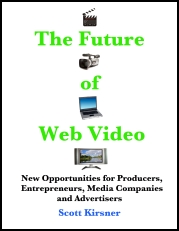
This one has been talked about enough online that I don’t need to add much more. Any way you look at it, however, it’s one of the most important media stories of 2006, with huge implications (still being sorted out) for distribution, copyright, revenue models for new media, etc. My hopes for 2007 – that independent filmmakers realize their kinship with the supposed amateurs of UGC, especially in regards to reaching audiences. This is about participatory culture and your audience finding your content more easily, not just finding videos of a frat boy falling down the stairs. You can use it to get people interested in your work, promote films you are trying to raise money for (advanced trailers) and to find your audience before your film is completed. Gootube is, of course, just one part of the story, but every filmmaker should be thinking about how to use online video to their advantage.
Resolution suggestion: Post teasers or trailers for all of your films online for free – even better, put a Creative Commons license on them, and read the book about your opportunities by Scott Kirsner.
2. Sundance Channel opens a Screening Room in Second Life
I’ve been suggesting for a long time that filmmakers need to get a presence in Second Life, and I wasn’t the only one. Recently, Sundance Channel announced they will launch a Second Life screening room and will premiere Four Eyed Monsters online in January of 2007. Second Life is a growing phenomenon, and people are making real money there. More importantly to filmmakers – it’s another place to find an audience for your work.
Resolution suggestion: I’m willing to bet that some media artists can make something more creative than some suits at Sundance Channel (okay, I know many people there who don’t wear suits), so get online, create an avatar and corner the market for cool visuals in Second Life.
1. Net Neutrality
Unfortunately, much of the above-mentioned promise for indies is threatened by the possible end of the internet as we know it. That’s what net neutrality means – saving the internet. I could go on and on about this, but many people have made great videos about it, like this one:

Resolution Suggestion: Educate yourself on Net Neutrality, get active in the debate and stop big media from ruining our possible future(s) online.
And Happy New Year!
Monday, December 18, 2006
More on net freedom
Great new video from the Save the Internet folks.
click on their site to take action.
click on their site to take action.
Wednesday, December 13, 2006
Big Brother FIND and piracy
I got an email yesterday from FIND about how I could watch screeners of the Spirit Award nominees through Netflix. Great, I thought, and saved it to follow-up on later. Then I got this draconian email from them (see below) making extra sure that I know not to pirate any of these DVDs. My main beef is with the erroneous claim: "As you are aware, piracy is a threat to the entire industry."
Oh really? I guess that FIND and IFP are now in bed a little too often with the MPAA if they are buying this garbage. The MPAA (and Netflix, etc) are trying to protect a certain business model, but its more about making sure they control distribution than it is about protecting any indie filmmakers rights. Several serious studies have shown that the statistical effect of illegal downloading on the industry is....a lot, a little...actually, nil. The one linked here is just one of many regarding the music industry - as Harvard's website puts it: "Professor Felix Oberholzer-Gee and co-author Koleman Strumpf floored the disbelieving music industry with their findings that illegal music downloads don’t hurt CD sales. Oberholzer discusses what the industry should do next." You can read the whole article, but what he suggests is that online trading actually helps push sales, and that the industry should develop new models.
I won't go on and on, like most of my posts, but I do suggest that film people read Oberholzer-Gee's study and think about what it means for independent film instead of just echoing the MPAA's BS. In fact, a long time ago, we would have expected film orgs like these to do it for us, and help us think about new possibilities afforded by new technologies instead of pushing for old, tired ones. As I've heard someone else say - If these filmmakers haven't gotten distribution or are no longer screening in theatres, then they have bigger worries than piracy - try obscurity.
In all fairness to FIND, they are probably just protecting their asses, but the letter is a bit too much:
Oh really? I guess that FIND and IFP are now in bed a little too often with the MPAA if they are buying this garbage. The MPAA (and Netflix, etc) are trying to protect a certain business model, but its more about making sure they control distribution than it is about protecting any indie filmmakers rights. Several serious studies have shown that the statistical effect of illegal downloading on the industry is....a lot, a little...actually, nil. The one linked here is just one of many regarding the music industry - as Harvard's website puts it: "Professor Felix Oberholzer-Gee and co-author Koleman Strumpf floored the disbelieving music industry with their findings that illegal music downloads don’t hurt CD sales. Oberholzer discusses what the industry should do next." You can read the whole article, but what he suggests is that online trading actually helps push sales, and that the industry should develop new models.
I won't go on and on, like most of my posts, but I do suggest that film people read Oberholzer-Gee's study and think about what it means for independent film instead of just echoing the MPAA's BS. In fact, a long time ago, we would have expected film orgs like these to do it for us, and help us think about new possibilities afforded by new technologies instead of pushing for old, tired ones. As I've heard someone else say - If these filmmakers haven't gotten distribution or are no longer screening in theatres, then they have bigger worries than piracy - try obscurity.
In all fairness to FIND, they are probably just protecting their asses, but the letter is a bit too much:
Dear Film Independent and IFP members:
The Spirit Awards and Netflix are pleased to be able to send you DVDs of the 2007 Spirit Award nominated films. (By now, you should have received the email from Netflix with your special offer code.) Please read this letter carefully—it contains important information about your screeners.
As you are aware, piracy is a threat to the entire industry. Netflix and the Spirit Awards have special permission to provide screener copies of nominated films for your personal viewing. Many of these DVDs are individually coded with invisible, unique watermarks that identify the screener and any copies of the screener. If any unauthorized copies (including internet uploads) of the film are traced back to your screener, you risk civil and criminal penalties. We ask you to be especially careful while the screener is in your possession, and do not circulate, transfer, distribute, loan, sell, reproduce, or give the screener to anyone else.
This special site created by Netflix solely for the Spirit Awards voters is a privilege for members that is invaluable to the nominees and to the voting process. Many of the nominated films have not had distribution or are no longer screening in theaters. The Neflix site ensures that these films can be seen by our voting members. Any abuse of this privilege may result in criminal penalties against you and the discontinuation of this program.
Thank you in advance for helping us all protect the rights of filmmakers in our fight against piracy.
Second Life Screening Room
The Sundance Channel announced yesterday that they will open a screening room in Second Life: Studio 4A. The studio will open with the Second Life premiere of Four Eyed Monsters, followed by a live Q&A session with film creators Arin Crumley and Susan Buice plus an after party.
I've been wondering when someone (that I know) would make such a move on Second Life. While many web-readers may consider this old news, I learned this weekend just how few filmmakers are even thinking about this right now. We were hosting a retreat for 15 filmmakers in Los Angeles, and I gave a presentation on using the web for marketing through the web and forming communities for independent films. I used Four Eyed Monsters as an example of people doing a great job, and then showed Second Life and suggested to the attendees that they put down a footprint there, and think of how it could build community for their films. Only one attendee had even heard of Second Life, and only two had heard of Four Eyed Monsters. This isn't to say they were behind the times, or that I am up to speed with it, but does show that the field is changing rapidly enough for many filmmakers that what some people take for granted is news to many others.
Sundance Channel is a corporate entity, and the Four Eyed Monsters gang are pretty savvy, so it's no surprise they had the resources and the web know-how to pull this off quicker than many others. At the recent National Black Programming Consortium conference, many black filmmakers discovered and discussed Second Life and its potential for building an audience for their films. It's becoming a great place for filmmakers to find audiences for their films. We'll see a lot more of this soon.
I've been wondering when someone (that I know) would make such a move on Second Life. While many web-readers may consider this old news, I learned this weekend just how few filmmakers are even thinking about this right now. We were hosting a retreat for 15 filmmakers in Los Angeles, and I gave a presentation on using the web for marketing through the web and forming communities for independent films. I used Four Eyed Monsters as an example of people doing a great job, and then showed Second Life and suggested to the attendees that they put down a footprint there, and think of how it could build community for their films. Only one attendee had even heard of Second Life, and only two had heard of Four Eyed Monsters. This isn't to say they were behind the times, or that I am up to speed with it, but does show that the field is changing rapidly enough for many filmmakers that what some people take for granted is news to many others.
Sundance Channel is a corporate entity, and the Four Eyed Monsters gang are pretty savvy, so it's no surprise they had the resources and the web know-how to pull this off quicker than many others. At the recent National Black Programming Consortium conference, many black filmmakers discovered and discussed Second Life and its potential for building an audience for their films. It's becoming a great place for filmmakers to find audiences for their films. We'll see a lot more of this soon.
Tuesday, December 12, 2006
Re:Sources Blog
My day job - the one that keeps getting in the way of my writing on this blog - is running Renew Media (formerly NVR). We've been going through a lot of change in the last six months, and part of this change is the launch of our new blog - Re:Sources. The blog arises directly from the feeling that in this post-AIVF era, someone needed to fill the gaps left behind, such as advocacy, in-depth information on creativity, distribution, policy, etc. It's a small step, but one which we hope grows into a much bigger source for filmmakers.
The blog just launched, hosted and edited by Agnes Varnum, who also has her own fine blog. She'll be making regular posts, as well as inviting guest bloggers for certain topics. This week, for example, Parul Desai of Media Access Project posted on why net neutrality matters to filmmakers.
The blog just launched, hosted and edited by Agnes Varnum, who also has her own fine blog. She'll be making regular posts, as well as inviting guest bloggers for certain topics. This week, for example, Parul Desai of Media Access Project posted on why net neutrality matters to filmmakers.
Thursday, November 02, 2006
Creative Commons and New Models of Funding
I've always been a big fan of Creative Commons, and after watching their new fundraising/explanatory video -

I am an even bigger fan. Most people probably already know this, but just in case - because they hosted the video on Revver with an ad at the end, they have the potential to earn money whenever it is watched. If someone watches the clip all the way to the end, Creative Commons will get a split of the advertising revenues. How it all works is here.
The video itself is quite creative, much more interesting than most fundraising pitches that I've received from nonprofits this year. I'd much rather watch an animation about the relationship between the White Stripes and Creative Commons, than read a boring appeal for my year-end donations. I'm even more impressed that CC head-honcho and (much more popular) fellow blogger Larry Lessig has agreed to personally write a thank you to every donor. Not a form letter either - doubt you'll get that much from many other nonprofits. Nor will you see as much "impact" from them either - and I say this as someone who runs a nonprofit. Not many of us have had the success, the impact on policy (or anything else for that matter) as Creative Commons has had in just a few years. Kudos.
Importance to Filmmakers:
But this campaign is even more important to me for what it suggests about fundraising for others, not just nonprofits. Filmmakers can take a tip from the CC folks and apply this kind of fundraising to their film projects. Instead of maxing out your credit card, perhaps you should make a cool viral video, post it on Revver and similar sites, and use the money to make the feature. You can even link them back to you to donate more, watch longer versions, etc. While you may not make tons of money, it's a lot more inventive than most strategies I see the majority of us trying to use to raise funds for our films, projects, etc.
I am an even bigger fan. Most people probably already know this, but just in case - because they hosted the video on Revver with an ad at the end, they have the potential to earn money whenever it is watched. If someone watches the clip all the way to the end, Creative Commons will get a split of the advertising revenues. How it all works is here.
The video itself is quite creative, much more interesting than most fundraising pitches that I've received from nonprofits this year. I'd much rather watch an animation about the relationship between the White Stripes and Creative Commons, than read a boring appeal for my year-end donations. I'm even more impressed that CC head-honcho and (much more popular) fellow blogger Larry Lessig has agreed to personally write a thank you to every donor. Not a form letter either - doubt you'll get that much from many other nonprofits. Nor will you see as much "impact" from them either - and I say this as someone who runs a nonprofit. Not many of us have had the success, the impact on policy (or anything else for that matter) as Creative Commons has had in just a few years. Kudos.
Importance to Filmmakers:
But this campaign is even more important to me for what it suggests about fundraising for others, not just nonprofits. Filmmakers can take a tip from the CC folks and apply this kind of fundraising to their film projects. Instead of maxing out your credit card, perhaps you should make a cool viral video, post it on Revver and similar sites, and use the money to make the feature. You can even link them back to you to donate more, watch longer versions, etc. While you may not make tons of money, it's a lot more inventive than most strategies I see the majority of us trying to use to raise funds for our films, projects, etc.
Tuesday, October 24, 2006
Viva Les Amis

My good friend Nancy Higgins recently screened her film Viva Les Amis as part of a showcase put together by my other friends at SXSW. The film is a great look at something that seems to happen everywhere - the replacing of a great cafe by a Starbucks. Well, it's not that simple. Les Amis was a cafe in Austin, Texas that was the quinessential college town cafe - run by quirky characters, worked at by drunks serving cheap food to other drunks and providing a place for slackers, punks and probably some students to hang out.

And it was slackers - in fact, Linklater's Slacker featured the cafe prominently. As the town got less weird, contrary to the current shirts proclaiming to "Keep Austin Weird," the cafe eventually closed down. High rents being a major part of the problem. Today, a Starbucks sits on the site.
No, Starbucks didn't force them out, but like so many other places, they benefitted from the changing demographics of the town. What makes this film great is that Nancy doesn't just play to the stereotype of the evils of gentrification, changing populations and green logos. She explores what the cafe meant to residents, but she also takes time to get to know the new employees of Starbucks. They are much more sober, but also have better health care, than the workers from Les Amis. She also fashions a film that becomes interesting to others than Austinites or Slacker fans. The film is about the dying of a culture, the changes that inevitably face any town that starts to grow and serves as a testament to the importance of the smaller things in life. It's great regional cinema - little films that say big things by focusing on something seemingly insignificant.
The film was recently programmed in Austin at the Alamo, and in Orlando at the Global Peace Film Festival. You can purchase the DVD, or just watch the clips online, but either way - you should check out this film.


Monday, October 09, 2006
YouTube Googlized
TechCrunch reports that the rumored sale of YouTube to Google is complete - in an all stock deal worth 1.65 Million. While many people, like Mark Cuban, wonder whether YouTube is worth such a price, you have to believe that Google spent millions in legal fees just contemplating whether this deal would land them in court and - if so - whether they could win any lawsuits. When Google announced the Google Book Project, the Author's Guild and others were quick to sue. My old friend from Atlanta, Joe Beck, is defending that case, and I'm willing to bet he'll win - he won for the Wind Done Gone, and in some ways that may have been more difficult. I'm sure that many a distributor will sue Google - its what you do when you are dying and scared - but I don't think Google scares easily.
It may be too much to dream, but I hope that the content industries start to wake up and realize that everyone will benefit from some changes to the rights-control-regime. Some money is better than no money, and could possibly be mo' money. I don't believe that advertising alone can support all video, we've seen how that works with TV - not everything gets supported, so there are definite tiers. But we also learned that people will pay for good content (HBO), and we've even seen that people will pay for what they can get for free with video (through sales of TV shows). While YouTube will probably always have illegally posted material, it also shows a demand - for content that's hard to find, for content made outside the system, etc. I bet Google could figure out a variation of the ideas proposed by Terry Fisher in Promises to Keep. Perhaps some combination of free, taxes or license fees for certain copyrights and fee-based video.
More thoughts on this soon, but this will be one of the more interesting business developments for film/video in years. Maybe this will get me posting more often than the once a month average I've had this summer.
It may be too much to dream, but I hope that the content industries start to wake up and realize that everyone will benefit from some changes to the rights-control-regime. Some money is better than no money, and could possibly be mo' money. I don't believe that advertising alone can support all video, we've seen how that works with TV - not everything gets supported, so there are definite tiers. But we also learned that people will pay for good content (HBO), and we've even seen that people will pay for what they can get for free with video (through sales of TV shows). While YouTube will probably always have illegally posted material, it also shows a demand - for content that's hard to find, for content made outside the system, etc. I bet Google could figure out a variation of the ideas proposed by Terry Fisher in Promises to Keep. Perhaps some combination of free, taxes or license fees for certain copyrights and fee-based video.
More thoughts on this soon, but this will be one of the more interesting business developments for film/video in years. Maybe this will get me posting more often than the once a month average I've had this summer.
Friday, September 01, 2006
Day of the Longtail Video
Day of the Longtail
Great video on the rise of participatory, or disintermediated, or whatever you want to call it - media and the fall of corporate media. I don't think it will actually happen this way, but great video nonetheless. We've definitely seen that people want their stuff when they want it, however they want it, whenever they want it and on whatever device they want it on. And we'll continue to see more content posted by the people - i hate the term UGC, but we don't have a better one yet - and a lot of the other things this video implies will keep occuring.
Unfortunately, every new technology has brought about utopian visions of the democratization of media - the printing press, ham radio, public television, the phonograph, the telephone, the list is endless. And each time, the range of possibilities has been narrowed immensely by corporate interests, and the regulatory bodies which serve their interests.
What we are seeing today - the long tail, YouTube's success, etc - was all easily envisioned back in the early 90s (maybe earlier), but we could also see then that corporations would take back control. And it has really already occured. We'll have a mix of both, but you would be dead wrong to think that Fox, Google, and other Hollywood companies won't still rule the media landscape.
Great video on the rise of participatory, or disintermediated, or whatever you want to call it - media and the fall of corporate media. I don't think it will actually happen this way, but great video nonetheless. We've definitely seen that people want their stuff when they want it, however they want it, whenever they want it and on whatever device they want it on. And we'll continue to see more content posted by the people - i hate the term UGC, but we don't have a better one yet - and a lot of the other things this video implies will keep occuring.
Unfortunately, every new technology has brought about utopian visions of the democratization of media - the printing press, ham radio, public television, the phonograph, the telephone, the list is endless. And each time, the range of possibilities has been narrowed immensely by corporate interests, and the regulatory bodies which serve their interests.
What we are seeing today - the long tail, YouTube's success, etc - was all easily envisioned back in the early 90s (maybe earlier), but we could also see then that corporations would take back control. And it has really already occured. We'll have a mix of both, but you would be dead wrong to think that Fox, Google, and other Hollywood companies won't still rule the media landscape.
Subscribe to:
Posts (Atom)