This is part seven in an ongoing series of posts on 7 Trends for the Future of the Arts. Originally published (and partially reprinted here with permission of the publisher) in the book: 20 Under 40: Reinventing the Arts and Arts Education for the 21st Century. I'm presenting selections from each trend, and you can follow the whole post series from here. If you are interested in these arguments, check out and think about purchasing the book here.
Trend 6: In a world of Free, the Future Lies in Find
In a digital world, a copy is just zeros and ones and thus—copies are free. This makes piracy of content much easier, but it also allows for the legal dissemination of content. Many companies are finding that they can use free as one aspect of their business model, often through advertising and sponsorship support or through the use of free content to attract people to pay for an upgraded “freemium” version.
It is important to note that this does not mean that free itself is a business model—that wouldn’t be sustainable, but rather that free access can be one part of a multi-tiered business strategy. Raise enough sponsorship and it could be mutually beneficial to you, your audience, and Target to make museum entrance free one night a week (which is not a novel concept).
Showing posts with label nonprofit. Show all posts
Showing posts with label nonprofit. Show all posts
Wednesday, March 30, 2011


Tuesday, March 29, 2011
Communal Conversation trumps Marketing: Trend 5/7 Future of Arts
This is part six in an ongoing series of posts on 7 Trends for the Future of the Arts. Originally published (and partially reprinted here with permission of the publisher) in the book: 20 Under 40: Reinventing the Arts and Arts Education for the 21st Century. I'm presenting selections from each trend, and you can follow the whole post series from here. If you are interested in these arguments, check out and think about purchasing the book here.
Trend 5: Communal Conversation trumps Marketing
 photo © 2011 jeff hubbard | more info (via: Wylio)When people join a social network, they do so for a variety of reasons including connecting with colleagues, sharing information, or possibly to find friendship, romance, or work. If you glance at most arts organizations’ websites, however, it appears that the administrators think social networking is just about marketing. Themselves. Constantly. If an organization is event-based, one usually finds a flurry of postings just before and during the events it offers, but rarely afterwards—unless it’s a tweet saying “hey, thanks for attending, see you next year.” This couldn’t be further from what audiences want, which is an ongoing dialogue and real sense of connection.
Arts organizations must participate in the building of online communities in a natural way or they will become, as many already have, just so much more noise in the Internet social sphere. This isn’t easy for arts organizations, or for most artists and other people, because real dialogue is hard. In fact, this is precisely the area where one often learns that one’s real queasiness around social media isn’t technical—almost anyone of any age group can learn how to use social networks. What’s hard is conversation, whether that’s in the lobby or online. The entire architecture of most museums, theaters, and arts organizations seems intended to minimize the chance that a staff member could engage in even brief conversation with the public. The architecture of the Internet, however, requires true, engaged conversation.
Until arts organizations realize they must actually participate in a dialogue with their community, they can’t create a proper presence online. While that dialogue will necessarily be different from one institution to another, reflecting different ideas of what constitutes dialogue, it must be genuine, ongoing, and it must have some compelling voice—be it from everyone on staff/commission or just the artistic director or performers. Arts organizations should also begin thinking about how this will evolve over time—likely becoming more participatory, more enriching, and more argumentative at the same time, and likely leading to entirely new art forms which could be co-created by those organizations who take the lead.
Next Up: The Future Lies in Find
Trend 5: Communal Conversation trumps Marketing
photo © 2011 jeff hubbard | more info (via: Wylio)When people join a social network, they do so for a variety of reasons including connecting with colleagues, sharing information, or possibly to find friendship, romance, or work. If you glance at most arts organizations’ websites, however, it appears that the administrators think social networking is just about marketing. Themselves. Constantly. If an organization is event-based, one usually finds a flurry of postings just before and during the events it offers, but rarely afterwards—unless it’s a tweet saying “hey, thanks for attending, see you next year.” This couldn’t be further from what audiences want, which is an ongoing dialogue and real sense of connection.Arts organizations must participate in the building of online communities in a natural way or they will become, as many already have, just so much more noise in the Internet social sphere. This isn’t easy for arts organizations, or for most artists and other people, because real dialogue is hard. In fact, this is precisely the area where one often learns that one’s real queasiness around social media isn’t technical—almost anyone of any age group can learn how to use social networks. What’s hard is conversation, whether that’s in the lobby or online. The entire architecture of most museums, theaters, and arts organizations seems intended to minimize the chance that a staff member could engage in even brief conversation with the public. The architecture of the Internet, however, requires true, engaged conversation.
Until arts organizations realize they must actually participate in a dialogue with their community, they can’t create a proper presence online. While that dialogue will necessarily be different from one institution to another, reflecting different ideas of what constitutes dialogue, it must be genuine, ongoing, and it must have some compelling voice—be it from everyone on staff/commission or just the artistic director or performers. Arts organizations should also begin thinking about how this will evolve over time—likely becoming more participatory, more enriching, and more argumentative at the same time, and likely leading to entirely new art forms which could be co-created by those organizations who take the lead.
Next Up: The Future Lies in Find
Monday, March 28, 2011
Participatory Culture: Trend 4 of 7 for the Future of the Arts
This is part five in an ongoing series of posts on 7 Trends for the Future of the Arts. Originally published (and partially reprinted here with permission of the publisher) in the book: 20 Under 40: Reinventing the Arts and Arts Education for the 21st Century. I'm presenting selections from each trend, and you can follow the whole post series from here. If you are interested in these arguments, check out and think about purchasing the book here.
Trend 4: Participatory Culture
This sense of disintermediation has expanded into what is called participatory culture. Audiences can now easily participate actively in the art they consume, and expect to be able to do so. This is an historic return to the way art used to be practiced—by and for all. Ancient cultures valued communal art making and practice, with the arts integrated into community activity.
For too long, however, art has been placed on a kind of altar—to become a painter, a musician, a dancer or a filmmaker one had to learn “the rules” and follow the canon. Sure, punk rock existed, but to make “fine art” music, such as classical music, one had to learn an almost secret language. One had to take dance lessons, learn ballet, and compete. One had to go to film school and spend a lot of money on equipment. Art was no longer something to be produced by everyone, but something that one had to aspire to learn perfectly. And because it was hard, art became something that was largely consumed.
From today’s perspective one can see that the one-way street of art consumption was an historic aberration, and one society’s good to toss. Audiences no longer want to just consume their art—they want to be involved, to engage in the conversation around art and creativity and perhaps participate in its production. Technology facilitates the human need to connect, share, and participate—and this is great news for the arts.
Through digital technology and sharing culture, legions of people now have access to entire recording studios for free, cheap cameras, and programs to teach them any instrument imaginable. These digital consumers don’t think of themselves as amateurs, but as creative beings, contributing to culture. Each of these individuals now feel a greater connection to the arts and will likely explore more within their interests. In film, the YouTube mash-up creator may begin to seek out classic cinema, or avant-garde works because they now understand it better and feel a connection. They are participating with the arts, searching for a dialogue, and it is incumbent upon existing cultural institutions to tap into this energy and change how it operates to allow for a more participatory arts experience.
Organizations must address this shift in their programming and outreach and even in how they create and curate their shows. They will need to let the audience become more than just spectators. This doesn’t mean that all arts experiences must be participatory, as not all audiences desire the same levels of interaction, but rather that greater levels of interaction should be possible for those who increasingly expect such participation. While some arts organizations are beginning to experiment with programming that involves the audience, or that at least makes the experience more participatory, such as bringing the audience into rehearsals or having them add to a musical performance with their cellphones, the field as a whole should make every effort to make their experiences more participatory.
The value in some of the most successful web businesses today, companies like Amazon, Craigslist, Google, and Wikipedia, derives from the participatory contributions of their users. Users of Amazon gain insight into prospective purchases from the reviews left by other consumers. This value accrues to Amazon, it becomes a more trust-worthy site, but comes from the participation of its users. Facebook, one of the fastest growing companies online today, builds almost all of its value from the participatory activities of its users.
This new level of interactivity, sometimes referred to as web 2.0 culture, is growing and becoming more prevalent in the interactions of most people online. Arts organizations would do well to follow the lead of such companies and incorporate more participation into their organizations, perhaps gaining more value by encouraging dialogue and audience contribution than they can offer on their own.
Up next: Trend 5: Communal Conversation Trumps Marketing.
Monday, March 21, 2011
The Rise of With-Profit Endeavors: Trend 2 of 7 for the Future of the Arts

This is part three in an ongoing series of posts on 7 Trends for the Future of the Arts. Originally published (and partially reprinted here with permission of the publisher) in the book: 20 Under 40: Reinventing the Arts and Arts Education for the 21st Century. I'm presenting selections from each trend, and you can follow the whole post series from here. If you are interested in these arguments, check out and think about purchasing the book here.
Trend 2: The Rise of For Profit and With Profit Endeavors:
Today’s combined economic and business practice turmoil also creates a perfect environment for strategic outside players to unseat established organizations. It’s not that the established players in the music industry, for example, didn’t see that change was coming due to digital technology. The changes brought about by digital technology are so disruptive precisely because in order to embrace the new paradigm, one must undercut an existing, often very profitable business model.
Likewise, it is difficult for established arts organizations to embrace change that might undercut their current business models, but this leaves room for others to enter the sector. One could argue that such a shift is already occurring today. For example, the amount of promotion, fundraising, sharing, career-building, and market-creation of such new online arts discovery services such as YouTube, Flickr, Spotify, Pandora, KickStarter and Etsy alone, all of which started very small and outside the nonprofit arts, have likely had more impact on the arts than any six nonprofit cultural organizations can claim in the last five years.
It isn’t impossible to imagine such services being created, much differently, in the nonprofit arts sector. For example, if a film festival had thought broadly about the combination of cheap access to the means of production and distribution and the growing forces of participation and disintermediation, it could have created YouTube. The site might look somewhat different, offer more curatorial sidebars and probably have a less catchy name, but it arguably should have been possible.
There was a time in the arts world when small arts organizations contributed to this sense of innovation. Organizations such as Nexus Press in Atlanta served as incubators for cutting edge book artists regionally, and the Off-Off-Broadway theater scene acted much the same way, pushing the field forward, taking chances and launching many careers. Today, however, that sense of excitement and innovation is sorely lacking from the arts sector. Innovation, risk-taking, and flexibility have migrated back to the for-profit sector, and cool new ideas aren’t brought to fruition as nonprofits, but as Internet start-ups that capitalize on the access to funding and the risk-taking, free-for-all atmosphere of the new digital economy.
Similar innovations could be developed in the nonprofit arts sector today, but due to the risk averse, highly structured funding environment that has evolved in the nonprofit arts sector, it is more likely that several organizations will get funding from a Foundation to think about and strategically plan for the future of their field. While they workshop their ideas for the future, two people in a garage will probably out-think them in two weeks and launch the next big thing that further disrupts the ecology of the arts.
Building a culture of entrepreneurship in the sector will require fresh thinking and innovative approaches to funding and support that aren’t readily apparent. Few nonprofits have unrestricted income with which to explore new, especially risky, programs and fewer still have enough general operating support to hire and pay the usually higher salary expectations of the skilled workers to build such new ideas. Most foundations won’t fund a new nonprofit until it has been around for three years, require grant proposals that take longer to write than most business plans and they often discourage any risk-taking, preferring “tried and true” programs.
In contrast, a sense of experimentation often, and importantly, without true strategic planning but rather a sense of “let’s just try it because it’s cool” is what works for most innovative companies and is what’s missing (and actively discouraged) from within the nonprofit arts. Ironically, this is what many arts organizations expect from their artists—experimentation and risk—and artists seem to flourish given this freedom. Unless this sense of exploration is recaptured, most innovation will likely be led by the for-profit sector.
If neither non- nor for-profit models seem to work perfectly, perhaps the arts sector should explore new ventures at the junction of the two, combining the assets of the for-profit and nonprofit sectors to realize both financial and social profits. This new space, perhaps called with-profit, as in social goals “with profit potential,” promises a rich field for the arts sector to explore. Such experiments could be undertaken by existing or new nonprofits on their own, in partnerships with existing for-profit organizations, or by creating new for-profit subsidiaries and/or affiliates of nonprofit arts companies. With-profit endeavors could use nonprofit funding to accomplish that which the market won’t support, while for-profits would step in to capitalize on those items that have commercial appeal. For example, perhaps nonprofit arts funding could be used to seed the development of 12 new plays, with a commercial arm (or separate entity) ready to step in and take the one project with the most promise to market. Of course, this would need to include some remuneration to the nonprofit and would require some clever legal thinking, but it could be applied to any number of art forms.
A with-profit partnership would allow a nonprofit to continue to serve its underlying mission, and maintain its tax status, while providing a vehicle for exploration of profit-making activities. For-profit partners (or divisions) could bring in investments, explore more robust marketing and program development with other for-profit companies and maintain an eye on the “double bottom line” of profits and mission. Such alliances are not uncommon in the health and science sectors and should be considered by arts organizations as well.
Next Up: Trend 3: Disintermediation, The Audience as Curator.

Friday, March 18, 2011
Downsized and Merged - Trend 1 of 7 for the Future of the Arts
This is part two in an ongoing series of posts on 7 Trends for the Future of the Arts. Originally published (and partially reprinted here with permission of the publisher) in the book: 20 Under 40: Reinventing the Arts and Arts Education for the 21st Century. I'm presenting selections from each trend, and you can follow the whole post series from here. If you are interested in these arguments, check out and think about purchasing the book here.
Trend One: Downsized and Merged
The economy continues to bring bad news to the arts sector, but the real news is that is isn’t going to get better. The budget battles we see now in the US are only just beginning (and are spreading globally, but that’s another conversation). Already, state governments, and the IRS, in search of increased revenues are contemplating vast changes to the benefits of nonprofit status, and many foundations have had to curb support for such supposedly “non-essential” activities as arts and culture due to declines in their endowments. While many may agree that such cuts wouldn’t be necessary if it weren’t for specific policies being pushed to shrink government (such as tax cuts to the wealthiest few), the fact remains that such cuts are likely to continue.
In addition, digital technology fundamentally changes business practices, and is downsizing once large industries rapidly. Craigslist upended the entire business model of the newspaper industry, effectively downsizing an entire $1 billion sector to one $100-million company. We are seeing this now in other cultural industries, and we’re also seeing more companies avoiding state taxes by being entirely web based. The resultant decline in tax revenues from these shrinking sectors will greatly limit the ability of government to maintain minimum service levels, much less support the arts (regardless of whether this is the correct argument, it is what will be used), and foundations will look to pick up the slack from government – also at the expense of the arts.
As government and foundation revenue shrinks, arts institutions will increasingly look to earned income, but fundamental shifts in consumer behavior make this a challenging arena as well. Consumers have less overall spending power, and more options for their cultural and entertainment experiences. As consumers increasingly find their content online, they expect to find yours there as well, watching your performance online instead of attending it live. While this itself can be a revenue stream, it is also one where consumers expectations are for free and/or cheaper access, meaning online profit margins will likely be lower than any reduction in overhead costs. As these stresses combine, the nonprofit arts sector will likely have to rethink business practices, and contend with radically different economics.
Unfortunately, it’s not a stretch to say the nonprofit arts sector looks like a field of zombies—undead, potentially harmful shells of their former selves, haunting the landscape, unable to live or to die. Quite simply, funders, board members, and leaders in the arts need to take a hard look at reality and make some painful decisions. More organizations need to merge to save costs, end duplicative services, and achieve greater impact. Many more organizations need to be shut down entirely, having either served their mission well or having long ago abandoned any real hope of having a meaningful impact. These conversations aren’t easy, but they need to be had on a field-wide level. Even those organizations that are healthy enough to survive will need to consider downsizing their costs and refocusing their energies as the dwindling support for the cultural sector is likely a permanent shift away from robust public, foundation, and individual financing of the arts.
A thinned-out and downsized nonprofit arts sector is probably inevitable and may actually bring greater good. Strategically downsized organizations will more readily make this transition and might create more sustainable arts businesses. Mergers are often thought of as drastic measures to cut expenses or end duplicative services, but they can also be planned for to better prepare organizations to face new economic and cultural realities, fill strategic gaps, and lead to new programming and greater services.
Of course, downsized organizations will only become stronger, remain competitive, and possibly lead change through rigorous planning. Yet, these conversations are being resisted at precisely the time they need to be had. I explore some ideas for such change in my chapter, and there’s a lively discussion online now, sparked by NEA Chairman Rocco Landesman's recent comments on "Supply and Demand" (that's #supplydemand) and I gave my thoughts here. Love to hear more of your thoughts on this in the comments below.
In my next installment, I’ll speak about the rise of both for-profit and what I call with-profit endeavors in the arts.
Wednesday, March 16, 2011
Inventing the Future of the Arts - 7 Key Trends

I recently contributed a chapter to the book: 20 Under 40: Reinventing the Arts and Arts Education for the 21st Century. For the next few days, I’ll be presenting excerpts from that chapter here, in hopes to get some more conversation started about these issues, and in the belief that if you like what you read here you might buy a copy of the entire book – or just recommend it to a friend. I’m editing each section down a fair bit, not so much to “force” anyone to buy the book, but because while this remains long, I felt some sections needed shortening to fit the blog format. Read on, send me your comments and please share!
INTRO
My fundamental argument in the chapter is that the disruptive changes we’ve seen as a result of digital technology will eventually affect all arts and cultural activities, not just those we’ve seen impacted thus far (print, music, film). Unfortunately, most arts organizations are being reactive and are trying to fit digital into their existing ways of operating, which mimics precisely those mistakes that led to crises in other industries. They must instead look strategically at these changes and make fundamental changes to their business practices in order to turn these challenges into opportunities.
While there are many challenges facing the arts, I argue that there are seven key trends brought about by digital technology that will arguably have the greatest impact on the arts sector:
- The future is “Downsized and Merged;”
- The rise of for-profit and with-profit endeavors;
- Disintermediation - the audience as curator;
- The rise of participatory culture;
- Communal conversation trumps marketing;
- In a world of free, the future will reside in find;
- The new, new media literacy is electracy
We’ll explore the first of these trends next (edited from tomorrow, as in: when I get to it), where I argue that the future of the arts is going to be "Downsized and Merged."
While most of the next few posts are geared for those of us working at/with arts organizations, I do think any artist can benefit from reading these posts and contributing their voice to the conversation, so please do so in the comments.
You can see all of the 20 Under 40 chapters here, and buy the book (or E-Book) here.

Wednesday, February 16, 2011
Save the NEA
It's that time again, when we get to play another round of "Culture Wars: Extreme Nincompoop, Edition X." That's right, you thought that we were done with the cretins who think the arts are a bunch of fluff and that they shouldn't be supported by tax payers money, but we're not. They were just napping, folks, and the culture war still rages.
I'm not going to explain why the arts matter, how little of our money goes to support the arts, how they finally have a rocking staff in place at the NEA or any of those things. I'm assuming my readers aren't dumb (try getting that respect from the regular media) and that you're up to speed on such matters, but perhaps have been so consumed keeping track of the revolutions going on in the Middle East via Al Jazeera English that you have missed the latest developments. That's the only reason I can think of for why we're not hearing more about this from the arts community. Hmmm, what's going on here.
Okay, anyway, here's the quick and dirty: Many State arts agencies have been recently cut - yes, entirely - in a few states and a few more are rumored to be following shortly. Now, the Republicans are threatening to eliminate the NEA entirely (and CPB) from the budget. Yes, it's true. You can read about it here and get active here (just don't expect a hip website or interesting campaign, mind you). I'm also linking some text Sundance sent out about it below.
You should care, you should get active, but I think we need to do more. I'm worried, however, that we can't or won't have much real impact, even if we keep their funding. I've been arguing that arts organizations need to prepare for this for quite some time, and I even wrote a chapter about it recently. I've suggested the field needs to make radical change, because such cuts aren't going to stop. I believe this strongly, yet I consistently get responses back from otherwise rational beings that I am supporting the Republican's arguments by calling attention to these problems and arguing we should change our business models. Good grief people - pointing out reality is not supporting their arguments, it is being practical. Part of that realism involves noticing things like the fact that when Obama came to office he appointed a big, gigantic brain trust of arts people to suggest policy changes. They recommended big things. Nothing happened. It means realizing that if Americans for the Arts only has an email campaign list of 50,000 people (thanks Leonard), we're in serious trouble. It means that everything we've done in terms of advocacy for the arts has largely been a waste of time.
We need more creative responses. Perhaps we need to put the artists in charge for once. Perhaps we need to recognize that not only do we need to rally and support the NEA, but that culture might just be the only thing that can pull us out of the continuing malaise in this country (you know, the one everyone but Wall Street is still in) and will definitely be the only thing remembered about this country when we're no longer relevant (I give that about 50 years, if it didn't pass 5 years ago....).
Yes, that's why the Republicans want to kill art - because it truly matters more than any of their bloviating nonsense. So, I'd really like to hear some good ideas for how to change the conversation. How to win this war. How to get a video about the need for the arts to go as viral as some kid biting his brother's finger. How to get a Kickstarter campaign started for a new, true Endowment for the Arts untouched by the grubby hands of either party.
That would be pretty cool.
In the meantime, listen to Keri Putnam of Sundance and do the following (from her email blast):
"
What you and I can and must do:
- Call your member of Congress NOW at 202-225-3121 and tell your representative that you oppose any and all amendments to cut NEA funding.
If you are uncertain as to who represents you in Congress, click here.
Remember! Congress is made up of ELECTED officials. They are there to represent us. - Share this email with your friends, family, neighbors, colleagues... everyone.
On behalf of the staff, alumni and Board of Trustees of Sundance Institute, and artists everywhere, thank you for taking action."
Monday, December 20, 2010
How not to crowd-fund
There's a lot of buzz out there about crowd-funding, and I'm a big fan of the practice. I think there's a lot of hype, and not everyone can raise funding for their project this way, but it's also more than just the funds received - it's just as much about your connection to your fans. When I've donated to a project, it's about more than the money. I feel a direct connection to the artist and know I am supporting their work. This is also true if I support a micro-lending program for an individual in need, a charity doing good work, etc. It feels good to know that while you may only be giving 10 bucks, you are giving it directly to someone who needs it (for survival or for art) and helping them accomplish something.
I often support such projects through Kickstarter. Kickstarter is a for-profit company. They take a small fee for their service - five percent, plus a small credit card processing fee added on by Amazon's payment service. This is pretty transparent, and it also seems fair and reasonable. I know Kickstarter gets a cut, but it is small and not dissimilar from what most nonprofits charge when they fiscally sponsor an artist, which can run as high as ten percent but is generally 5%. Take IFP for example. If you are fiscally sponsored by them, people can donate to you on and IFP takes a sliding scale fee - anywhere from 3% to 6%. Kickstarter works pretty well too, so I am fine with them charging for their service, even though they aren't a nonprofit. IndieGoGo is a similar site, and it charges 4% (which raises to 9% if you don't fund your project in its entirety), plus a 3% third party transaction fee.
That's why I am more than a bit perplexed that United States Artists (USA) is charging a 19% fee to those who donate to artists through their site. Wow. Really? Yes, really. That's 1% higher than what was reported in the NYT today, but it's what is quoted in their terms of use. There is no reason that any artist should participate in this scheme.
Now I have to give a little disclaimer before I continue. I have never been a fan of this organization. It's a long story, but when it launched I was one of a group of arts organizations that protested that instead of starting a new nonprofit to distribute grants to artists, the Ford Foundation (who started this) should have given grants to those organizations that were already supporting artists. Like the one I was running at the time (yes, some self-preservation was involved), but also like many other arts organizations. While I still believe this would have been a better path, I finally decided that even if the way it was being done was wrong, I would support the organization because artists were getting more money. I've recommended artists to them for support (it is a nomination process, not an open call) and I've been thrilled for those artists who receive their grants.
In fact, I recently read (in the Times again) that USA was launching a crowd-funding initiative, and I was very happy for them and the artists. Many artists reported that new donors were finding them, and they were getting more support for their projects. Some, while skeptical at first, were happy to report that donations had exceeded their requests. I planned to write up a blog post this week to highlight this great new initiative, as well as a proposal from Ian David Ross and Daniel Reed for a new way of crowd-funding philanthropy in the 20 Under 40 book that I've been plugging here. That post will have to come next, because I've now learned about the bad part of this initiative.
Look, as I said above, I have no problem with nonprofits taking a cut on donations to individual projects. This is fair. I would even support them adding a check box where I could add an extra gift to the nonprofit. Something like "help us support more artists like this, add an extra gift here." That approach was also mentioned in the Times story. I would even go so far as supporting a nonprofit that just asked for a donation to help support all of their work in support of artists and not single out an individual project (old fashioned donation style). I understand that USA has helped "curate" these artists, and for some people (not me) that might be a symbol of quality. I also see that some of them get matching funds from a donor, that's great, but it isn't worth taking 19% of my donation to the artist. Perhaps you should get matching funds for your organization so you don't have to take it from me!
The NYT story suggests that making a donation to these artists would otherwise be difficult. I'm sorry, but that's just not true. Any of them could sign up with Kickstarter, Indiegogo or any other service and accomplish the same thing. Sure, a nonprofit might be helping an artist get their stuff up online, and many artists aren't good at such tasks, so I can even support a small mark-up, but 19% is insane!
Not to mention....hidden. If the NYT hadn't reported that amount (they said 18%) most people wouldn't know. When you click to support an artist on the USA website, it mentions that you should look at the terms of service, but unless you do so (and they know 99% of people don't do so), you aren't told anywhere else about the 19% fee. There's another golden find in their TOS statement too:
You understand that your contribution is being made to United States Artists, that United States Artists has exclusive legal control over all donations and that United States Artists is under no obligation to use your donation to fund any Projects recommended by you for funding.
....
While United States Artists intends to take into account donor recommendations with regard to funding recommended Projects, United States Artists shall have exclusive control of your donation and is not obligated to use your donation to fund any particular Project.
Translation - we don't have to give your funds to who you select. We don't have to follow your intent. What, did the City of Philadelphia write this up? Okay, I am sure they will likely give my donation to the artist, and are likely saying this in case the artist breaks their contract, but in my view, that should mean I get a refund not that they keep the dough. (I have a few other problems with their terms (especially as it relates to privacy), but that's the norm these days with website, so I'll stick to this one quibble.)
This goes against the entire spirit of crowdfunding. It goes against the entire nature of what it means for artists to build a direct relationship with their donors. I have no idea if the artist gets my contact info, as perhaps I'd like to fund them again, directly, in the future. I'll likely get hit up by USA again if I make this donation, as they surely keep my email address. I also can't be sure that the artist will definitely get my donation either. But, I can be sure - if I read the NYT, this blog or the TOS - that my donation gets cut 19% if I make it through USA. Really. This is what's astounding - more of my money supports the artist if I make my donation through a for profit company than a nonprofit. Something is wrong here folks.
We need a better system for supporting artists. USA was supposed to be part of that answer. I'd be much more likely to support both them and the artists they have funded if more of my donation went to the artists directly. I'd support their system if the 14% mark-up over most fiscal sponsorship charges was plainly shown, or better yet, if it was optional. Heck, I might even donate more, if it was a choice. I don't like slamming any nonprofit for trying to raise money for artists, but this isn't the way it should be done. Unless something changes, I can't support this program and recommend that you don't either.
Monday, November 29, 2010
New thinking on the arts - 20 Under 40

We received our author's copies not long ago, and after a quick perusal (to be sure my chapter actually made it through), onto the shelf it went, behind a stack of other books I need to read. Then came the Great Flu of Thanksgiving...okay, maybe just a cold, but I was laid up this entire past weekend, and had more free time to watch movies and read books, and I decided to read the entire book.
I'm glad I did. There are some great chapters in here, with some pretty cool ideas. I'm not going to review the entire book here, but I can say that if you have any interest in the arts, arts participation, arts education and/or new ideas for the arts and arts education it is a great read. I liked many of the chapters and will likely be bringing up these ideas on this blog, and in my practice, in the coming months, but here's a quick shout out to a few that struck a chord, as a way to possibly stimulate your interest in the book:
1. David J. McGraw - writing on The Epoch Model - the idea being that we should make room for organizations with an "expiration date" instead of thinking every new nonprofit needs to last forever. Oh, how I wish this would become prevalent!
2. Ian David Moss and Daniel Reid - unveiling a fabulous idea for crowd-sourcing philanthropy. This one is gold. Their idea goes well beyond the simple crowd-funding models we have now (such as Kickstarter and Indiegogo) and envisions an entirely new system for philanthropy....and they even write the chapter as a proposal for a foundation to adopt their idea. I'm not sure if anyone will, but I've already used this chapter as fodder for some new ideas in the film world. Ian has a great blog post about the idea and this project here.
3. Kylie Peppler - on how learning to "creatively code" is fundamental to the "future of arts education in a digital world." Right on. This one really spoke to me, as it touches on ideas of what it means to be electrate (literate in an electronic world), and because the author makes it clear that coding can be done by anyone - and should be done by everyone - because it is "essential to communica(tion) in a digital age."
4. Bridget Matros of the Boston Children's Museum closes the book's submissions with an amazing chapter about the need for new thinking about teaching arts to very young kids (under 5) if we are to build a more creative society. Matros uses real examples from her time in the Museum to show how adult's fear of arts/creativity impacts youth - and sets their thinking into rigid boundaries that are the opposite of art. It reminded me of an old quote from David Lynch, about how his parents wouldn't give him a coloring book because they didn't want him to feel bounded by the lines on the page - he needed more freedom to create. Matros says much the same, and her anecdotes about frustrated parents limiting their kids creativity to "paint a flower for Mommy" (because of their own fears and preconceptions about art) are poignant. Reading her chapter, it becomes clear that if we want to change public perceptions on the arts (and arts education, importance, funding, etc.) we need to focus on how we teach art to 3 year old kids!
Readers interested in seeing brief blurbs on every chapter can find them here. Fellow authors not mentioned here, don't despair - I learned something from every chapter, but feel the ones mentioned here resonate most with what I write about on this blog, and I couldn't review every chapter here! I'll likely have more here soon on the other ideas in the book. Kudos also to editor Edward Clapp, for putting this all together!
You can also support a crowd-funding campaign for the book (a very DIY effort, worthy of support), and while I've already found the books on Amazon, buying it from the project website will support the effort (and I say this not expecting any revenue from this, just to support the idea of the project). There's an all day launch party in Boston on Dec 10th and one will be scheduled in NYC soon. I'd love to see a similar book just about film. I've suggested my own 20 under 40 in film, and would love your thoughts on this in the comments.

Wednesday, September 22, 2010
Ai Wei Wei: Never Sorry and Muse

Scholar, dissident, patriot, artist or activist— who is Ai Weiwei? This much is certain: since his co-design of the Bird’s Nest Stadium for the Beijing Olympics, Ai Weiwei has catapulted to the forefront of the international art landscape, generating almost as much discomfort for his antics as admiration for his courage.
Whether smashing millenia-old Han Dynasty urns, or confronting Chinese police over a beating he received for investigating the Sichuan earthquake deaths, or turning a Twitter-advertised dinner party into a political action event, Ai Weiwei remains fearlessly outspoken, despite considerable danger to himself. Willfully turning a blind eye to the very eye the Chinese government has relentlessly trained on him, he advocates for freedom of expression and access to information– principles all the more fragile and precious as China undergoes its remarkable internal transformation.
Ai Wei Wei was recently featured in an excellent New Yorker article, and I highly recommend you get to know his work. Actually, if you saw the Olympics, you already do - he was the co-designer of the Bird's Nest auditorium. This video ran with the article, and gives a good intro:
Ai Wei Wei will be attending the Gala, along with many other outstanding artists and art/film world folks. The tickets are expensive - it is a fundraiser after all, but they are tax deductible and benefit a great organization. Muse Film & Television is one of the only organizations dedicated to making films about art and artists. While this film has a "social issue" and technology bent to it, many of their films are less overtly political, but equally important. Muse is a producer of this film, and they have a great track record, so the film should be pretty incredible. The Gala will feature an auction of many great artworks, dinners, vacations and more. There will be an online auction at Charity Buzz, but I don't have that link yet. If you have time, join me at the Gala, and if not - follow the film from their website. Or, just follow Muse on Twitter - they send out some great news and info about art, artists and culture.
Monday, June 14, 2010
20under40

Now this might seem like a shameless plug, because it is, but I'm also plugging this because I think it would be a great project to duplicate in the film and media arts world. I once suggested 20 leaders under 40 in the film world, but I'd really love it if some reader volunteered to help put together a similar project for film. Perhaps an open call for ideas, maybe not a book but a film or robust online and video project...who knows, but it would be great to hear some of the good ideas out there, especially those coming from voices we don't often hear (which aren't always under 40...I know). If anyone is interested in taking this idea up, get in touch. In the meantime, check out the 20<40 site for updates on events, the book, other authors and what not.
Monday, June 07, 2010
ATL-PushPush Distrib/Fundraise 101

They also have innovative thinkers like PushPush Theater. Yes, I am biased as they paid me to consult and to speak, disclaimer enough? That said, I don't know of many other theater companies that are thinking about community and creativity like they are doing. They aren't just a theater company. Sure, lots of people open their doors to improv, to people showing film screenings, to training, to actors who might want to go from stage to screen. PushPush, however, is going further and thinking about how their projects can become multi-platform transmedia productions. This kinda started with a program they did called Dailies, which helped a group of filmmakers workshop a series of short film experimentations into what became Pop Film's The Signal.
Tuesday, May 11, 2010
My thoughts on 1 of Ted's 38 reasons indie film's failing
Ted Hope has a new post up at his truly interesting blog listing 38 ways the independent film industry is failing today. I would be depressed with just these 38 reasons, but I’m sad to report this is the second time he’s posted 38 reasons, as he had already posted 38 equally interesting things before. I’m sure I could post 24 more to get him to 100 total, but instead I’d like to add just a few thoughts on number 25 of his 38 failures, because I think it’s one of the biggest failures we face as an industry:
25. We know incredibly little about our audience or their behavior. We spend so much money making our films without really knowing who are audiences are, why they want our product, how to reach them, or how they behave, or how they are changing. Does any other industry think so late about their audience? Does any other industry do so little research into their audience? Shouldn't we all be sharing what info we have?
This one has always boggled my mind. I’ve written about it before, and will likely do so again, but I’m continually amazed at how little we think about and how little we know about our audience. Whenever I meet with filmmakers about their script or project, I ask them about their intended audience, and as you can guess, most don’t have much of an answer. Sometimes they’ll say something like “everyone who loves indie films” or perhaps they’ve progressed to “white males 25-34” or something. A few have films that have clear niche audiences - Nascar fans - great, or - Nascar fans who only watch at home, don’t tell their friends and drink fancy beer - even better, a true niche. Very few have built any fan base already, either for their films or themselves, which is mind-boggling in an era of Facebook, Twitter and plain-old email lists. I understand the whole “I’m an artist, not a marketer” thing, actually, but in this day and age, to not think about your audience in advance is not just poor business, it ignores the fundamental changes that have hit every business and every art form - that audiences are more participatory, so you can’t just try to engage them with a product and no conversation.
I could go on and on about this, but what drives me even crazier is how little we, as an industry, know about our audience(s). Excuse the artistes, but talk to almost anyone else in the business and you frankly won’t get a much savvier answer. Sure, many distributors have been doing this long enough to have some audience research and staff who know a bit about marketing (BTW, this is some, not all, distributors), but very few have done any real, in-depth research into our audiences and their behavior. Those that have done this tend to keep it private - it’s pretty valuable info to have when your competitors have barely thought about looking into it in the first place. As a field, we have very little to work with. How many festivals survey their audiences for real data? How many can break these results on a per-film basis? B-Side collected a fair amount of data on film-going habits, but their database is now part of another company (Slated), so do any of those fests have their portion of that data (I honestly don’t know)? Why aren’t film schools, business schools or all these nonprofits that supposedly represent us doing some data analysis? I have lots of questions like these, but I think you get the point - we need much better research into the audiences for indie films and for our individual films. I can think of a few quick, partial solutions to this problem -
- Filmmakers - collect data on your audiences, from everywhere you can, and share it with others. Anonymize it, of course, but share it whenever possible.
- Savvy computer geek film people - build open source platforms for the sharing of this data.
- Nonprofit service orgs - partner with researchers to study indie audiences. I suggest using these folks, but I’m sure with a grant you could study this with just about anyone - and share it with your members (a reason for them to join!).
- Festivals - survey your audiences and share this data with filmmakers. It will also help you when speaking to sponsors.
Tuesday, February 02, 2010
On the YouTube, Sundance Failure
 There's been a lot of noise out there about the YouTube rental program and it's experiment with some films from Sundance. Most of the posts seem to (almost gleefully) agree that the program was a failure - and with approximately $10,000 in net revenue, it's hard to disagree. So, I'll concede from the start that whatever this experiment was, it was a failure. I don't think it's something we can really make any judgements from, however, as it was almost not even an experiment. The story of this debacle really shines a light on the problems Sundance has always had with digital, and which YouTube seems to have with monetization in general, but I'm not sure it shines any light on indies, rental or the future of the business except that it might not be Sundance and YouTube figuring it out (even if they likely remain part of the answer).
First, calling this an experiment in day/date rentals is generous at best. Ok, they did get lots of press impressions, but in nearly every mainstream publication I read, the story was buried on about page 2 of the business section. Almost every story focused on the idea of rentals, the fact that it was in partnership with Sundance or some similar angle. There was almost no mention of the films, the merit of the films (as no PR person seemed to think that was something to pitch them on) or anything else that would make you want to see the films. Then we have the marketing...or should I say we didn't.
Midway through this experiment my Sundance condo-mates and I did our own experiment - how easy would it be to find and rent a film. So late at night (disclaimer, we'd been to a party or two, so this could be an influence) Lance Weiler, Scilla Andreen and I tried to find the films online.
For an hour. With no success.
Tuesday, January 19, 2010
10 ideas on the future of the arts (20<40)

Friday, January 15, 2010
My 20<40 leaders in Film
Well, that went over well....No one has suggested anyone for the twenty leaders under 40. Considering I made it clear that you could even nominate people over 40, I’m surprised. Perhaps no one cares, or perhaps as was suggested to me, people don’t want to diss anyone by not nominating them. One person suggested online that they couldn’t think of any real film leaders under 40. Before giving up on this experiment, here’s my list of 20 leaders in film under the age of 40. I’m not sure all of them are actually under 40, but they all look young. And these aren’t my only picks, actually, so if you aren’t on the list, don’t feel slighted. In picking my starter list, I tried to stay away from some of the usual suspects - i.e., if I speak on panels with you on a regular basis, or everyone refers to you as our savior daily, I left you off the list. The people below are leaders in the film world who I deeply respect and who I think will do at least one thing, if not more, to improve the indie film world in the next five years. Disagree? Don’t say so here. No need to denigrate anyone, but do feel free to add people you think I’ve missed. I’m sure there are lots more.
This list is in alpha order by last name:
This list is in alpha order by last name:
Thursday, December 31, 2009
10 Things I'm thinking about for Twenty10

1. Who will be the exciting new storytellers?
Who will we be talking about post Sun/Slamdance, Berlin, etc.? I'm always excited to discover new talent, and while there's always great new works by established folks, I can predict with confidence that there will be at least one new discovery this year. But I also predict that like the last couple of years, the new voices I discover won't come from a fest or even a proper film, but from mash-ups, remix, machinima and plain old viral video online. Can't wait.
2. OpenIndie.
What will it be? I donated to this thing and I still don't completely understand it. But, I have faith that the two folks behind it will make something cool that probably won't change the world (as they hope) but will likely change it just enough to matter.
3. Will fest launches work?
This is the year that many people think filmmakers will really start thinking of festivals as their path to finding an audience instead of finding a distributor. At least one filmmaker is using Sundance as their launch. I can't wait to see how many others do this and what degree of success they have.
Monday, December 21, 2009
Future of Film - Punk Rock or Classical Music?

A common refrain in the indie/arthouse film world these days is that the field needs to act more punk rock in how we think about audience engagement. It’s something I say often, and I’ve been reading/hearing people say it more often lately. The idea being that back in the day, punk bands (and to be technically accurate, this would be the more modern hardcore punk, or even garage bands, not the earlier, official “P” punk) would reach audiences by going around the country in a van playing small gigs to loyal audiences who would then support them directly and while they couldn’t make a fortune they could make a living. The famous case-study being Ian MacKaye of Minor Threat. The argument continues that with the tools we have today to directly reach audiences and avoid middle-men, and given that audiences are increasingly downloading films for free or cheap, that perhaps we can offer more value, and thus make a bit more money, by connecting directly to our fans who will pay to meet us with our film in person and support an authentic experience.
But the notion also has something to do with the excitement a subset of us felt - the connection and being in the “now” sense of punk rock. The tearing down the walls (even self-consciously) feeling. Being a fan, you felt part of a visceral experience that mattered. For many of us, this led to lots of learning about music. My interest in punk led me to noise rock, to obscure forms of jazz and even to electonica, rap and even in an odd way, the same music that punk was originally against - disco. That’s not to say that everyone knew how to play their instruments, but that was the other liberating sense of the music - anyone could pick up an instrument and play (and frankly, have better odds of getting laid than from most other adolescent hobbies). People collaborated a lot - from making bands, to sharing tips for the road, couches to sleep on, etc. There was another similarity we could learn from as well - you learned about the music not from the mainstream press (at least not at first), but from your friends and from local experts (now called curators) - the local pub, the house that someone turned into a venue, the local record store clerk. Walking into a record store, you were overwhelmed with records, but you never thought “wow, there’s too many records in here.” Instead you thought, “awesome, lots of music to discover, I just have to flip through the bins for things I’ve heard of, or ask someone in the room what they think.” More often, you’d already listened to a band and were there to buy it because you had heard them on a mix tape you got for free (and this being a mix tape, not a disc, you could throw it on the ground and stomp on it and it would still play in your stereo). You had already sampled the music, possibly heard them live at a show, and wanted to own it. For the most part, this sense of excitement still exists in music, for most people, even if it’s not as strong as when you were an adolescent.
I think we can see most of the potential parallels for film today. Instead of elaborating on this more, I think it’s better to admit we may instead need to turn to what seems like a more apt metaphor for the future of film - classical music. Our continual evocation of punk rock is a way for us to romanticize the potential future of film, but I think a more sober assessment would place us squarely in the classical music camp, and looking at what’s going on there is not pretty. Analogies only last so far as arguments, but humor me for a moment as we compare the fate of classical music with the current state of and possible future for indie/arthouse film.
Monday, September 28, 2009
Swing for the Fences (SFTF)
SFTF is my new Acronym For The Future of Indies
Thanks to Ted Hope’s speech at TIFF, there’s been a lot of buzz about DIY and DIWO lately. I now propose a new acronym - SFTF.
WTF?
What? Why? Let me explain.
TechCrunch just held their TC50 event, a tech start-up pitch session that I didn’t attend in person but followed sporadically online. Soon after, Sarah Lacey (a reporter with TC critiquing their own event, imagine this happening in Variety (WTF??)) posted an article entitled “Memo to Start-Ups: You’re Supposed to Be Changing the World, Remember?” where she reported the feedback from many of the pitchees, panelists, VC’s and others behind the scenes, and many complained that no one was really pitching the next big idea. One tech guru said he didn’t care if “one of the companies he judged, succeeded or failed because it was so meaningless in the world.” Others said that some of the pitching companies could succeed, maybe sell for $100 million, but they still wouldn’t care. Why? Because none of them were trying to be the next “big thing” that changes the world, and that’s what they think everyone, especially in Silicon Valley should be aiming for (this is a gross oversimplification, read the article). This paragraph sums it up:
I did interviews with most of the TechCrunch50 experts backstage and there was a common gripe about the companies launching there: Not enough passion, not enough swinging for the fences, not enough trying to change the world. There were too many people building safe businesses, too many companies just trying to make existing things slightly better, and too many people wanting to be the next Mint.com, not the next Google. Nothing against Mint, but Silicon Valley wasn’t built on $170 million exits.
This resonated with me me in thinking about the current state of indie film. I’ve written a fair amount about the changes I think we need to address, but I think the TechCrunch article spurred me to realize what I think is my main complaint (and wish) - there’s not enough “swinging for the fences” out there, not enough focus on “changing the world” and that’s precisely what I think is needed - and hope to see more of soon in film - we need to all swing for the fences and try to change the world. Thus SFTF (quick aside, I could have chosen CTW, but it’s so Sesame Street).
Obviously, there are exceptions to this generality, so let me be clear up front - I’m not saying that no filmmaker, no nonprofit, no entertainment company, and no one else is doing anything interesting or game-changing, nor am I saying I’m not guilty of some of the same behavior I castigate here. Rather, I am saying not enough people are focused on really SFTF, and that’s the only thing that interests me. Sure, not everyone needs to change the world, or change it the same way, and not every film needs to break new ground. But I’m very uninterested in the status-quo and it seems to me that most proposals and ventures I read about in my sector are more snooze-inducing than awe-inspiring. We need more people SFTF.
I read a lot of proposals for films, read too many scripts, watch pitches at festivals and markets regularly and while I watch less films than I did as a programmer, I still see more than the average person. It’s increasingly rare to find that filmmaker that is really trying something new - be it through narrative structure, documentary style or (god help us) new story-telling methods. It’s even rarer to find someone who has thought about their audience, the impact they want to have (even if impact means not saving the world but making me piss my pants laughing) and how they might use new methods to reach their audience, raise their funds and make a living.
Too many distribution companies are doing the same old routine with every film they have and seem oblivious to the fact that we’re (collectively) not doing a good job at reaching audiences. Many exhibitors seem scared to death of the changes facing the field, but few of them are trying anything new to change the system. Film festivals, even good ones, are doing the same thing year after year. Even many of the new platforms/companies that have launched are still using an outdated model - essentially trying to bend the new realities of the web to their existing business model rather than truly do something new and amazing. Worse, some are exploiting filmmaker’s lack of knowledge about these changes to keep intact an unfair system that doesn’t serve filmmakers or audiences (nothing new here, really). Many of the nonprofit organizations supposedly serving filmmakers (including youth media) have settled into routines that seem better fit to filmmakers of the 70s than those of today. Don’t get me started on the trade publications...anyone who reads them knows how out of touch they are.
Now, to stop being negative, I do see some very positive examples of “big ideas” in film. People like IMPACT Partners have sprung up and become arguably more influential in effecting change than many of the largest foundations. The MacArthur Foundation has been funding innovative new experiments by people like BAVC, who are helping filmmakers harness new technologies in their projects (disclaimer, I’ve also received their funding, so maybe I’m biased). The San Francisco Film Society has gone from a nice festival and screening organization to a regional powerhouse supporting filmmakers and audiences in entirely new ways, and in some aspects is becoming a model for the nation. Filmmakers like Thomas Allen Harris are thinking about how their films can do more than just play on PBS, but can spark the imagination of their audiences, engaging them as participants in bigger projects. Journalists like Karina Longworth and Anthony Kaufman are smartly bringing film criticism and reportage into the digital age, while maintaining integrity and putting forth insight that often exceeds that I received via print. Industry leaders like producer Ted Hope are prodding the industry to wake up and smell change, and be active in creating the future. They SFTF.
These are all good signs, but recently I was speaking with someone about how many people/organizations we think are truly SFTF and between the two of us, we counted very few beyond the examples above. I got interested in film because I’m just barely old enough to remember the excitement of that time when indie film was rising and seemed so vibrant - anything was possible, and the next, new, exciting vision was right around the corner. People then really did SFTF even if it was DIY, DIWO and helped by IFP, the NEA or AIVF. I still get that sense of excitement, of seeing an entire industry transform now, but seldom from film - I get it now from people launching new web companies, iPhone apps or platforms like Spotify. I get it from my ten year-old nephew’s stabs at machinima and those doing it more professionally. I get it from crazy viral videos and from new gaming platforms, but rarely are these revelations coming from anywhere near the indie film world. Yes, I still love movies, and festivals and filmmakers and every last one of you, but that sense of excitement is often missing from the air. I see a lot of DIY, and some DIWO, but very few people seem to be SFTF.
In her article, Lacey makes a stab at what was missing from TC50. Speaking of start-ups she points out that:
If what they’re trying to do makes clear business sense, a bigger, better-positioned company would do it. A start-up’s only edge is that it’s not built into legacy businesses and preconceived notions and can do something, well, crazy.
Replace start-up with indie and you have a business plan for the future of indie film. I think this spirit of craziness is what’s needed for indie film today.
So my new mantra is to Swing For The Fences and support those who do - SFTF.
Conveniently, this is appropriately and aconymically close to WTF, the exclamation you should make when you see someone who has SFTF. I can’t always say what it is, but I know it when I see it, and I usually say, “man, this is genius, WTF,” or even better, I don’t understand it for days or weeks and am left speechless. SFTF should be the new mantra instead of or in addition to, DIY or DIWO - those are great slogans and great business plans today, but let’s now support those who aim sky high, even if they fail.
P.S. Do I expect this phrase to catch on? No, not as an acronym, but boy I hope it does as an action-plan. SFTF, SFTF, SFTF....
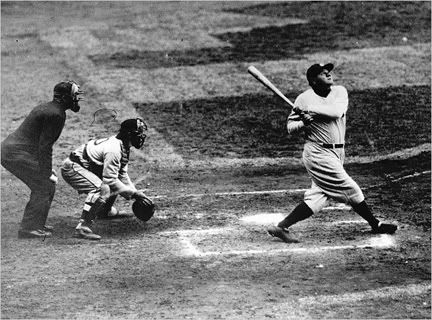
Addendum - In searching for an image to accompany this article today, the first Google Images result was the great photo included here, linked from a blog post by my friend Jacques Thelemaque talking about the need for filmmakers to SFTF in their scripts, so I guess he needs some credit here as well.
Thursday, July 30, 2009
Help Northwest Film Forum

I got this email today from a friend at the Northwest Film Forum in Seattle. I'm a big fan of this theatre, and hope a few of you will join me in helping them out.
Friends, compatriots, and loved ones, I'm here with what could be the biggest small ask of my life.
I am writing to you to ask for your help. I am asking you for $10, the price of an average movie ticket. The Film Forum has had done many great things this year, but much like other organizations our income is off by 30%. And while we remain scrappy and imaginative in tough spots, this time is different.
We are looking at real changes at the Film Forum unless you say yes and support us. We need to reach a goal of $70,000 by August 15. Please walk it in, mail it in, or visit www.nwfilmforum.org to make a donation.
You and 10,000 others are receiving this, which means you regularly find our emails and enews in our inbox, which means that you care, too. Maybe you even love what we do and believe the city is a better place - more sophisticated, inspired, or just more fun -- because of the films we show here, the summer filmmaking camps we offer to kids, the screenwriting and film editing classes we schedule, the filmmakers we bring to town (and the classes they teach), and the movies we are so instrumental in getting made.
Classes, filmmaker support, equipment rental, special screenings, and film series, many of these programs may be put on hold, shelved, or stopped altogether without your small gift. That means programs such as Soul Nite and ByDesign could go. It means fewer masterpieces such as "Silent Light" showing up on our screens. It means maybe no more camera rentals. Jobs and programs are on the line.
So, as the movie voiceover says, imagine a world: imagine a world in which people can open a door and find community. Imagine a world in which emerging filmmakers can receive the advice, equipment, collaborators and support they need to make their movies. Imagine a world in which anyone can register for classes to get the tools they need to enter the fields of screenwriting, editing, and video production. Imagine a world in which you can see movies that change the way you see the world. Imagine a world where you can find people of a like mind for inspiration and community.
Fifteen years ago we did that, all of it. To summarize what the Film Forum provides the city would take a much longer letter, but if you are a member or regular patron you have a pretty good idea already. You already believe in what we do.
You can keep all this, now, for the price of a ticket at your average movie theater. It's tough out there, we know that; we have tried our best to keep moving ahead in spite of the current economy. But now we know that some of what we do and provide will go dark without your support.
I am asking you urgently. If you have benefited from our equipment, from the images on our screens, from our classes, from our network of people, from our famously great parties, we are asking you to say yes, you believe, yes you can give $10. Yes.
Please make a donation here.
Subscribe to:
Posts (Atom)