Wednesday, December 27, 2006

Top Ten Stories for Indies and Resolutions

I’ve seen lots of year-end film lists, and even participated in some. What I haven’t seen, however, is a list of the top stories that matter to indie filmmakers. I wouldn’t say this is my definitive list, but it’s the top ten things that come to mind, in reverse order, along with New Year resolution suggestions.


10. Mermigas Firing proves Hollywood is still out of touch.
Diane Mermigas was the best writer in the film world. Who, you may be asking? Mermigas wrote a column on technology for the Hollywood Reporter - how it was disrupting business models and where things may be going. As most indie folks can’t afford the HR, very few may have read her column, but work picked up the tab for me, and I was a fan. Her last prediction - that Google might buy the NY Times (original) and she could be right. This only makes the top ten list because it would be like the Washington Post getting rid of Bob Woodward during Watergate – you don’t get rid of the one reporter that really knows what’s going on when your ship is sinking. Geeky blogs always thought she was old-fashioned (or worse), but she was the only columnist in film land who consistently understood the shifting landscape, and the Hollywood Reporter letting her go recently shows how out of touch old media remains about how the changes that are affecting them now are just the tip of the proverbial iceberg.
Resolution suggestion: Independent filmmakers should pay more attention to the geeky business news about the industry, because its going to affect your world as much as it will Hollywood, and you might just be able to use the changes to your advantage. Start with Mermigas’ old columns.


9. Orphan works proposals show there is some hope in copyright land.
An orphan work is one whose author can’t be found, even after extensive searching. In film, this usually affects documentaries that use rare footage, and with an orphan work, no one can authorize you as a filmmaker to use the footage in your film. Even though the rights-holder probably died years ago, no E&O Insurer will insure your film, and thus no one would distribute or broadcast it if it contained this footage. This year, a coalition of groups representing filmmakers (disclaimer: including the one I work for) made recommendations to the copyright office for a fair system to allow such works to be used, while maintaining safeguards for rights-holders. The proposal is now being considered by Congress, and could represent a nice change for filmmakers.
Resolution Suggestion: Click here to take action.


8. FCC acts indecent

Think that Janet Jackson’s breasts are unrelated to your issues as a filmmaker? Think again. Her exposure in the Super Bowl is just one example of the things that led the FCC to begin cracking down on things they consider “indecent.” Well, that and a bunch of right wing nuts, but the FCC’s actions have led PBS stations to not broadcast films due to fears of large fines, and while most of the films affected have been big (Saving Private Ryan, Ken Burns), this has huge implications for indie filmmakers. All broadcasters need is one more excuse to not show your unrated film.
Resolution suggestion: Marjorie Heins of the Free Expression Policy Project at NYU is leading the charge against this nonsense, and you should take an interest.


7. AIVF collapsed/Others Didn’t (yet?)
When AIVF started to go under, a group of us met to debate whether we cared. The consensus was, I think, that now more than ever, filmmakers needed a place like AIVF, but that the situation had deteriorated to the point that it couldn’t be salvaged. In early 2006, the board finally pulled the plug, and AIVF no longer exists. As I wrote then, the ideals of AIVF (it could no longer serve them) were still needed – in-depth information, advocacy, and a national community among the many needs. AIVF could have been the place to unite the UGC and Indie worlds and make a powerful lobby for creative concerns on the net; they could have been active in the recent debates about Showtime and the Smithsonian; they could have thrown a real awards for independent filmmakers (maybe in Brooklyn), when other awards shows departed from indies. On the plus side, my prediction that they were the first of many to go was either early or just wrong. IDA, IFP and others are surviving, IMAGE and Film Arts have new leaders and may rise from the (near) ashes. On the other hand, none seem to have taken the place of AIVF. Perhaps more will be clear when I moderate a panel on this subject at SXSW in March of 2007. (photo credit: Indiewire.com)
Resolution suggestion: Make your organization accountable by letting your voice be heard – let their executive directors know how you feel. Me included.


6. Fair Use gets a boost, and a manual
Fair Use is the legal concept that allows you to utilize copyrighted material, under certain conditions without asking for it. For example, Kirby Dick used this concept to make his recent doc This Film Is Not Yet Rated… because it allowed him to comment on the way the MPAA treated certain films, without having to pay large fees to show certain clips. For years, however, there was no clear system for filmmakers to follow in utilizing fair use, so Pat Aufderheide, a professor at American University and Peter Jaszi, a law professor, got together with filmmakers and their organizations (again, we participated) and crafted a Filmmakers guide to Fair Use. IFC used it in deciding to distribute Dick’s film, and rumor has it that Arthur Dong will be using the principles to release his new work The Chinese in Hollywood Project.
Resolution suggestion: Read the manual and stay informed via Agnes Varnum’s blog for the Center for Social Media.


5. New Distribution Models (and reminders of some old ones)
It still boggles the mind that anyone debates whether the windows model of releasing is a bad idea. Yes, Bubble didn’t work, but it’s clear to everyone that consumers want their media when they want it, where they want it, when they want it and on whatever device they want to see it on. The key will be versioning – having different versions, so that you can show one version at fests or theatres while the download is available, and possibly sell the extended (or educational) version later. While Holly/Indy-Wood distributors debated this, many simply threw up their hands in disgust and started their own distribution. Four Eyed Monsters showed the best way to use the internet to build buzz, Lance Weiler self-distributed to success and blogged about it, Sujewa focused his blog on self-distribution, Landmark made four-walling a little easier, and even David Lynch took to the streets to promote his own self-distribution (photo credit: Defamer.com). It was also fun to listen to filmmakers propose a self-distribution collective or system, when one already exists with New Day, and it was great to see filmmakers opening their eyes to the simple truth that getting a distributor can often be the worst thing that can happen to your film.
Resolution suggestion: Use fests to find an audience, instead of a distributor. Start here or here.

4. Death of VHS goes unnoticed

In November, Variety ran the obituary for VHS. Yes, you can still find them, but Hollywood and all but a handful of small distributors have abandoned them altogether. VHS lasted around 30 years, but no one expects DVD to last nearly that long. While people continue to debate whether consumers will switch to digital downloads or streaming, there are clear signs that DVD sales are slowing, and this has huge implications for indies. While every other technological advancement showed such promise in the past only to be closed down, we once again have the chance that indies can get their films to a wider audience through digital downloads, TiVO, Revver, or even through your Xbox. With the Long Tail model changing business, and with everyone from Amazon to Wal-Mart (I would go all the way to Z with Zune, but it’s such a bad player) getting in the digital download business, 2007 should be a interesting year.
Resolution suggestion: Read up about the implications with this report we produced, and check out your options for self-distribution online.


3. Google/Youtube and future implications
This one has been talked about enough online that I don’t need to add much more. Any way you look at it, however, it’s one of the most important media stories of 2006, with huge implications (still being sorted out) for distribution, copyright, revenue models for new media, etc. My hopes for 2007 – that independent filmmakers realize their kinship with the supposed amateurs of UGC, especially in regards to reaching audiences. This is about participatory culture and your audience finding your content more easily, not just finding videos of a frat boy falling down the stairs. You can use it to get people interested in your work, promote films you are trying to raise money for (advanced trailers) and to find your audience before your film is completed. Gootube is, of course, just one part of the story, but every filmmaker should be thinking about how to use online video to their advantage.
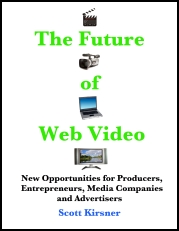
Resolution suggestion: Post teasers or trailers for all of your films online for free – even better, put a Creative Commons license on them, and read the book about your opportunities by Scott Kirsner.


2. Sundance Channel opens a Screening Room in Second Life
I’ve been suggesting for a long time that filmmakers need to get a presence in Second Life, and I wasn’t the only one. Recently, Sundance Channel announced they will launch a Second Life screening room and will premiere Four Eyed Monsters online in January of 2007. Second Life is a growing phenomenon, and people are making real money there. More importantly to filmmakers – it’s another place to find an audience for your work.
Resolution suggestion: I’m willing to bet that some media artists can make something more creative than some suits at Sundance Channel (okay, I know many people there who don’t wear suits), so get online, create an avatar and corner the market for cool visuals in Second Life.


1. Net Neutrality
Unfortunately, much of the above-mentioned promise for indies is threatened by the possible end of the internet as we know it. That’s what net neutrality means – saving the internet. I could go on and on about this, but many people have made great videos about it, like this one:


Resolution Suggestion: Educate yourself on Net Neutrality, get active in the debate and stop big media from ruining our possible future(s) online.

And Happy New Year!

Monday, December 18, 2006

More on net freedom

Great new video from the Save the Internet folks.
click on their site to take action.

Wednesday, December 13, 2006

Big Brother FIND and piracy

I got an email yesterday from FIND about how I could watch screeners of the Spirit Award nominees through Netflix. Great, I thought, and saved it to follow-up on later. Then I got this draconian email from them (see below) making extra sure that I know not to pirate any of these DVDs. My main beef is with the erroneous claim: "As you are aware, piracy is a threat to the entire industry."
Oh really? I guess that FIND and IFP are now in bed a little too often with the MPAA if they are buying this garbage. The MPAA (and Netflix, etc) are trying to protect a certain business model, but its more about making sure they control distribution than it is about protecting any indie filmmakers rights. Several serious studies have shown that the statistical effect of illegal downloading on the industry is....a lot, a little...actually, nil. The one linked here is just one of many regarding the music industry - as Harvard's website puts it: "Professor Felix Oberholzer-Gee and co-author Koleman Strumpf floored the disbelieving music industry with their findings that illegal music downloads don’t hurt CD sales. Oberholzer discusses what the industry should do next." You can read the whole article, but what he suggests is that online trading actually helps push sales, and that the industry should develop new models.

I won't go on and on, like most of my posts, but I do suggest that film people read Oberholzer-Gee's study and think about what it means for independent film instead of just echoing the MPAA's BS. In fact, a long time ago, we would have expected film orgs like these to do it for us, and help us think about new possibilities afforded by new technologies instead of pushing for old, tired ones. As I've heard someone else say - If these filmmakers haven't gotten distribution or are no longer screening in theatres, then they have bigger worries than piracy - try obscurity.

In all fairness to FIND, they are probably just protecting their asses, but the letter is a bit too much:


Dear Film Independent and IFP members:

The Spirit Awards and Netflix are pleased to be able to send you DVDs of the 2007 Spirit Award nominated films. (By now, you should have received the email from Netflix with your special offer code.) Please read this letter carefully—it contains important information about your screeners.

As you are aware, piracy is a threat to the entire industry. Netflix and the Spirit Awards have special permission to provide screener copies of nominated films for your personal viewing. Many of these DVDs are individually coded with invisible, unique watermarks that identify the screener and any copies of the screener. If any unauthorized copies (including internet uploads) of the film are traced back to your screener, you risk civil and criminal penalties. We ask you to be especially careful while the screener is in your possession, and do not circulate, transfer, distribute, loan, sell, reproduce, or give the screener to anyone else.

This special site created by Netflix solely for the Spirit Awards voters is a privilege for members that is invaluable to the nominees and to the voting process. Many of the nominated films have not had distribution or are no longer screening in theaters. The Neflix site ensures that these films can be seen by our voting members. Any abuse of this privilege may result in criminal penalties against you and the discontinuation of this program.

Thank you in advance for helping us all protect the rights of filmmakers in our fight against piracy.

Second Life Screening Room

The Sundance Channel announced yesterday that they will open a screening room in Second Life: Studio 4A. The studio will open with the Second Life premiere of Four Eyed Monsters, followed by a live Q&A session with film creators Arin Crumley and Susan Buice plus an after party.
I've been wondering when someone (that I know) would make such a move on Second Life. While many web-readers may consider this old news, I learned this weekend just how few filmmakers are even thinking about this right now. We were hosting a retreat for 15 filmmakers in Los Angeles, and I gave a presentation on using the web for marketing through the web and forming communities for independent films. I used Four Eyed Monsters as an example of people doing a great job, and then showed Second Life and suggested to the attendees that they put down a footprint there, and think of how it could build community for their films. Only one attendee had even heard of Second Life, and only two had heard of Four Eyed Monsters. This isn't to say they were behind the times, or that I am up to speed with it, but does show that the field is changing rapidly enough for many filmmakers that what some people take for granted is news to many others.
Sundance Channel is a corporate entity, and the Four Eyed Monsters gang are pretty savvy, so it's no surprise they had the resources and the web know-how to pull this off quicker than many others. At the recent National Black Programming Consortium conference, many black filmmakers discovered and discussed Second Life and its potential for building an audience for their films. It's becoming a great place for filmmakers to find audiences for their films. We'll see a lot more of this soon.

Tuesday, December 12, 2006

Re:Sources Blog

My day job - the one that keeps getting in the way of my writing on this blog - is running Renew Media (formerly NVR). We've been going through a lot of change in the last six months, and part of this change is the launch of our new blog - Re:Sources. The blog arises directly from the feeling that in this post-AIVF era, someone needed to fill the gaps left behind, such as advocacy, in-depth information on creativity, distribution, policy, etc. It's a small step, but one which we hope grows into a much bigger source for filmmakers.
The blog just launched, hosted and edited by Agnes Varnum, who also has her own fine blog. She'll be making regular posts, as well as inviting guest bloggers for certain topics. This week, for example, Parul Desai of Media Access Project posted on why net neutrality matters to filmmakers.

Thursday, November 02, 2006

Creative Commons and New Models of Funding

I've always been a big fan of Creative Commons, and after watching their new fundraising/explanatory video -

Thumb_default


I am an even bigger fan. Most people probably already know this, but just in case - because they hosted the video on Revver with an ad at the end, they have the potential to earn money whenever it is watched. If someone watches the clip all the way to the end, Creative Commons will get a split of the advertising revenues. How it all works is here.

The video itself is quite creative, much more interesting than most fundraising pitches that I've received from nonprofits this year. I'd much rather watch an animation about the relationship between the White Stripes and Creative Commons, than read a boring appeal for my year-end donations. I'm even more impressed that CC head-honcho and (much more popular) fellow blogger Larry Lessig has agreed to personally write a thank you to every donor. Not a form letter either - doubt you'll get that much from many other nonprofits. Nor will you see as much "impact" from them either - and I say this as someone who runs a nonprofit. Not many of us have had the success, the impact on policy (or anything else for that matter) as Creative Commons has had in just a few years. Kudos.


Importance to Filmmakers:

But this campaign is even more important to me for what it suggests about fundraising for others, not just nonprofits. Filmmakers can take a tip from the CC folks and apply this kind of fundraising to their film projects. Instead of maxing out your credit card, perhaps you should make a cool viral video, post it on Revver and similar sites, and use the money to make the feature. You can even link them back to you to donate more, watch longer versions, etc. While you may not make tons of money, it's a lot more inventive than most strategies I see the majority of us trying to use to raise funds for our films, projects, etc.

Tuesday, October 24, 2006

Viva Les Amis


My good friend Nancy Higgins recently screened her film Viva Les Amis as part of a showcase put together by my other friends at SXSW. The film is a great look at something that seems to happen everywhere - the replacing of a great cafe by a Starbucks. Well, it's not that simple. Les Amis was a cafe in Austin, Texas that was the quinessential college town cafe - run by quirky characters, worked at by drunks serving cheap food to other drunks and providing a place for slackers, punks and probably some students to hang out.


And it was slackers - in fact, Linklater's Slacker featured the cafe prominently. As the town got less weird, contrary to the current shirts proclaiming to "Keep Austin Weird," the cafe eventually closed down. High rents being a major part of the problem. Today, a Starbucks sits on the site.

No, Starbucks didn't force them out, but like so many other places, they benefitted from the changing demographics of the town. What makes this film great is that Nancy doesn't just play to the stereotype of the evils of gentrification, changing populations and green logos. She explores what the cafe meant to residents, but she also takes time to get to know the new employees of Starbucks. They are much more sober, but also have better health care, than the workers from Les Amis. She also fashions a film that becomes interesting to others than Austinites or Slacker fans. The film is about the dying of a culture, the changes that inevitably face any town that starts to grow and serves as a testament to the importance of the smaller things in life. It's great regional cinema - little films that say big things by focusing on something seemingly insignificant.

The film was recently programmed in Austin at the Alamo, and in Orlando at the Global Peace Film Festival. You can purchase the DVD, or just watch the clips online, but either way - you should check out this film.

Monday, October 09, 2006

YouTube Googlized

TechCrunch reports that the rumored sale of YouTube to Google is complete - in an all stock deal worth 1.65 Million. While many people, like Mark Cuban, wonder whether YouTube is worth such a price, you have to believe that Google spent millions in legal fees just contemplating whether this deal would land them in court and - if so - whether they could win any lawsuits. When Google announced the Google Book Project, the Author's Guild and others were quick to sue. My old friend from Atlanta, Joe Beck, is defending that case, and I'm willing to bet he'll win - he won for the Wind Done Gone, and in some ways that may have been more difficult. I'm sure that many a distributor will sue Google - its what you do when you are dying and scared - but I don't think Google scares easily.

It may be too much to dream, but I hope that the content industries start to wake up and realize that everyone will benefit from some changes to the rights-control-regime. Some money is better than no money, and could possibly be mo' money. I don't believe that advertising alone can support all video, we've seen how that works with TV - not everything gets supported, so there are definite tiers. But we also learned that people will pay for good content (HBO), and we've even seen that people will pay for what they can get for free with video (through sales of TV shows). While YouTube will probably always have illegally posted material, it also shows a demand - for content that's hard to find, for content made outside the system, etc. I bet Google could figure out a variation of the ideas proposed by Terry Fisher in Promises to Keep. Perhaps some combination of free, taxes or license fees for certain copyrights and fee-based video.

More thoughts on this soon, but this will be one of the more interesting business developments for film/video in years. Maybe this will get me posting more often than the once a month average I've had this summer.

Friday, September 01, 2006

Day of the Longtail Video

Day of the Longtail

Great video on the rise of participatory, or disintermediated, or whatever you want to call it - media and the fall of corporate media. I don't think it will actually happen this way, but great video nonetheless. We've definitely seen that people want their stuff when they want it, however they want it, whenever they want it and on whatever device they want it on. And we'll continue to see more content posted by the people - i hate the term UGC, but we don't have a better one yet - and a lot of the other things this video implies will keep occuring.

Unfortunately, every new technology has brought about utopian visions of the democratization of media - the printing press, ham radio, public television, the phonograph, the telephone, the list is endless. And each time, the range of possibilities has been narrowed immensely by corporate interests, and the regulatory bodies which serve their interests.

What we are seeing today - the long tail, YouTube's success, etc - was all easily envisioned back in the early 90s (maybe earlier), but we could also see then that corporations would take back control. And it has really already occured. We'll have a mix of both, but you would be dead wrong to think that Fox, Google, and other Hollywood companies won't still rule the media landscape.

Monday, August 14, 2006

Leaders Leaving

The great film programmer and festival director Shane Danielsen of the Edinburgh Film Festival will be leaving the festival after this year's edition, which wraps on August 27th (it started today). IndieWire reports the news with an interview with Shane where he comments on his leaving after five years:

I think that five years is an ideal time: long enough to put your stamp upon the festival, but not so long that you - or it - become stale. I made a point of saying I'd do five years when I took the gig in 2001, and I actually believe that there should be a compulsory five-year limit on these things - it should be written into the contract. Otherwise you become one of these desperate old men (and they are invariably men), clinging on forever to something which, frankly, would be better off without them: renewed, regenerated and revitalised. As Edinburgh now will be, under Hannah McGill. And rightly so.

(It may not surprise you, however, to learn that this is not a popular view among my peers: during a dinner in Cannes last year, sitting at a table of other film festival directors, when I tried gently to outline this point-of-view they stared at me with the expression akin to Cardinal Bellarmine listening to Galileo propose the heliocentric cosmos.) (italics mine)

Way to go Shane! I agree completely, and I practice what I preach, having left the Atlanta Film Festival after getting close to my five year anniversary. I wish more people in the world felt this way, especially in arts and film. All of us can think of festivals that are doing great jobs, but that could move in new directions with new blood. And this doesn't always mean young blood, just a fresh look at the direction. It applies to things other than festivals as well - nonprofits, program officers at foundations, curators, distribution execs and critics, to name a few.

I've explained this thinking many times over the years, and with a few exceptions, I have always gotten the same expression that Shane so eloquently describes. There is this odd sense of holding on to these careers, instead of viewing them, as I feel they should be seen, as steps on a journey.

This attitude would be fine, but it is contributing to great problems in the field. People are holding on to jobs and not allowing a new generation to move forward. Leading festivals, which set the agenda in many ways for the field, don't change and adapt to the times - and this means that we see the same films, the same players and the same themes instead of going in new directions.

Thank you Shane for leaving - now, I just hope that your move to Berlin takes you to another five years somehow involved with the cultural sphere, so that we can all run into your (new) work again.

Friday, August 11, 2006

Copyright and Education

Harvard's Berkman Center has recently released a white-paper/study by Bill McGeveran and Terry Fisher on the impact of copyright related issues on innovation in education.
From the abstract:
Drawing on research, interviews, two participatory workshops with experts in the field, and the lessons drawn from four detailed case studies, the white paper identifies four obstacles as particularly serious ones:

* Unclear or inadequate copyright law relating to crucial provisions such as fair use and educational use;
* Extensive adoption of digital rights management technology to lock up content;
* Practical difficulties obtaining rights to use content when licenses are necessary;
* Undue caution by gatekeepers such as publishers or educational administrators.

The white paper concludes with some discussion of paths toward reform that might improve the situation, including certain types of legal reform, technological improvements in the rights clearance process, educator agreement on best practices, and increased use of open access distribution.


Glad to see this study, as this is an important issue for the use of video and other media arts in the classroom as well.

Small Screens

Matt Dentler, whose blog I always like, makes one of his most interesting posts today about the popularity of small screens - watching video on cellphones, etc. According to a recent article in the LA Times, a survey showed that not a lot of teens and young adults were interested in watching such content on their phones - which, theoretically, means that all of the companies making their content available in this fashion may have an uphill battle getting consumers to adopt this form of consumption. As teens/young adults are supposed to be early adopters, and are a major target demographic, the article presupposes that we have something to learn from this response.

Dentler points out, quite correctly, that early adopters are usually from an even younger demographic. His story puts it best:

Another personal anecdote: one of the biggest fans I know of video iPod content is Harper Cummings. Harper Cummings is 3 years old. When on trips with her family, Harper loves to watch episodes of Dora the Explorer, downloaded to the video iPod. You have to think that by the time Harper is 13 years old, her and her friends will have much greater comfort and ease with greater and greater resources of mobile video material. That's why Apple, Viacom, News Corp. and Nokia are buying up real estate in this industry of short-form, digital video. Because not today and not tomorrow, but by the time Harper Cummings is earning spare cash waiting tables at Chuy's, this stuff will be everywhere. So, while I have nothing but respect for the polling of the L.A. Times and Bloomberg... maybe they should try asking around at the elementary schools, for a more accurate picture.

Dentler is quite correct - the elementary set are much more the demographic. But I think the study and the article are flawed in numerous other ways. For one, a lot of this content can get expensive, so I actually know more adults who watch videos on iPods than teens. Yes, teens buy music, but music has more of a hip cachet still, and it's easier to listen (say, when driving, every teen's favorite activity) than to watch. Second, while we've known this type of stuff was coming since 1992 (or earlier), the idea of watching on a small screen is still very new to most people - most never thought about it until they saw the video ipod. Even for teens, there hasn't been enough time, or good content for a good price, to really drive change. It took awhile for big screen tv's and HD to catch on as well.

But, even more, the writer misses the latent potential which will soon be realized when people can more easily watch intermittently and wirelessly. Some people undoubtedly do this already in some fashion, but pretty soon, we'll all be able to start watching content at home on the big screen, pause the film, start watching it at the same position on your cellphone from the subway, and then finish the film at the office. Or start watching something wirelessly downloaded to your cell and finish at home....etc. Not everyone will want to watch a feature film this way, but some will. I would, if it wasn't a masterpiece, but something I just wanted to entertain me. It will also be used for tv shows, news, personal video, how-to video, etc. This will all start to happen, but companies are taking baby steps in getting there (largely because of rights issues, but that's another post).

The idea that people won't eventually make money from this is ridiculous. And smart filmmakers should already be thinking about this in designing their films, trailers, etc.

Tuesday, August 08, 2006

Jesus and Michael Moore

A recent article in IndieWire reports that Magnolia Films, which had recently acquired the film Jesus Camp, got in a bit of a spat with Michael Moore's Traverse City Film Festival for playing the film. As the editor of IndieWire points out, it's a bit hard to tell who is telling the truth, but the basic story is probably that:

1. Jesus Camp was submitted in some fashion to the festival. It may have been solicited, someone involved in some way with the film may have begged to be shown, or someone may have just thought that it wouldn't hurt to show the film at another festival for publicity. It was accepted and programmed and possibly began to sell-out all seats;
2. Jesus Camp was acquired by Magnolia for distribution, and at some point they asked Traverse City to not show they film. They claim this was because they didn't want a fair and balanced film to be pegged as a liberal piece of junk by being endorsed by Michael Moore. This wasn't their wording, but you get the drift.
3. The festival said tough luck and showed the film anyway.

Most of the story is pretty obvious here - could be a publicity stunt on the part of Magnolia; could be bad business on the part of the festival; was definitely a delight to residents who saw the film.

In the article, the writers ask many a festival programmer what they thought, and this is what's interesting - none of them could possibly speak the truth. Matt Dentler of SXSW was pretty open in saying they walk the line, and at the end of the day, try to keep everyone happy, but must acquiesce to the distributor's demands. Christian Gaines of AFI was quite right to point out that generally speaking, this doesn't happen to major festivals. In a comment, Jeff Abramson of GenArt, points out an example where he couldn't accomodate the distributor, but was able to get them to understand his festival's perspective and work with him.

None, however, could tell the bigger picture and still run their festivals. As a former festival person, I can tell you that this happens more than you would think. Usually, such requests are made solely because a film enters a festival, later gets picked up for distribution and then the distributor thinks that anyone who saw the film at that fest is a lost potential customer, so they'd better pull the film from the festival. Unless that fest screening is at a major festival, or can get them press in a major city. The filmmakers are usually left out of this decision, and often can't even sway the distributor - as its no longer their film.

This is maddening to the filmmakers, the festival and the audience (aren't these the three folks who should matter at all??) but two of the three have sucked up to the teet of the distributor so much that they can't break free. Say no, I'm enforcing my contract with the filmmaker (usually part of the application) and potentially forever lose the right to show that distributor's films. Try as a filmmaker to broker peace, and be thought of as the problematic filmmaker getting in the way of the distributor's brilliant plan... The audience, of course, doesn't know any of this, but gets mad at the festival because they bought tickets and can't see the film they want to see.

I'm sure this particular case has its nuances, but it strikes me as another example of what's best for the distributor not always being what's best for the filmmaker, the film, the support system (festivals) or the audience. And something is wrong with that.

Wednesday, July 05, 2006

The Real Pirates


I've been hoping for some time that I'd see a good spoof of the ridiculous ads the MPAA has been running about piracy. Today on BoingBoing, they linked to this great new video by Steve Anderson. Wish these would run in the "Twenty."

Friday, June 30, 2006

Amanda Congdon on Net neutrality

I meant to get this up earlier this week, but it's still relevant. Rocketboom has a nice edition on Net Neutrality. The Senate seems dead set on killing the internet. I won't go on and on about why you should care,as a full site has been put up for this purpose. Today, Senator Kerry put out a letter saying:

Free and open access to the internet is something all Americans should enjoy, regardless of what financial means they’re born into or where they live. It is profoundly disappointing that the Senate is going let a handful of companies hold internet access hostage by legalizing the cherry-picking of cable service providers and new entrants. That is a dynamic that would leave some communities with inferior service, higher cable rates, and even the loss of service. Not to mention inadequate internet service — in the age of the information.

This bill was passed in committee over our objections. Now we need to fight to either fix it or kill it in the full Senate. Senator Wyden has already drawn a line in the sand — putting a “hold” on the bill, which prevents it from going forward for now. But there will be a day of reckoning on this legislation soon, make no mistake about it, and we need you to get engaged — pressure your Senators, follow the issue, demand net neutrality and build-out.


SaveTheInternet has links for action - and take it today, because after July 4th, the Senate returns and simultaneously tries to kill the Net and figure out a way to allow Bush to get around the Supreme Court's orders yesterday that he act civilized on Guantanamo. Busy folks.

Monday, June 26, 2006

Four Eyed Monsters Invite

Great new invitiation from the 4 Eyed Monsters Folks - it's an ad, it's instructions, it's viral marketing...it's brilliant.

New York, NY - Cinema Village

Tuesday June 27th @ 7:30pm | Wednesday June 28th @ 7:30pm
Buy Tickets | Print B&W flier | Directions | Who is attending
Trailer | Video Podcast

Monday, June 19, 2006

NYC Losing Arts

A great email was sent out by Galapagos Arts Space today. In it they refer to ten performing arts spaces going out of business in New York, and how this is just the beginnings of a loss of emerging arts, and artists, from NYC.

As I've written elsewhere, this trend is also hitting the media arts, and the recent closing of AIVF can, in part, be seen as indicative of this change. Is the same trend mentioned by Galapagos starting to be seen in NYC's media landscape? We're probably in better shape due to the continued imnportance of NYC as a film town, even for Hollywood production. But, I would argue that what Robert of Galapagos mentions below could easily be seen occuring in the film world next. Perhaps filmmakers and media artists that call NYC home should start addressing this possibility now:


The original article is quoted almost entirely here, and is worth reading:

"The canaries in New York City’s real estate gold mine – the emerging arts – are no longer talking about the next show they hope to land, they’re talking about the next city they think they can land in once their current lease runs out. (...) Within the next few months, ten off-Broadway theaters will permanently close . The price of real estate has risen so far that, from a cultural point of view, in three to five years we’ll be experiencing a fundamentally different idea of what it means to live in New York City and be a New Yorker. City Hall must find ways to incentivize rebuilding the emerging arts infrastructure that’s evaporating in our white-hot real estate market, or it won’t be built.

(...)

In a New York too expensive to incubate young artists many of these best young minds will fly right past our exploding real-estate market and rezoned artistic neighborhoods to cultivate and grow cultural and economic opportunities in other, less expensive cities. It’s important to remember that these young artists have no loyalty to New York; they’re from places like Des Moines after all. Many in New York City believe that the vital underground of emerging artists’ environments is here to stay ‘just because’. This is wrong. New York doesn’t have to be the cultural capital of the emerging arts, or of the financial or the media industries for that matter, New York needs to continue to earn its place and it can easily price itself out of that role. London is only one of many capable cities who are very busy trying to beat us at our best industries.
(...)

The Future:

As more and more cities begin to understand the advantage they can place in their populations by proactively attracting the emerging arts and either establishing or buttressing their own creative economies, the bidding for our young cultural participants will begin. Smart cities will soon make New York based artists offers they’d be foolish to refuse, and cities like (gasp!) Philadelphia, Berlin, Pittsburg or London will get the most adventurous of them – the ones our meritocracy would obviously miss the most – if we can’t find effective ways to continue pooling them here, in our city."


What we need to do:

The cost of real estate is crushing the emerging arts. We’re about to see a huge exodus of emerging artists leaving new York for other, less expensive cities. To even think about retaining them we have to incentivize the creation of opportunity at the emergent level. And we have to create lots of it.

Why?

If emerging artists and the best young cultural thinkers can’t see themselves possibly affording to live here then we’d better find ways to make them think they can’t possibly afford to live anywhere else.

In the end only one-thing matters: good artists and the best young cultural thinkers follow ideas, and ideas flourish when and where there is opportunity to realize them. .

No one can roll back the cost of real estate or prevent small performance spaces from becoming chic little clothing stores, but to create so much opportunity in this real estate climate that we remain an effective cultural capital and not simply a wonderful museum city where art isn’t made, there are a number of questions that must be asked.

What can our City government do?
What can the largest cultural institutions do?
What can the foundation and funding community do?
What can the business community do?
What can our next Governor do?
What can you, the audience, do?

Robert Elmes
Director, Galapagos Art Space"

Thursday, June 15, 2006

Filmmaker Julia Reichert’s Big Day

A quick shout out to wish filmmaker Julia Reichert Happy Birthday, and to congratulate her on getting to this day. (Okay, her birthday is June 16th, but I had to post this a day early). As some of you probably read in IndieWire or heard through others, Julia found out in January at the Sundance Film Festival that she had cancer, and her doctors advised her to leave Sundance immediately and return home for treatment. Julia had been at Sundance with her partner in life and film, Steven Bognar to premiere their documentary A Lion in the House, a four-hour long film about kids and their families struggling with cancer (filmed over eight years). Since that time, many of us have kept up with them through emails that both she and Steven have been sending out chronicling her journey. It’s been harrowing, sad, honest and lately it’s been turning for the better - much better.

I’ve known Steven and Julia for years, having first met Steven at the Atlanta Film Festival in the early 1990s. I later met Julia at the same festival, and have always found them to be among the most genuine filmmakers I’ve ever met, not to mention quite talented. When I arrived at my current gig in New York, both of them had already received Fellowships from our organization, and it made me proud to have them in our roster even if I had nothing to do with their success. Their bios, from the NVR website:

Bognar’s documentaries and short narratives have screened widely at festivals and on television. He has produced feature films, taught media production and received several fellowships. Reichert has directed and produced both fiction features and documentaries, and teaches filmmaking at Wright State University, Ohio. She co-founded the film distribution co-op New Day Films and Film Fund, the predecessor of Independent Feature Project. They have collaborated on several films, often as producers, since the mid-1990s.

A Lion in the House has been playing at several festivals, and has won numerous awards, including Best Documentary at the Nashville Film Festival. It just ended a run at the Makor Theater in New York, and it premieres on Independent Lens on PBS on June 21 and 22nd. I recommend you check it out.

Best wishes to Julia as she celebrates an important birthday!

Wednesday, June 14, 2006

AIVF Closing Shop

After several months of attempting to reverse their slide, AIVF sent an email out announcing that they will close the doors on June 28th. They do give word that some members are gathering soon to try to save the magazine and possibly relaunch the organization. My understanding is that some ex-board members (from long ago, I believe), and concerned members of the community plan to meet at the Flaherty Film Conference to discuss the demise of AIVF and see if they can figure out a way to relaunch it. In addition, as mentioned in the email, several groups are discussing with AIVF the possibility of at least taking on the magazine, The Independent, and keeping its focus of in-depth information and advocacy. (Full Disclosure: The group I run, NVR, has discussed this possibility, although we have no plans at this time).

I'm not sure, however, that trying to relaunch the organization is a good idea. As I described in an earlier post, AIVF is dying for a variety of reasons, and no one has been able to step forward and offer a plan for revitalization during the appropriate time - which would be the last five months of reorganization. Furthermore, part of AIVF's problems were due to having a board comprised mainly of filmmakers without much ability to raise funds. The group coming together sounds like more of the same.

It would possibly be much wiser for people to rally behind any of the numerous other groups that serve filmmakers, and that are also currently struggling, and help them transition. During the beginnings of the (public knowledge) of the AIVF crisis, several filmmakers gathered and made it clear that they didn't feel that any other organization was serving their needs. This is probably true, but organizations are really what their members make of them. If organization X isn't serving filmmakers needs, then their members (that means those of you willing to pay for the right to complain about them) should gather and force change. These organizations have to respond to their members needs, but they won't if those needs aren't articulated.

I continue to believe that even in this new age of media, where access is near ubiquitous and everyone seems to be a filmmaker, artists still need a group that can advocate on their behalf, serve their needs, get them information they can use and possibly help them get their films made and seen by more people. Such a group will undoubtedly need a stronger web presence, new business models and stronger commitment to its members, but the need is still there. Perhaps it's time for media artists to get more vocal about what they want and deserve.

Friday, June 09, 2006

Poor Glickman

Dan Glickman agreed to debate John Perry Barlow about movie piracy on the BBC. Didn't he know he'd end up looking really, really bad? You've gotta wonder sometimes about the advice given to the MPAA by their PR people. Read the full interivew here, or just my favorite snippet:

"JPB: I've got good news and bad news and good news. And the good news is that you guys have managed to buy every major legislative body on the planet, and the courts are even with you. So you've done a great job there and you should congratulate yourself.

But you know the problem is - the bad news is that you're up against a dedicated foe that is younger and smarter that you are and will be alive when you're dead. You're 55 years old and these kids are 17 and they're just smarter than you. So you're gonna lose that one.

But the good news is that you guys are mean sons of bitches and you've been figuring out ways of ripping off audiences and artists for centuries....."

I've never met Dan Glickman, but a friend has and they told me he's actually a nice guy. I've been trying to give him the benefit of the doubt, but it appears he is hopelessly confused about the potential economics of the internet. Says Glickman:

"It is ridiculous to believe that you can give product away for free and be more successful. I mean it defies the laws of nature."

Well Dan, you should talk to Rick Prelinger at Prelinger Archives. He made all of his content available for free, and his sales increased more than 40% defying all laws of nature. Or check out one of the numerous studies showing that free availability of music has had zero statistical effect on music sales.

The MPAA is going to keep fighting this war, and keep losing, for quite some time. It would be interesting to see them take their collective heads out of the sand and think about the possibilities of addressing the changes due to the internet, instead of reacting in a manner that alienates their consumers.