Thursday, January 07, 2010

Filmmaking and Releasing - changing the male climax model


One thing I’d like to see in Twenty10 is a move away from the male climax version of film-making and releasing. (Ok, apologies in advance for the word-play, it’s impossible not to use in such an article.)

Filmmakers spend a lot of time leading up to the making of a film - development, pre-production, production and then....release. Play a fest, flirt with a distributor, find one who takes it out for you, because your job is finished. Filmmaker is done and on to the next show. Getting the film in some fests is the filmmaker’s release.

The distributor follows this same male climax pattern. Lots of attention is paid to building a campaign, taking it to market, woo-ing audiences. Once the audience comes to see the show, be it in theaters, DVD or VOD - distributor is done. Wham bam thank you ma’am. (Ok, it’s a longer process than most males can handle...)

Festival’s premiere policies, theatrical and then ancillary windows, media attention - it’s all built around this same model. Even filmmakers that are getting in to the whole viral video, build your audience, transmedia, etc thing are usually focused on what leads up to launch and nothing after. Their game, ARG, viral video campaign all usually end once the film is out and being seen by an audience. In fact, this idea came from a discussion with media expert Christy Dena, who speaks about this in an interview to be podcast on Workbook Project soon. She commented to me about the problem of filmmaker’s only thinking of transmedia leading up to a film’s release and how we need to broaden our thinking. She’s right, but I think it pertains to a lot about the business.

What if we thought a little more about what happens after release? What if the film was just the beginning of the experience, with more to come? What if it led you to something else? Can people re-experience the ARG months later if they didn’t hear about it until after the film? A film’s life is much, much longer than the initial release - just look at the cult faves like Donnie Darko, Primer not to mention Bourne.  What if we built strategies to sustain that momentum beyond the release?

On a simpler level, once you’ve built that great following on Twitter, Facebook, etc for your film are you keeping those audiences engaged on a regular basis so that they are ready for the next film? Are you using them to push new audiences to see it a year later?

When I ran Reframe, a project to bring back out older films, I was shocked at the amount of filmmakers that were doing nothing to push their older films - many of which they now had rights to again from their distributors. Think of how many older books get rediscovered every time an author’s new release comes out - sometimes their sales for older titles jump as much as 40% or more. Are you pushing your older films every time a new one comes out?

Festivals swear by premieres, but not only do most of your audiences not care (as long as it’s new to them), but I’m willing to bet that careful programming of even older titles could sell. A lot of thought will have to be put into this as filmmakers start to do more day/date releasing with their festival premiere. Can you imagine a world where every other fest still plays that film, even though it’s online already? We’re going to have to, I think.

I’m not sure what exactly could replace this model, but I do think we are losing attention too early, and probably losing audiences as a result. What are the possibilities if we move away from the climax model? Thoughts?

Tuesday, January 05, 2010

Can film leapfrog music to success?


Everyone says that the movie industry should not repeat the mistakes of the music industry when it comes to digital. Many argue that we have already repeated these mistakes and continue to do so. I think we need to start thinking about this equation differently. We need to think more actively. The real failure of the music industry wasn’t just to make mistakes, but to not envision the totality of change and respond not according to how it looked on that day, but how things would look 10 years down the road. We need to not just repeat their mistakes, but also come up with solutions that are responding not to where we (and they) are today, but where we’ll be way down the line.

So I propose that we can’t start comparing anything we do until we’ve leapfrogged their current solutions. Until then, we are repeating all of the same mistakes.

For the MPAA, this seems to mean we haven’t succeeded unless we do more than the RIAA did. The RIAA stopped with relatively minor stuff - they try to sue their fans into submission. The MPAA decides it’s going for the jugular and will bypass American and all other laws and work on secret international treaties to rewrite copyright law in their favor.

This is not learning from the mistakes of the past.  It’s just going nuclear.

They may make some major changes, but they will fail at reinventing their model. This is also my main complaint with 3D. It’s not a new response - in fact, the last time the industry felt threatened they turned to 3D to solve their problems. More of the same, updated for today is not a paradigm shift.

In the DIY world, we’re still looking to the music world for answers. We look at what indie musicians have been doing with crowdsourcing, making cool apps to request a band, experimenting with free leading to fee, etc. and try to duplicate them for the film world. These are great experiments, but again, not paradigmatic changes.

Until it’s the other way around - the music world looks to the film world for novel solutions -  we’re still behind. Not repeating the mistakes means leapfrogging them, and until we do, we’re just repeating.

I’m not saying we (film) can’t learn from music folks, or that we shouldn’t be looking for many overlaps and lessons from multiple industries. This is good. But I do think we need to think bigger. All of the things I’ve seen so far look more like band-aids than laser surgery approaches to staunching the bleeding. I don’t know what the “leapfrog solution” is, but I’m thinking about this a lot, and would love your thoughts.

Thursday, December 31, 2009

10 Things I'm thinking about for Twenty10


Ok, now I'm on this damn list machine, luckily there's less than 12 hrs left for making end of year lists. I don't have any predictions for film and media in 2010, but I am wondering about a few things:


1. Who will be the exciting new storytellers? 
Who will we be talking about post Sun/Slamdance, Berlin, etc.? I'm always excited to discover new talent, and while there's always great new works by established folks, I can predict with confidence that there will be at least one new discovery this year. But I also predict that like the last couple of years, the new voices I discover won't come from a fest or even a proper film, but from mash-ups, remix, machinima and plain old viral video online. Can't wait.

2. OpenIndie. 
What will it be? I donated to this thing and I still don't completely understand it. But, I have faith that the two folks behind it will make something cool that probably won't change the world (as they hope) but will likely change it just enough to matter.


3. Will fest launches work?
This is the year that many people think filmmakers will really start thinking of festivals as their path to finding an audience instead of finding a distributor. At least one filmmaker is using Sundance as their launch. I can't wait to see how many others do this and what degree of success they have.


Wednesday, December 30, 2009

10 Film Trends that spell success and doom


This has been the year of new experiments in film and media. Whereas there used to be a few of us touting the new models, it now seems to be a cacophony of voices all extolling how the new tools available to us will change the world and make indie film successful. Ok, there's been a lot of gloom and doom talk as well, but as my reading list shows, there's been a lot of great new models proposed. But whenever a crowd agrees on something, well, something's wrong. So, here below are ten of the most promising developments of the year and a few words about why I think each one is also worrisome. Or rather, why the future remains uncertain. Note in advance - I really believe in the good side of many of these things, but I'm always contrarian...

1. Direct connection with your fans. Earn 1000 Fans and you can make a career. You can now connect directly with your audience and make a living. But to quote Matt Rosoff of CNET - "The common wisdom today dictates that musicians need a personal connection with their fans. They must blog, tweet, maintain their MySpace and Facebook profiles, and generally act like your next door neighbor who's always pestering you to see his band. There's a word for receiving "personal" messages from your favorite 100 bands--it's called "spam." Eventually, this cloud of self-promotional noise will dissipate, and will be replaced by old-fashioned word of mouth." I can't say it better. So, remember, as every other filmmaker catches up with audience-connection - and this means Hollywood too - you've got more emails, more requests for micro-funding and a lot more noise. Who do you think will drown in this noise....?

Tuesday, December 29, 2009

Recommended Reads


There's been a lot of great writing both in print and online (and at times, both) for filmmakers this year. It's late in the year, but I thought I'd give my quick summary of some great titles that I think are required reading for any filmmaker - or any person in the film business, really - and most are good for other artists as well. These are in no particular order, and while I know some of the authors and am quoted in some of these, I tried to be unbiased and stand to make no financial gain. Most were written this year, but some came out earlier (even much earlier) but I just got around to reading them, and near the end are a few that aren't even film/media books but that I still highly recommend.

Thursday, December 24, 2009

The Phantom Menace Review and the Future of Film Criticism

As usual, I was late to the game in discovering the latest viral video sensation - this wonderful 70 minute review of The Phantom Menace. It's hilarious, and if you haven't seen it yet, I think it's worth watching all 70 minutes, as some of the best stuff is buried in the end. Ironically, I finally got around to seeing it after gazillions of tweets came my way when I was doing some research into the current state of film and media studies. Ok, I was wasting time on that instead of anything productive, but I did find something great from Eric Faden, the Bucknell professor who made the Fair(y) Use Tale video a few years ago. It's a great "Manifesto for Critical Media" published in the online journal Mediascape where he renounces traditional criticism/theory for something more robust. As he puts it: "I vow to abstain from that most sacred but restricted of intellectual practices-the literary academic essay-no matter the temptation. From here forward I put my faith in media over text, screen over paper."

Monday, December 21, 2009

Future of Film - Punk Rock or Classical Music?


A common refrain in the indie/arthouse film world these days is that the field needs to act more punk rock in how we think about audience engagement. It’s something I say often, and I’ve been reading/hearing people say it more often lately. The idea being that back in the day, punk bands (and to be technically accurate, this would be the more modern hardcore punk, or even garage bands, not the earlier, official “P” punk) would reach audiences by going around the country in a van playing small gigs to loyal audiences who would then support them directly and while they couldn’t make a fortune they could make a living. The famous case-study being Ian MacKaye of Minor Threat. The argument continues that with the tools we have today to directly reach audiences and avoid middle-men, and given that audiences are increasingly downloading films for free or cheap, that perhaps we can offer more value, and thus make a bit more money, by connecting directly to our fans who will pay to meet us with our film in person and support an authentic experience.

But the notion also has something to do with the excitement a subset of us felt - the connection and being in the “now” sense of punk rock. The tearing down the walls (even self-consciously) feeling. Being a fan, you felt part of a visceral experience that mattered. For many of us, this led to lots of learning about music. My interest in punk led me to noise rock, to obscure forms of jazz and even to electonica, rap and even in an odd way, the same music that punk was originally against - disco. That’s not to say that everyone knew how to play their instruments, but that was the other liberating sense of the music - anyone could pick up an instrument and play (and frankly, have better odds of getting laid than from most other adolescent hobbies). People collaborated a lot - from making bands, to sharing tips for the road, couches to sleep on, etc. There was another similarity we could learn from as well - you learned about the music not from the mainstream press (at least not at first), but from your friends and from local experts (now called curators) - the local pub, the house that someone turned into a venue, the local record store clerk. Walking into a record store, you were overwhelmed with records, but you never thought “wow, there’s too many records in here.” Instead you thought, “awesome, lots of music to discover, I just have to flip through the bins for things I’ve heard of, or ask someone in the room what they think.” More often, you’d already listened to a band and were there to buy it because you had heard them on a mix tape you got for free (and this being a mix tape, not a disc, you could throw it on the ground and stomp on it and it would still play in your stereo). You had already sampled the music, possibly heard them live at a show, and wanted to own it. For the most part, this sense of excitement still exists in music, for most people, even if it’s not as strong as when you were an adolescent.

I think we can see most of the potential parallels for film today. Instead of elaborating on this more, I think it’s better to admit we may instead need to turn to what seems like a more apt metaphor for the future of film - classical music. Our continual evocation of punk rock is a way for us to romanticize the potential future of film, but I think a more sober assessment would place us squarely in the classical music camp, and looking at what’s going on there is not pretty. Analogies only last so far as arguments, but humor me for a moment as we compare the fate of classical music with the current state of and possible future for indie/arthouse film.

Tuesday, December 15, 2009

Paramount, Clips and Fair Use/micropayment questions

I was fascinated to see that Paramount is the first studio - or really first film entity of any import - to start a video clip service. I'm not going to describe it in detail, you can read about it here, but it's essentially a marketplace for clips from famous Hollywood films. It's a great idea that I've been waiting to see someone launch. At first I was surprised to see a studio do this first, but on second thought, I think this is going to be an ongoing trend - movie studios embracing things indies have been talking about doing for years in the digital space but with real monetary backing and different aims.

When we were developing Reframe, we tried to launch it with just such a clip model - the idea being that filmmakers could not just sell their entire film, but also license clips for use. But, we were going to allow not just selling it to other filmmakers as clips, but also consumers and also allow for alternate licensing - Creative Commons or free even, and try to accommodate fair use principles etc. We didn't get very far, as many filmmakers and rights-holders literally flipped, and we realized it would be easier to start small with just a digitization and access place for entire films.

We even held a two day meeting with many filmmakers, lawyers, professors, and other industry to discuss how this could be done, ramifications,etc. This process, while helpful in some ways, is the perfect example of how nonprofits don't innovate - they brainstorm ideas with constituents and end up never building the right thing while some for profit builds it without taking any of your concerns into consideration. But that's another article.

What I find very interesting to contemplate is what this means for the future of a couple bigger ideas - fair use and micropayments as a practice. Obviously, this development is also interesting for what it means to the industry, to audience participation, to reuse in general, viewing habits, etc. but these other two are potentially more important.

First, one of the very real concerns raised when we held the Reframe panel was what would such a system mean for fair use? The Paramount system is obviously based on a heavy DRM type system. This helps them theoretically combat piracy (in reality all DRM now and in the future can and will be broken), but it breaks your legal right to reuse a clip in a fair use setting. Now obviously you can go grab the clip from somewhere else and use it in a fair use setting, but there's apparently (according to the legal scholars I spoke with) a problem with setting a precedent for a market. In other words, a studio could claim there's no need to allow a fair use argument because there exists a micro-payment system that could solve the problem. I'd love to hear more wisdom on this from other legal people, but it definitely will have an impact.

Second, this is a pretty clear move towards a micro-payment world. This is something every old school media person, be it film, tv, print or music - really wants to work. But up until now, it's been just a pipe-dream. Al such schemes usually fail and many take it as a given truth of the internet now that micro-payments won't work. (itunes not being considered a true micro payment, as I understand it, because it's not for song segments but entire songs) So, will Paramount's scheme fail? Will it lead to more robust clip piracy and really cool video mash-ups (oh, of this I really hope yes)? Or, is this the beginning of the big media squeeze that finally makes a web world where we pay in tiny slices for every little bit of media we consume?

I've not thought about this enough to answer either of these questions, but I've realized that if I wait to fully form an opinion for a blog post, then I'll keep posting at this once a month rate, which isn't a great trade-off. So, I hope to think more about this and post more later. Or send me your thoughts.

Saturday, November 07, 2009

Uh-oh movies here's Pet Society

Reading my NYTimes today - in print, slowly - I kept bumping into some interesting articles with a lot of relevance for the film industry. Everyone in the film biz knows that videogames are increasingly beating cinema for dollars, that's nothing new. But three articles in today's Times sum up the problem.

1. In the article "A Game That Takes Aim at Bigger Screens," Seth Schiesel reports that video games are now reaching the holy grail of providing a genuinely cinematic experience (that's his grail btw, I always thought most of us are waiting til it's an even better experience). He goes on to say that "Uncharted 2: Among Thieves" actually got him to buy an HDTV - something no film had made him bother to do. Gaming 1, Cinema 0

2. In the article "Online Warfare Prompts an Offline Crash in China," Michael Wines reports on the wars between two Chinese government agencies over who gets to oversee (governmentally) World of Warcraft. He reports that online gaming in China is already an almost $3-billion business and that "50 million people crowd the Internet cafes of China on a regular basis." I haven't read any similar articles about how hot the film business is these days lately, and nothing approaching those numbers. Gaming 2, Cinema 0

3. But the absolute best article and the game winner for gaming is this quote from Sara Merrill of Parsonfield, ME about why she spends money to buy virtual goods in the game Pet Society on Facebook:

"It's an experience, like going to the movies. That's how I describe it."

And that's the problem for Hollywood, and all content folks. It's an experience - and that experience becomes more valuable today as our time is crunched, we have tons of options and content is free. We value what is worth our time, and increasingly it's an experience. There's good reason that video games are increasing in popularity - they are participatory, they offer an experience. She, and millions of others, are making the market for virtual goods into what is now a $5-billion annual business according to the Times. She's not buying an actual product, she's buying an experience. She plays this game 5 times a week with her two kids by the way - not an insignificant amount of time. Very few parents take their kids to 5 films a week anymore (if they ever did). The article - " Virtual Goods Start Bringing Real Paydays" by Claire Cain Miller and Brad Stone was on the front page of the Times today. That's what film is up against and as of now, in today's Times, it's Gaming 3-0 vs cinema.

Note- I'm not linking the articles. I found them in print, and the Times now makes you register to read them online. I am a print subscriber and I can't be bothered to take the time to tell the Times this to get my free access - thus, the idiots don't get a link. But I'm sure you can google the articles and read them for free somewhere else. And when the NYTimes dies, we can all read them somewhere else online for free without having to register.

Monday, October 26, 2009

The future of film and Pepin WI

I just returned from Pepin, WI the home of the great Flyway Film Festival. It's a small, regional festival with a lot of heart, and I had a great time. I met some great people, mostly filmmakers but also some local audiences and business owners, and saw some interesting films. The festival takes care of you - if you ever get invited, go, as they have great hospitality and it's an all-around good time. I was asked to attend to give a keynote at their opening night, and to speak on a panel. Below is the approximate text of my speech - I use an outline and ad-lib most of this stuff, but I think this text captures it well.

The Speech:

Thanks to Rick Vaicius and all the staff of Flyway for bringing me here to Pepin, WI. I’ve never been here before, and I’m delighted to be here speaking with you tonight. I’d also like to thank the sponsors of this fest, as I know they can never be thanked enough and I’d like to give a quick thanks to all of the attending filmmakers, because if it weren’t for you and your films we wouldn’t be here tonight. I want to talk tonight about the state of the film industry, the changes of technology and how Pepin fits in. I think that if you bear with me, we’ll find that it’s all interconnected.

It may come as a surprise to those of you in the audience tonight who aren’t filmmakers or film “people” but the film industry is in a bit of a crisis. Sky falling, batten the hatches, we all may die crisis. Or so everyone keeps saying. From most regular folk’s seats, that may be hard to understand - what with 500 plus channels on the TV, Netflix, Redbox, YouTube, 3D, Blu-Ray and yes, even Pirate Bay, it seems like a time of plenty for film. But these same things I just mentioned are part of an intricate puzzle and as of this moment it seems that as we add each piece we are slowly seeing the full picture and it spells DOOM.

Briefly - digital has been a disruptive technology that has upended the film world. Everyone knows what has happened to music, and we’ve seen it with print - books, magazines and particularly newspapers - and now it’s happening to film. I don’t need to go into detail - you either know this or you can imagine it. In theory, it is now cheaper than ever before to make a movie, and there are more mechanisms than ever before to get that film to an audience more cheaply than ever before. But it still costs money to make a good film, and someone usually has to buy it and take it to market. And filmmakers, and their investors would like to get paid and make a living. But whether you are a filmmaker or a company the situation is the same - the business models aren’t working anymore.

But the reality is - this isn’t new. The film business has always been a bad business except for a few exceptions. I think the crisis we find ourselves in today in film mirrors the general economic crisis facing our world today. As Warren Buffett has said - it’s not until the tide goes out that you see who is really wearing shorts. Well folks, the tide is gone and we now see that we’d been in a bubble and there was a lot of funny money but no real value. Likewise, in film, the tide is out, and many a bad business model has been exposed.

The old model for film was one of scarcity. For the most part, we watched Hollywood films exclusively because film was expensive and scarce and hard to make. We didn’t have many other options. Even with indie film, it was pretty expensive to make and the marketplace was hard to figure out - in theory, the audience for indie/art films was scarce too, and finding them was expensive. Even with TV and then VHS and DVD, there was a scarcity model - films were still expensive to make, manufacturing and distributing DVDs was expensive. Everything was built on scarcity.

But digital changes that. Everything is ones and zeros and a copy is free. And everyone can make one, and copy it and spread it to friends. Copies are now ubiquitous. Copies are now superabundant, they are no longer scarce.

When content is no longer scarce, we need to look at value differently. What’s valuable now?

Well, my time is much more valuable. I have lots of options. I don’t have to just watch the Hollywood movie, I can watch anything, or a remix of it. What is scarce is my attention. My attention is a new form of value.

Films are everywhere - anyone can make one, copy it, rip it, trade it, remix it. People say there’s too many films, too much to choose from, but back when I used to walk into a record store, I never said, there’s too many bands. So what did I do - I listened to my friends, to my peers, to critics and other musicians. I listened to people I trusted and that’s what’s valuable now - curation from a trusted source. This, to me, is one of the big values of a thing like Flyway - Rick’s curation. He’s reached in to that grab bag of thousands of films and curated something for this community. That curation is now valuable.

What also becomes valuable is authenticity. In a world of abundant copies, free or pirated material and fakes, I value authenticity. Authentic stories, authentic experiences that aren’t duplicable. That’s what we find here in Pepin - real people, watching films, with filmmakers having an authentic experience we can’t get elsewhere. I’ll pay for that, and I’ll value it more than it costs.

Small becomes valuable. It’s easier to find authenticity in small, but it’s also true in life. As Margaret Mead said - “Never doubt that a small group of thoughtful, committed citizens can change the world. Indeed, it is the only thing that ever has.” Well, small films can change the world. The problem is it’s always been difficult to reach small groups with mass media, thus broadcast. Well now, small films can find just the small audience they need online much easier than ever before. And it’s through small fests like this that we can build a new model for support of filmmakers. Everyone talks about DIY today, well the old punk DIY ethic was built on playing in small clubs - not unlike this room tonight, playing to real fans, going around in a van, but by reaching that core audience, one could make a living. I think it’s true again now for film.

Because with small, we can connect. Connection is more valuable than ever before. I’m connected now on Twitter, Facebook and every other social network. This has real value - Rick found me through email, reaches me on Twitter and the filmmakers here started talking before they even arrived. What’s valuable now is this idea of being connected directly to the band, the artist, the filmmaker. I can now support the filmmaker directly, buy their film from them. Through micro-payments, I can become a direct supporter of their film and they can get it to me before it becomes a mass release.

But it goes deeper.

It’s about a participatory conversation. Technology allows this, but I think it’s something audiences have been wanting for a long time. It’s no longer a one-way broadcast to many. It’s a dialogue between the artist and the audience. People can now talk to the artist during the making of the film, during its release or after it is out there. They may want to interact by making their own version, remixing your footage and sending it back, or sharing with others. It’s no longer a one way street. It’s why many artists are working with cross or transmedia - the idea that there story might be bigger than a film and include a graphic novel, or a game, or user-generated content - it extends the story and let’s the audience interact more with the art and at times, the artist. In a simplistic way, it’s also another way to get people to pay for content - they may not want just another copy, but they value paying a price to come here, see your film and hear you in a Q& A afterwards, and maybe meet you over a beer. Conversation makes for a richer experience.

But for many, this is also scary. I used to think filmmakers were afraid of technology, but they’re really afraid of dialogue. Conversation is hard. Being an auteur and having your final say on a story is much easier. But historically, this is an aberration, a blip. We used to have call and response, actors and dancers and storytellers had to react to their audience more directly. The audience reaction and demand informed their art. It was participatory. It was a conversation, and digital allows that. It’s not easy, but I think it is crucial to the art form.

We as artists and audiences need to embrace this new conversation. We’re faced with a lot of possible futures of where media might go. Big media - Hollywood, Murdoch, TV - they don’t like this conversation. They want a fancy one-way TV set where the only interaction is you buying some product they are selling. It’s what we’ll get unless we dream for something better - and to me, if the internet just gives me more things to buy and less conversation, less new story-telling and less access to genuine, authentic voices then we’ve failed.

So that’s how I see the connection between new technology, Pepin and the future of storytelling. In summary -

Curate - Tell others, spread indie culture, be a trusted source and support those like Rick who are;
Authentic - Demand and pay for authentic experiences;
Small - Think local, connect small communities. It’s easier than ever before;
Participatory conversation - engage in conversation, and as artists make this easier for your audiences.

We have more tools to help connect us - to connect our storytelling to audiences and to engage with them in a cultural conversation. These tools are often found online - but they help connect us in the real world, and they can also be found at festivals like Flyway. I believe we can use these tools to build the future of film culture. No one knows where the future of film lies - anyone who says otherwise is lying or wrong - but while we can’t predict the future we can, in the words of Alan Kay, build the future. The best way to realize the future of film is to take advantage of the tools we have available, both online and in Pepin, and start building.

Wednesday, October 21, 2009

Power to the Pixel Videos

The videos are up on Babelgum from this year's Cross-Media Film Forum of Power to the Pixel at the BFI London Film Fest (that's a mouthful!). Mine is linked here, but watch them all - there's some good stuff here.


My fave was the Age of Stupid tag-your-it approach to panels:

Thursday, October 15, 2009

Power to the Pixel

Here in London at Power to the Pixel for a little while longer. It's been exciting, learned a lot from other panelists, met some great filmmakers and could feel a real change in just one year - lots more nodding heads (in agreement, not sleep) than last year. Many filmmakers in my meet the expert session were much better experts than me, and doing some cool stuff. More on that soon, but I'm uploading my presentations below. Video will be up soon on PTTP and Babelgum. I was asked to deliver a presentation I've done before. So, the first one, on living with free is not new, just a couple slide updates. If you've seen it before, skip it. Second one was an hour.5 workshop on how to use social media to build audiences and funds. I added a few new things, but some have seen this. But for those who hasn't they are below:


Thursday, October 08, 2009

Araya, Flyway, OpenIndie, PTTP and other SFTF


Some updates on current cool stuff:

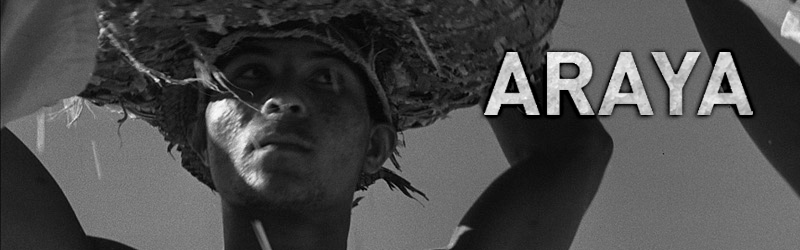
I had a chance to catch Araya this week, and have to say - it's beautiful. Go see it now at IFC Theatres while you can see it on film. It's a great restoration of a lost film by the folks at Milestone (who re-released Killer of Sheep) and it's a beautiful print and a beautiful doc story. The NYTimes review suggested it was a snooze, and that couldn't be further from the truth - I was fascinated the entire time. Highly recommended.

My friend Signe Baumane emailed me to let me know her great film Teat Beat of Sex is available on DVD. In typical Signe fashion, it's a hilarious, over the top animated film with 15 short "lectures" on sex. Order now.

I'm speaking soon at the Flyway Film Festival. Their schedule is up online now, and I'm impressed with the line-up as well as with the great tweets by their director Rick Vaicius @flywayfilmfest. I'm also speaking soon at Power to the Pixel's Cross-Media forum at the London Film Festival. My speech promises to be a snooze, but the other speakers are great.

There's been a lot of press about this lately, but kudos to Arin Crumley and team for launching the campaign for OpenIndie. It's a great idea for indie film community building that should be supported. It's just a beginning, but an important one. Check it out.

Last, a non film related plug - The absolute best part of my summer has been visiting Governor's Island as often as possible. This is the last weekend of the season, so if you haven't been go there now.

Just a few cool things on my mind today.

Monday, September 28, 2009

Swing for the Fences (SFTF)


SFTF is my new Acronym For The Future of Indies

Thanks to Ted Hope’s speech at TIFF, there’s been a lot of buzz about DIY and DIWO lately. I now propose a new acronym - SFTF.

WTF?

What? Why? Let me explain.

TechCrunch just held their TC50 event, a tech start-up pitch session that I didn’t attend in person but followed sporadically online. Soon after, Sarah Lacey (a reporter with TC critiquing their own event, imagine this happening in Variety (WTF??)) posted an article entitled “Memo to Start-Ups: You’re Supposed to Be Changing the World, Remember?” where she reported the feedback from many of the pitchees, panelists, VC’s and others behind the scenes, and many complained that no one was really pitching the next big idea. One tech guru said he didn’t care if “one of the companies he judged, succeeded or failed because it was so meaningless in the world.” Others said that some of the pitching companies could succeed, maybe sell for $100 million, but they still wouldn’t care. Why? Because none of them were trying to be the next “big thing” that changes the world, and that’s what they think everyone, especially in Silicon Valley should be aiming for (this is a gross oversimplification, read the article). This paragraph sums it up:

I did interviews with most of the TechCrunch50 experts backstage and there was a common gripe about the companies launching there: Not enough passion, not enough swinging for the fences, not enough trying to change the world. There were too many people building safe businesses, too many companies just trying to make existing things slightly better, and too many people wanting to be the next Mint.com, not the next Google. Nothing against Mint, but Silicon Valley wasn’t built on $170 million exits.

This resonated with me me in thinking about the current state of indie film. I’ve written a fair amount about the changes I think we need to address, but I think the TechCrunch article spurred me to realize what I think is my main complaint (and wish) - there’s not enough “swinging for the fences” out there, not enough focus on “changing the world” and that’s precisely what I think is needed - and hope to see more of soon in film - we need to all swing for the fences and try to change the world. Thus SFTF (quick aside, I could have chosen CTW, but it’s so Sesame Street).

Obviously, there are exceptions to this generality, so let me be clear up front - I’m not saying that no filmmaker, no nonprofit, no entertainment company, and no one else is doing anything interesting or game-changing, nor am I saying I’m not guilty of some of the same behavior I castigate here. Rather, I am saying not enough people are focused on really SFTF, and that’s the only thing that interests me. Sure, not everyone needs to change the world, or change it the same way, and not every film needs to break new ground. But I’m very uninterested in the status-quo and it seems to me that most proposals and ventures I read about in my sector are more snooze-inducing than awe-inspiring. We need more people SFTF.

I read a lot of proposals for films, read too many scripts, watch pitches at festivals and markets regularly and while I watch less films than I did as a programmer, I still see more than the average person. It’s increasingly rare to find that filmmaker that is really trying something new - be it through narrative structure, documentary style or (god help us) new story-telling methods. It’s even rarer to find someone who has thought about their audience, the impact they want to have (even if impact means not saving the world but making me piss my pants laughing) and how they might use new methods to reach their audience, raise their funds and make a living.

Too many distribution companies are doing the same old routine with every film they have and seem oblivious to the fact that we’re (collectively) not doing a good job at reaching audiences. Many exhibitors seem scared to death of the changes facing the field, but few of them are trying anything new to change the system. Film festivals, even good ones, are doing the same thing year after year. Even many of the new platforms/companies that have launched are still using an outdated model - essentially trying to bend the new realities of the web to their existing business model rather than truly do something new and amazing. Worse, some are exploiting filmmaker’s lack of knowledge about these changes to keep intact an unfair system that doesn’t serve filmmakers or audiences (nothing new here, really). Many of the nonprofit organizations supposedly serving filmmakers (including youth media) have settled into routines that seem better fit to filmmakers of the 70s than those of today. Don’t get me started on the trade publications...anyone who reads them knows how out of touch they are.

Now, to stop being negative, I do see some very positive examples of “big ideas” in film. People like IMPACT Partners have sprung up and become arguably more influential in effecting change than many of the largest foundations. The MacArthur Foundation has been funding innovative new experiments by people like BAVC, who are helping filmmakers harness new technologies in their projects (disclaimer, I’ve also received their funding, so maybe I’m biased). The San Francisco Film Society has gone from a nice festival and screening organization to a regional powerhouse supporting filmmakers and audiences in entirely new ways, and in some aspects is becoming a model for the nation. Filmmakers like Thomas Allen Harris are thinking about how their films can do more than just play on PBS, but can spark the imagination of their audiences, engaging them as participants in bigger projects. Journalists like Karina Longworth and Anthony Kaufman are smartly bringing film criticism and reportage into the digital age, while maintaining integrity and putting forth insight that often exceeds that I received via print. Industry leaders like producer Ted Hope are prodding the industry to wake up and smell change, and be active in creating the future. They SFTF.

These are all good signs, but recently I was speaking with someone about how many people/organizations we think are truly SFTF and between the two of us, we counted very few beyond the examples above. I got interested in film because I’m just barely old enough to remember the excitement of that time when indie film was rising and seemed so vibrant - anything was possible, and the next, new, exciting vision was right around the corner. People then really did SFTF even if it was DIY, DIWO and helped by IFP, the NEA or AIVF. I still get that sense of excitement, of seeing an entire industry transform now, but seldom from film - I get it now from people launching new web companies, iPhone apps or platforms like Spotify. I get it from my ten year-old nephew’s stabs at machinima and those doing it more professionally. I get it from crazy viral videos and from new gaming platforms, but rarely are these revelations coming from anywhere near the indie film world. Yes, I still love movies, and festivals and filmmakers and every last one of you, but that sense of excitement is often missing from the air. I see a lot of DIY, and some DIWO, but very few people seem to be SFTF.

In her article, Lacey makes a stab at what was missing from TC50. Speaking of start-ups she points out that:

If what they’re trying to do makes clear business sense, a bigger, better-positioned company would do it. A start-up’s only edge is that it’s not built into legacy businesses and preconceived notions and can do something, well, crazy.

Replace start-up with indie and you have a business plan for the future of indie film. I think this spirit of craziness is what’s needed for indie film today.

So my new mantra is to Swing For The Fences and support those who do - SFTF.

Conveniently, this is appropriately and aconymically close to WTF, the exclamation you should make when you see someone who has SFTF. I can’t always say what it is, but I know it when I see it, and I usually say, “man, this is genius, WTF,” or even better, I don’t understand it for days or weeks and am left speechless. SFTF should be the new mantra instead of or in addition to, DIY or DIWO - those are great slogans and great business plans today, but let’s now support those who aim sky high, even if they fail.

P.S. Do I expect this phrase to catch on? No, not as an acronym, but boy I hope it does as an action-plan. SFTF, SFTF, SFTF....

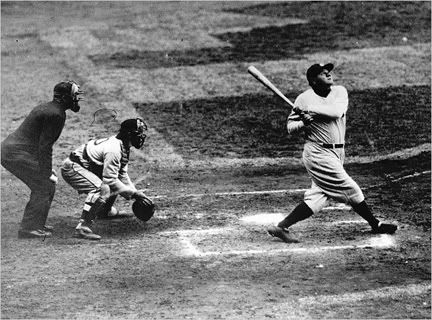
Addendum - In searching for an image to accompany this article today, the first Google Images result was the great photo included here, linked from a blog post by my friend Jacques Thelemaque talking about the need for filmmakers to SFTF in their scripts, so I guess he needs some credit here as well.

Wednesday, September 16, 2009

DV Republic Debate and Free

Boy, it seems I'm speaking a lot about "Free" lately. My article on how to make money in a world where everything is increasingly free was in Screen International and while I don't see many comments online, I got a few via email. Next up, I've been invited by Warrington Hudlin to participate in a debate called "Steal this Film: Is the Only Place Indie Film Can Find Justice Outside the Law?" with Neil Sieling. The description:

Content holders are suing their consumers, creating an environment where media users are are pitted against the content rights holders. The digital appropriation enabled by new technologies could be seen as a new era of media abundance rather than theft. But is this justice?

Neil is a great guy I've worked with before, and he thinks a lot about new directions in media, so I doubt this will be a heated debate, but it should be an interesting way to explore the topic further. I'm glad that Warrington actually set the panel up this way - it's less about two opposing views than two people trying to think smartly about how content creators might fare in the current media/economic climate. I'm especially glad because I've not been trying to be such a supporter of "Free" as espoused by Chris Anderson. Rather, my argument is that given that many things are increasingly available for free or cheap to consumers via advertising supported models, Redbox, Hulu, Pirate Bay, etc (even if the content costs money to make, host, deliver) then we should at least think about how we can still create value and possibly make a living. I also think the knee-jerk reactions of the MPAA, UK government and others aren't going to help matters. Anyway, you can learn more about all of this if you join us at the debate.

The panel also features a session on journalism:

Journalism faces fundamental challenges in the digital era. From the economic viability of print media to its status as a "trusted source" , this debate is whether journalism, as we have known it, is doomed and whether or not we should care.

Ty Ahmad-Taylor (Founder of FanFeedr and digital media veteran of MTV Networks, Comcast, and @Home)

Errol Louis (Columnist, New York Daily News and radio talk show host WWRL 1600 AM)


The two panels are moderated by Omar Wasow of Black Planet, and should be great.

A couple weeks later, I'll be back at Power to the Pixel, speaking about this topic again. Luckily, I have a workshop as well where I'll get to elaborate not just on free, but how to use new tools to better build a fan base, find an audience and raise funds for your film/media projects. Looking forward to the events.

Sunday, September 13, 2009

Age of Stupid World Premiere(s)

I've been writing and speaking a lot about innovative film distribution models and I keep referencing "The Age of Stupid." Well, it's finally getting a huge worldwide release and you can attend in just about any city. Check out where they are playing, go see the film and look around their website for some great self-distribution clues.

Monday, August 31, 2009

Living with Free - DIY Days Philly

Way back before my long vacation, I went down to Philadelphia to speak at DIY Days Philly. It was a good time, and I learned a lot from many panelists - although I am learning more now by watching the videos online of the panels I missed. My presentation video has been posted:


You can also look at the slides that accompanied the presentation here:


Perhaps one day soon, I'll combine the two so there's a presentation with audio. In the meantime, I think the panel that held the most interesting stuff for filmmakers was actually this one on music:

Distribution by the Numbers


While away on vacation - from electronic communications as well - SXSW put up their panel picker. I've proposed a panel for them called "Distribution by the Numbers." The idea is to get some real data behind all these distribution options out there. This is something few distributors want to talk about usually, but it's very important to filmmakers. So, if you like the idea, give it a vote here, and feel free to suggest co-panelists to me. I have some potential folks in mind, but am always open to ideas.

Friday, July 31, 2009

Filmmaker Demands Right to Lose Money


I moderated a panel yesterday for the New York Latino Film Festival entitled "Web Distribution, The Future is Here but how do Filmmakers Maximize the Movement?" We had a diverse, but all male, panel of experts - Warrington Hudlin filmmaker and founder of the new CastandCrewofColor.org, Slava Rubin of IndieGoGo, Alex Rivera the filmmaker behind Sleep Dealer, entertainment attorney Fernando Ramirez and Josh Green of Emerging Pictures. The conversation was pretty far ranging about how to find your audience online, as well as new distribution strategies (not all online) and a particular emphasis on reaching the diverse audience that is America, especially Black and Latino audiences. Great conversation.

We also spent a fair amount of time bemoaning the state of the indie film marketplace and the fact that it's become even more difficult to recoup your investment on any film made for above oh, say, $50K. Alex Rivera noted that to make his film he needed $2 million to accomplish what he wanted to do artistically. His sale of the film post-Sundance and his net returns from that distribution were decidely less than this investment. Nothing new there, of course, it's the rare film that actually is the financial success that filmmakers dream about. But I liked what he said about it -

" Filmmakers need to demand the right to lose money."

The audience laughed, but he elaborated that not all films are meant to be profit centers. Some art will never remake their investment, but need to be made as they are part of our cultural heritage. Furthermore, as a Latino filmmaker, he feels strongly that he needs to put forth an image of Latinos in society that's different than what mainstream media portrays and what many people think of when they think about Latinos. He doesn't make films just to make money but because of a greater cultural and social need - as well as an artistic one.

He went on to say that funders - both private and governmental - need to respond to this need. He particularly bemoaned the fact that the NEA hasn't stepped up and told the audience that filmmakers need to start demanding that they help fill this role. Warrington countered that while he agreed with the sentiment, the history of the NEA - particularly who would end up making decisions of what gets funded - doesn't bode well for this, but agreed that funders need to fill this gap. Coming from a place where I've mingled with this world pretty regularly, I don't see much hope for this - funders now want to see "impact" and other buzz words and tend to support only social issue docs (worthy of course) as opposed to art or narrative cinema. I do like Alex's sentiment, however, and agree that artists should defend their right to not just create what the market will bear. (knowing full well, of course, that they may not make a living!)

image: Alex's website.