Showing posts with label second life. Show all posts

Thursday, June 24, 2010

FutureThink - Virtual production

My recent trip to the Edinburgh International Film Festival was grand. As I posted here, I was speaking on several panels for the festival, Shooting People and BAFTA Scotland. I really enjoy these panels, because I almost always learn about new things from the other panelists or we talk about something that really gets my head thinking about new directions in the film/media sphere. This happened once again on the panel called FutureThink, where I was joined by Susan Kemp, Co- Director of Film In the Public Space at the University of Edinburgh, Ted Cawrey of Olswang and the filmmaking team of Stephanie Argy and Alec Boehm who had a film called The Red Machine premiering at the film festival.

The panel was about new directions in film and media, and Steph and Alec smartly pushed us to focus more on the future of storytelling than on distribution, etc. The conversation inspired me to launch a new series of columns on this blog, called FutureThink, where I'll pay homage to Edinburgh by trying to write more frequently on emerging trends and how they might impact indie films.My hope is to keep these shorter than my usual (quite lengthy) posts, but that also means I won't be analyzing these things too in depth, just throwing out some ideas in hopes you'll give me more in the comments.

Up first, virtual production and/or virtual performance. Stephanie brought this up as an area of great interest to her, and while I had thought about it before, I hadn't really thought about it as much as she has. So, what is it? Well, I think there's many meanings to the term, and all of them are worth thinking about, but here we're speaking about virtual performance - when actors are playing characters through digital renderings, and entire worlds of characters might be produced with green screens, digital tech and some fancy facial muscle techniques - think Avatar, the Hobbit, etc. We've all seen these great creations where an actor like Andy Serkis gets transformed into Gollum or King Kong. Stephanie pointed out how different it is for an actor, and for the director, when doing such productions. That's a bit obvious, of course, but I found it cool to think about how this changes the nature of acting. Stephanie likened it to having to go back to all your black-box theater skills. While this is all done through technology, it also kinda gets us back to where the director can focus on working with the actor to create a story world - which perhaps can lead not just to new characters, but also new ways of telling stories.

The problem has been (perhaps not a capital P, problem) that such technologies have been and still are very expensive and often proprietary. Like all technology, however, such effects are already getting cheaper and it's not hard to imagine that within a couple of years almost any indie will have the tools on their laptop to create not just amazing CGI but also whatever character they want. This may be with actual actors doing some virtual acting, or it could be completely computer generated. In fact, there's already been many people doing this, creating machinima, or films created in Second Life, where people used their avatars to create an entire Western, for example. That was way back in 2006, by the way, so I'm sure it's come along much further now.

As these costs come down, indies will undoubtedly use them to their advantage, but it's interesting that while this phenomenon is nothing new, this was the first panel I've been on where it ever came up in relation to indie and arthouse films. I attend a lot of festivals and conferences, and while I am sure there's been a few (I know SXSW had at least one), I'm surprised it doesn't come up more often. Sure, the technology is a bit in the future, but I'm also worried that many indies are so focused on the current state of things that this sector is bypassing them altogether. None of my indie friends ever mention machinima, yet some of the most interesting films I've seen have been virtual mash-ups, often created by young folks. I meet a ton of actors, but very few who aspire to learn the skills necessary to be the next Andy Serkis. Some theorize that this trend will mean the death of stars, but I doubt it - if anything I imagine a world of fewer stars, but with the same ones playing multiple virtual roles - kinda like how the voice-over world is dominated by just a handful of stars now. I get in plenty of debates about the future of copyright and piracy, but let me tell you - the fights over piracy of celebrity's images will put them all to shame. Once we have fake digital Bogart's running around in every film, Hollywood (every aspect from the stars to the agents to the home office) is gonna sh-t a virtual brick (performed by which actor I wonder?). What does this mean for documentary, when it becomes even harder to be sure that was really so and so big whig talking, not some avatar? Think that there's been a loss of industry jobs due to runaway production and ever-cheapening costs? Just wait until a farmed-out team of teenagers in China or Mexico is being hired via Amazon's Mechanical Turk to produce entire sets and act out most of the motions for pennies on the dollar....I think you get the point, there's a lot of interesting things to discuss, but very few people seem to be having the discussion (if I'm wrong, please point me to some resources in the comments).

Of course, it's not all bad - as I said, this might also lead to some cool new storytelling as well. I, for one, am excited at the prospect that much of this work can become cheap and digital, leaving storytellers to focus on story, once again.

Monday, February 01, 2010

Diverse thinkers on the new era

I’ve been spending much of the last few years on the road speaking at numerous panels about new models for film, new media and distribution. I’m continually peeved to find myself sitting on a stage with a bunch of other white guys talking about the future. Usually, there’s not even a woman on the panel. I often bring this lack of diversity up publicly, because I find it so odd to find a bunch of white guys talking about the future - when we are decidedly not the future. What gives?

I found myself thinking about this again at Sundance in the panel entitled “The Doctor’s in the House” on distribution. Besides the moderator, Eugene Hernandez, there was no diversity on the panel. Now, I’m not faulting Sundance here - while their track record isn’t great when it comes to diversity, they aren’t the only, just the most recent example of this phenomenon. It’s much broader.

During the panel, I tweeted out the following:

“What, do only white people think about new models for film?? Wtf #sundance c'mon”

Thursday, January 29, 2009

Future of Social Media Video

My good friend Joe Summerhayes teaches kids how to make media - animations, videos, web - and runs a cool blog on issues around the future of media and education. He posted a video today that I hadn't seen about the history of and future of media on the web - or really about our future as a result. It's a little corny but spot on for most of the video. The video's producer has some other cool videos on the future of cellphones, etc, and even on making caipirinha's in Dublin!
Worth a look:


Wednesday, October 03, 2007

Internet Outdated & Not for Video

That's right - and don't take it from me, take it from Larry Roberts - one of the founders of the internet in 1969, when he helped build ARPAnet. As he says in the Wall Street Journal:
"The internet wasn't designed for people to watch television...I know because I designed it."
He also states that "We can no longer rely on last-generation technology, which has essentially remained unchanged for 40 years, to power internet performance." The article is an interesting read, but the argument is essentially that the technology powering the internet is outdated, not that what we are doing online is outdated, or that video shouldn't be online (rather, not with the technology we're using now). The network is outdated.
I would argue that most of what we are doing online is dated as well - we are sooo far behind where we should be by now. I remember back in 1992, taking a class on Cyberspace, when everyone was sure that within a couple years we'd all be wearing virtual reality goggles going through cyberspace and interacting with media, information and each other in much more advanced ways than anyone is doing now. A recent issue of MIT's Technology Review (registration required) dreams about what happens when you combine Second Life with Google Earth - but I'm still waiting for that mashed up with CC Mixter, YouTube, Kaneva, Twitter, Slingbox and some robotics. And I'm pretty sure Mr. Roberts has thought more than I have about that, and can tell me the backbone still can't handle it.

Sunday, July 08, 2007

New Resources Podcast


Agnes Varnum has launched a new podcast on Resources, the blog of Renew Media (where I work). Her first podcast is an interview with Philip Mallory Jones, one of our media arts fellows, and a great filmmaker, now digital artist, who has made a pretty successful move into Second Life. As Agnes describes:

His new work, IN THE SWEET BYE & BYE, is a three-pronged collaborative project with his mother Dorothy Mallory Jones, which includes a book, gallery installation and an installation in Second Life. From his text, “It is an evocation of African-American personal/familial/communal narratives and allegories, in words and distinctive interpretive visual compositions. It is a hymn of nuanced harmonies and discords; a blending of voices sweet and rough. It is a trans-generational memoir, illuminating paths we walk, stories we’ve been told, and the dream-places we haunt. It is a continuation of my four decades of art-making and research, and my creative collaborations with poet/novelist Dorothy Mallory Jones.”

Definitely something to check out. I like his mix of orality and new media literacy (electracy, per Ulmer). I haven't visited this yet, but plan to asap.

Agnes did an amazing job with this podcast- it's her first podcast for us (and I think her first podcast at all), and she did it quite professionally. Nice music intros and interludes, great interview questions, good editing. It's the first of several that she'll be launching with us, and I can't wait for the next one. We should have a subscription button up soon, and perhaps I'll learn how to embed the podcast directly into this blog soon! For now, it's here.

Wednesday, June 20, 2007

IPod and the death of creativity


Ok, this title is purposefully over-the-top, but bear with me. I held out on buying an IPod for years. I was ridiculed by friends, perhaps more because of the fact that I still don’t have cable even though I write about Second Life. Part of the reason for my IPod less-ness was philosophical; part that I don’t like to listen to music while walking, still have vinyl records and was too cheap. I finally gave in and bought the IPod, but my conscience kept bothering me, and I continue to have major issues with the IPod, and also with TiVo and some other gadgets that most people think are the second coming.

Why? Because they defy the possibilities inherent in new technologies, and actually make computers more like toasters – something good at a certain function, but not good at experimental, user-generated upgrade. I think this also has serious implications for the net, for our society and most of all for creativity. I think filmmakers should care about it, but to most people it is counterintuitive to give these products any negativity, so I’m sure this view won’t be popular.

While in Sonoma for a conference, I read a great article called “Saving the Internet,” by Jonathan Zittrain in the Harvard Business Review on the subject, and it got me thinking about this some more. (Note - HBR isn't very generative, so you may have to sign in, but the article is free). Zittrain argues that what makes the internet interesting, innovative and creative is its generativity. As he describes it:

The expediently selected, almost accidentally generative properties of the Internet—its technical openness, ease of access and mastery, and adaptability—have combined, especially when coupled with those of the PC, to produce an unsurpassed environment for innovative experiment.

In other words, the ability for anyone to make new applications, to build new systems, to adapt old models into new models – to create, to innovate – is precisely what has been important about the PC and the web. These technologies are created to “generate” new ideas and new platforms. Yes, it may be easier for someone to develop a computer that only lets you do certain things – like find music, buy it and play it – but this is much less interesting than a computer that one could adapt to also do other things, or do these same things better.

Zittrain goes on to show that the same things that make generative computing work so well are precisely the same things that allow for mischief, such as hacking and piracy. As he describes it:

Those same properties, however, also make the Internet hospitable to various forms of wickedness: hacking, porn, spam, fraud, theft, predation, and attacks on the network itself. As these undesirable phenomena proliferate, business, government, and many users find common cause for locking down Internet and PC architecture in the interests of security and order.

So, because someone could create a malicious hack that would cripple the IPod, or because of piracy concerns, Apple says “we’re taking away these properties which could confuse you or be harmful.” I’m not exaggerating. Like everyone else, I can’t wait for the IPhone, but Steve Jobs has already been quoted saying that the IPhone will not be an open platform, similar to the IPod because people don’t need or want this. Who is he to day, and why does this matter? Think about how cellphones are today - As Zittrain puts it, “Most mobile phones are similarly constrained: They are smart, and many can access the Internet, but the access is channeled through browsers provided and controlled by the phone-service vendor.” Cellphones are usually locked so that you can’t use them on networks other than your provider (a big problem for travelers), not open to reprogramming – not generative. Imagine what great things could be made for the IPod or the IPhone if they were more open – like Firefox, for example, or like other open platforms.

The IPhone will not be a generative device. Why? One, so that they can control the experience – they don’t want you to download music from outside their system where someone else makes money, but they also don’t want you to download a program that could harm your phone. Most consumers don’t want this either, and we want a cool phone, so we accept this trade off pretty readily. In doing so, however, we perpetuate the move towards making our generative computers more like appliances - less innovative and less room for actual creativity.

Zittrain isn’t saying anything new – lots of tech people talk about this, and Larry Lessig has covered similar ground quite well in discussions about the difference between the Read/Write and Read Only paradigms. He too aligns the IPod with this problem. To Lessig, the Read/Write paradigm is quite similar to generative computing – technology that you can use to both read and write – to be a passive consumer or an active creator – whatever floats your boat. Read Only technology – the IPod – just lets you consume, not create. Read-Write encourages creativity, innovation and, he argues – actually encourages more economic growth, due to this constant innovation. In essence, by embracing read-only, less generative models, we are killing the goose that laid the golden egg – and early in this technology’s development.

Both authors are getting at this for different reasons, but both note the possible effects on creativity. This is what I’d like to explore further in my next post, as I think it merits more thought. Other technologies started as more “Read/Write” and became more “Read Only” over time – cinema, radio, television all moved from systems for which people could easily create content to ones in which most people just received content. The creative possibilities for filmmakers –and the distribution possibilities – will become less as we move away from generative computing to the internet and the computer as an appliance. I’m not saying to throw away your IPod, but I do think that as creative types, filmmakers should pay attention to this change and push for more open models.

Wednesday, December 27, 2006

Top Ten Stories for Indies and Resolutions

I’ve seen lots of year-end film lists, and even participated in some. What I haven’t seen, however, is a list of the top stories that matter to indie filmmakers. I wouldn’t say this is my definitive list, but it’s the top ten things that come to mind, in reverse order, along with New Year resolution suggestions.


10. Mermigas Firing proves Hollywood is still out of touch.
Diane Mermigas was the best writer in the film world. Who, you may be asking? Mermigas wrote a column on technology for the Hollywood Reporter - how it was disrupting business models and where things may be going. As most indie folks can’t afford the HR, very few may have read her column, but work picked up the tab for me, and I was a fan. Her last prediction - that Google might buy the NY Times (original) and she could be right. This only makes the top ten list because it would be like the Washington Post getting rid of Bob Woodward during Watergate – you don’t get rid of the one reporter that really knows what’s going on when your ship is sinking. Geeky blogs always thought she was old-fashioned (or worse), but she was the only columnist in film land who consistently understood the shifting landscape, and the Hollywood Reporter letting her go recently shows how out of touch old media remains about how the changes that are affecting them now are just the tip of the proverbial iceberg.
Resolution suggestion: Independent filmmakers should pay more attention to the geeky business news about the industry, because its going to affect your world as much as it will Hollywood, and you might just be able to use the changes to your advantage. Start with Mermigas’ old columns.


9. Orphan works proposals show there is some hope in copyright land.
An orphan work is one whose author can’t be found, even after extensive searching. In film, this usually affects documentaries that use rare footage, and with an orphan work, no one can authorize you as a filmmaker to use the footage in your film. Even though the rights-holder probably died years ago, no E&O Insurer will insure your film, and thus no one would distribute or broadcast it if it contained this footage. This year, a coalition of groups representing filmmakers (disclaimer: including the one I work for) made recommendations to the copyright office for a fair system to allow such works to be used, while maintaining safeguards for rights-holders. The proposal is now being considered by Congress, and could represent a nice change for filmmakers.
Resolution Suggestion: Click here to take action.


8. FCC acts indecent

Think that Janet Jackson’s breasts are unrelated to your issues as a filmmaker? Think again. Her exposure in the Super Bowl is just one example of the things that led the FCC to begin cracking down on things they consider “indecent.” Well, that and a bunch of right wing nuts, but the FCC’s actions have led PBS stations to not broadcast films due to fears of large fines, and while most of the films affected have been big (Saving Private Ryan, Ken Burns), this has huge implications for indie filmmakers. All broadcasters need is one more excuse to not show your unrated film.
Resolution suggestion: Marjorie Heins of the Free Expression Policy Project at NYU is leading the charge against this nonsense, and you should take an interest.


7. AIVF collapsed/Others Didn’t (yet?)
When AIVF started to go under, a group of us met to debate whether we cared. The consensus was, I think, that now more than ever, filmmakers needed a place like AIVF, but that the situation had deteriorated to the point that it couldn’t be salvaged. In early 2006, the board finally pulled the plug, and AIVF no longer exists. As I wrote then, the ideals of AIVF (it could no longer serve them) were still needed – in-depth information, advocacy, and a national community among the many needs. AIVF could have been the place to unite the UGC and Indie worlds and make a powerful lobby for creative concerns on the net; they could have been active in the recent debates about Showtime and the Smithsonian; they could have thrown a real awards for independent filmmakers (maybe in Brooklyn), when other awards shows departed from indies. On the plus side, my prediction that they were the first of many to go was either early or just wrong. IDA, IFP and others are surviving, IMAGE and Film Arts have new leaders and may rise from the (near) ashes. On the other hand, none seem to have taken the place of AIVF. Perhaps more will be clear when I moderate a panel on this subject at SXSW in March of 2007. (photo credit: Indiewire.com)
Resolution suggestion: Make your organization accountable by letting your voice be heard – let their executive directors know how you feel. Me included.


6. Fair Use gets a boost, and a manual
Fair Use is the legal concept that allows you to utilize copyrighted material, under certain conditions without asking for it. For example, Kirby Dick used this concept to make his recent doc This Film Is Not Yet Rated… because it allowed him to comment on the way the MPAA treated certain films, without having to pay large fees to show certain clips. For years, however, there was no clear system for filmmakers to follow in utilizing fair use, so Pat Aufderheide, a professor at American University and Peter Jaszi, a law professor, got together with filmmakers and their organizations (again, we participated) and crafted a Filmmakers guide to Fair Use. IFC used it in deciding to distribute Dick’s film, and rumor has it that Arthur Dong will be using the principles to release his new work The Chinese in Hollywood Project.
Resolution suggestion: Read the manual and stay informed via Agnes Varnum’s blog for the Center for Social Media.


5. New Distribution Models (and reminders of some old ones)
It still boggles the mind that anyone debates whether the windows model of releasing is a bad idea. Yes, Bubble didn’t work, but it’s clear to everyone that consumers want their media when they want it, where they want it, when they want it and on whatever device they want to see it on. The key will be versioning – having different versions, so that you can show one version at fests or theatres while the download is available, and possibly sell the extended (or educational) version later. While Holly/Indy-Wood distributors debated this, many simply threw up their hands in disgust and started their own distribution. Four Eyed Monsters showed the best way to use the internet to build buzz, Lance Weiler self-distributed to success and blogged about it, Sujewa focused his blog on self-distribution, Landmark made four-walling a little easier, and even David Lynch took to the streets to promote his own self-distribution (photo credit: Defamer.com). It was also fun to listen to filmmakers propose a self-distribution collective or system, when one already exists with New Day, and it was great to see filmmakers opening their eyes to the simple truth that getting a distributor can often be the worst thing that can happen to your film.
Resolution suggestion: Use fests to find an audience, instead of a distributor. Start here or here.

4. Death of VHS goes unnoticed

In November, Variety ran the obituary for VHS. Yes, you can still find them, but Hollywood and all but a handful of small distributors have abandoned them altogether. VHS lasted around 30 years, but no one expects DVD to last nearly that long. While people continue to debate whether consumers will switch to digital downloads or streaming, there are clear signs that DVD sales are slowing, and this has huge implications for indies. While every other technological advancement showed such promise in the past only to be closed down, we once again have the chance that indies can get their films to a wider audience through digital downloads, TiVO, Revver, or even through your Xbox. With the Long Tail model changing business, and with everyone from Amazon to Wal-Mart (I would go all the way to Z with Zune, but it’s such a bad player) getting in the digital download business, 2007 should be a interesting year.
Resolution suggestion: Read up about the implications with this report we produced, and check out your options for self-distribution online.


3. Google/Youtube and future implications
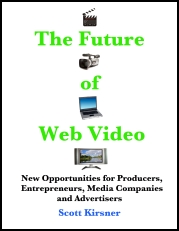
This one has been talked about enough online that I don’t need to add much more. Any way you look at it, however, it’s one of the most important media stories of 2006, with huge implications (still being sorted out) for distribution, copyright, revenue models for new media, etc. My hopes for 2007 – that independent filmmakers realize their kinship with the supposed amateurs of UGC, especially in regards to reaching audiences. This is about participatory culture and your audience finding your content more easily, not just finding videos of a frat boy falling down the stairs. You can use it to get people interested in your work, promote films you are trying to raise money for (advanced trailers) and to find your audience before your film is completed. Gootube is, of course, just one part of the story, but every filmmaker should be thinking about how to use online video to their advantage.
Resolution suggestion: Post teasers or trailers for all of your films online for free – even better, put a Creative Commons license on them, and read the book about your opportunities by Scott Kirsner.


2. Sundance Channel opens a Screening Room in Second Life
I’ve been suggesting for a long time that filmmakers need to get a presence in Second Life, and I wasn’t the only one. Recently, Sundance Channel announced they will launch a Second Life screening room and will premiere Four Eyed Monsters online in January of 2007. Second Life is a growing phenomenon, and people are making real money there. More importantly to filmmakers – it’s another place to find an audience for your work.
Resolution suggestion: I’m willing to bet that some media artists can make something more creative than some suits at Sundance Channel (okay, I know many people there who don’t wear suits), so get online, create an avatar and corner the market for cool visuals in Second Life.


1. Net Neutrality
Unfortunately, much of the above-mentioned promise for indies is threatened by the possible end of the internet as we know it. That’s what net neutrality means – saving the internet. I could go on and on about this, but many people have made great videos about it, like this one:


Resolution Suggestion: Educate yourself on Net Neutrality, get active in the debate and stop big media from ruining our possible future(s) online.

And Happy New Year!

Wednesday, December 13, 2006

Second Life Screening Room

The Sundance Channel announced yesterday that they will open a screening room in Second Life: Studio 4A. The studio will open with the Second Life premiere of Four Eyed Monsters, followed by a live Q&A session with film creators Arin Crumley and Susan Buice plus an after party.
I've been wondering when someone (that I know) would make such a move on Second Life. While many web-readers may consider this old news, I learned this weekend just how few filmmakers are even thinking about this right now. We were hosting a retreat for 15 filmmakers in Los Angeles, and I gave a presentation on using the web for marketing through the web and forming communities for independent films. I used Four Eyed Monsters as an example of people doing a great job, and then showed Second Life and suggested to the attendees that they put down a footprint there, and think of how it could build community for their films. Only one attendee had even heard of Second Life, and only two had heard of Four Eyed Monsters. This isn't to say they were behind the times, or that I am up to speed with it, but does show that the field is changing rapidly enough for many filmmakers that what some people take for granted is news to many others.
Sundance Channel is a corporate entity, and the Four Eyed Monsters gang are pretty savvy, so it's no surprise they had the resources and the web know-how to pull this off quicker than many others. At the recent National Black Programming Consortium conference, many black filmmakers discovered and discussed Second Life and its potential for building an audience for their films. It's becoming a great place for filmmakers to find audiences for their films. We'll see a lot more of this soon.